

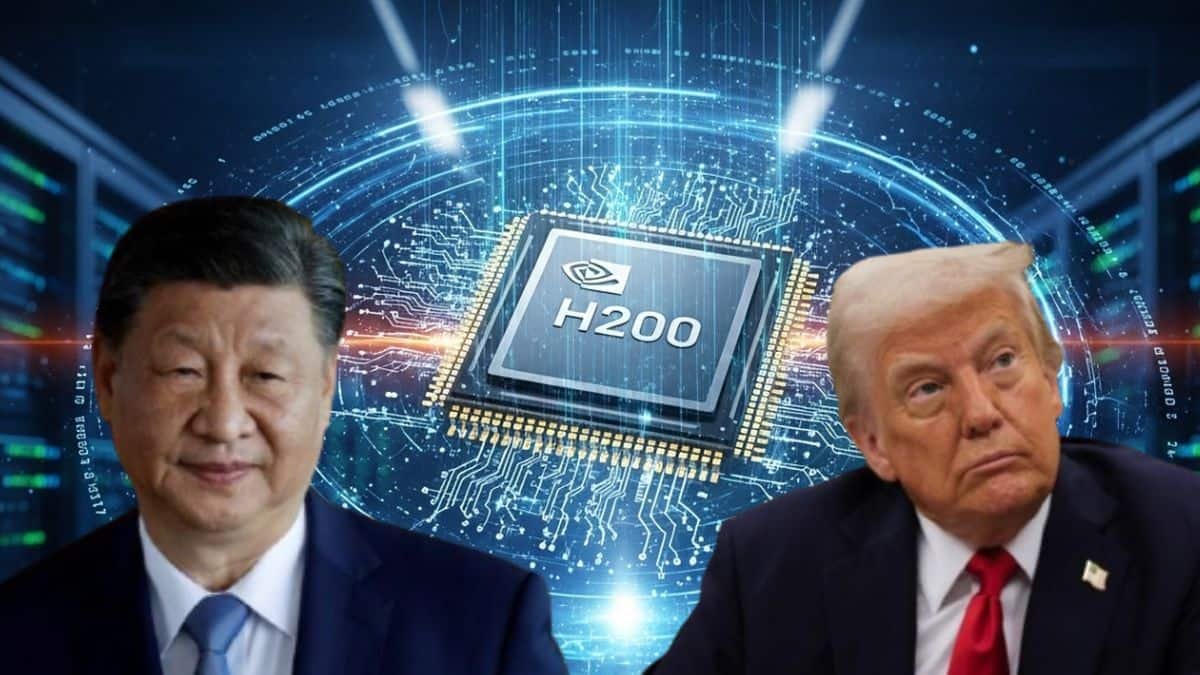
John Moolenaar, the Michigan Republican who leads the influential China panel, questioned claims that China’s most advanced chips, produced by Huawei, can match those made by Nvidia
The Republican chair of the US House Committee has posed questions to the Trump administration about its decision to sell Nvidia’s H200 chips to China.
John Moolenaar, the Michigan Republican who leads the influential China panel, questioned claims that China’s most advanced chips, produced by Huawei, can match those made by Nvidia.
President Donald Trump earlier this week announced that he would allow Nvidia to sell its second-best chips, H200, to China, ignoring concerns from some US security officials that it would fuel Beijing’s AI ambitions that would in turn help accelerate its military’s modernisation.
What has the lawmaker said?
“Huawei has sought to end-run US technology controls by linking ever-greater numbers of less-capable chips together to achieve individual service output comparable to Nvidia’s results,” Moolenaar wrote to US Commerce Secretary Howard Lutnick in a letter seen by theFinancial Times.
He highlighted that Huawei has said that its flagship chip, the 910C, is a competitor to Nvidia. The lawmaker further noted that Huawei was “less willing to acknowledge” that the 910C is manufactured in Taiwan by TSMC.
“Given China’s relentless indigenisation drive, the fact that the 910D is a step backward in capability represents a tacit admission that China’s domestic fabs, without the benefit of illegal production abroad, are not yet able to replicate the 910C’s sophistication at scale,” he wrote.
Moolenaar also pointed to reports suggesting that DeepSeek, China’s leading AI firm, has had to rely on smuggled Nvidia chips to keep training its models. He added that allowing China to purchase millions of chips more advanced than those it can produce domestically would undercut Trump’s push to preserve US dominance in the AI industry.
China keeps an eye
China has set a limit on the imports of Nvidia’s H200 chips after Trump announced that Washington would lift a ban on selling AI chips to Beijing. With this move, China aims to push self-sufficiency in achieving its tech goals.
According to a report by theFinancial Times, regulators in Beijing are looking at ways to limit access to the H200 chips, Nvidia’s second-best generation of artificial intelligence chips.
Buyers would likely have to undergo an approval process, submitting requests to purchase the chips and explaining why domestic suppliers could not meet their requirements. Other moves include increasing customs checks of chip imports andoffering energy subsidiesto data centres using domestic chips.
End of Article