

India has reiterated that Shaksgam Valley is part of its territory, calling the agreement illegal and rejecting CPEC as it passes through Indian land, the MEA said.
India on Thursday said the Shaksgam Valley is part of its territory, reiterating that the agreement relating to the area is illegal and invalid, and restated its rejection of the China-Pakistan Economic Corridor (CPEC) as it passes through Indian territory.
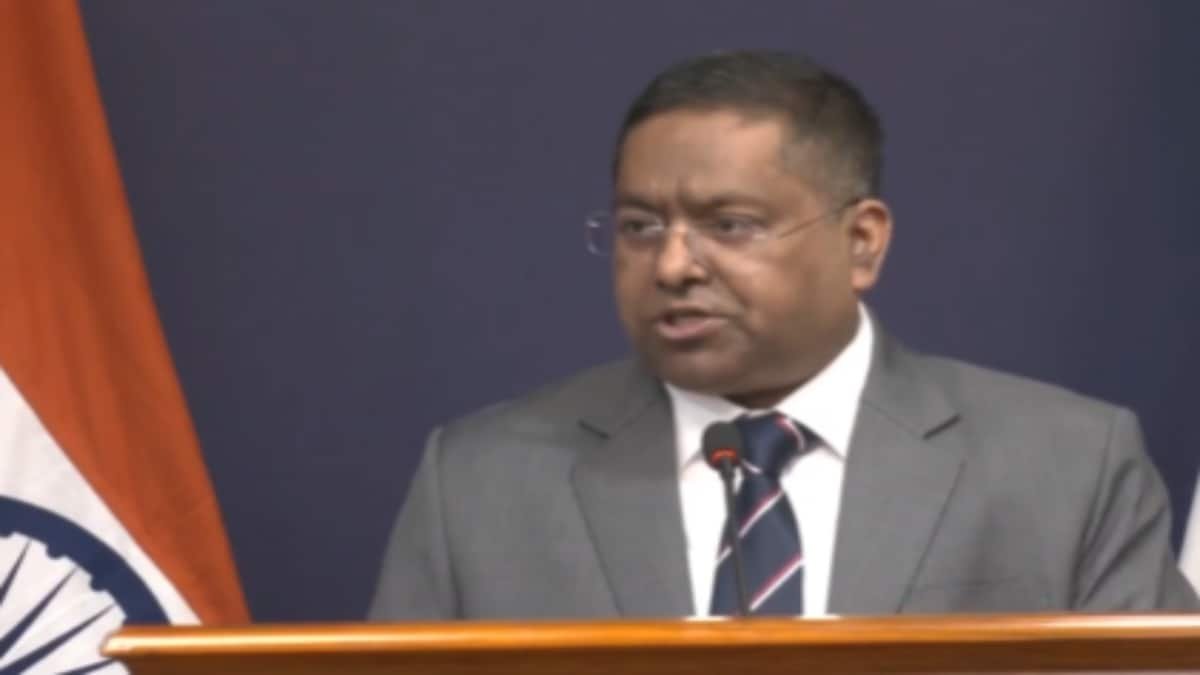
Addressing the media on Friday, Ministry of External Affairs spokesperson Randhir Jaiswal said, “Shaksgam valley is Indian territory. We have never recognised the so-called China-Pakistan ‘Boundary Agreement’ signed in 1963. We have consistently maintained that the agreement is illegal and invalid.”
VIDEO | Delhi: “Shaksgam Valley is Indian territory. We have never recognised the so-called China-Pakistan boundary agreement that happened in 1963. We have consistently maintained that the agreement is illegal and invalid. We do not recognise the so-called China-Pakistan… pic.twitter.com/i3Eb9FTc09
— Press Trust of India (@PTI_News) January 9, 2026
“The entire union territories of Jammu and Kashmir and Ladakh are an integral and inalienable part of India. This has been clearly conveyed to Pakistani and the Chinese authorities several times. We have consistently protested with the Chinese side against attempts to alter the ground reality in Shaksgam Valley. We further reserve the right to take necessary measures to safeguard our interests,” he said.
India reacted after reports indicated that China is actively building a long “all-weather” road in the Shaksgam area, located north of Siachen, a region of high strategic importance to Indian forces, sources told News18. The sources said about 75 km of the road—estimated to be nearly 10 metres wide—has already been completed, with construction continuing at a fast pace.
Meanwhile, responding to a proposed bill in the United States Congress that seeks to impose a 500 per cent duty on countries continuing to purchase Russian oil, he also said it remains guided by the imperative of securing “affordable energy” for its 1.4 billion people amid evolving global market dynamics.
“New Delhi is aware of the bill and is closely monitoring developments. We are aware of the proposed bill. We are closely following the developments,”,” he said.
Reiterating India’s long-standing position on energy sourcing, Jaiswal underlined that New Delhi’s decisions are driven by energy security needs and market realities.
“Our position on the larger question of energy sourcing is well known. In this endeavour, we are guided by the evolving dynamics of the global market and by the imperative to secure affordable energy for our 1.4 billion people through diverse sources to meet the energy security needs,” the statement said.
MEA’s reponse comes days after US Senator Lindsey Graham said that US President Donald Trump has given a green light to the bipartisan Russia Sanctions Bill, which would give leverage against India, China, and Brazil to stop them from purchasing Russian oil and punish the countries “fuelling Putin’s war machine”.
In a post on X on Wednesday, Graham said the move comes amid ongoing peace negotiations for Ukraine and hinted it would go to a bipartisan vote next week.
“After a very productive meeting today with President Trump on a variety of issues, he greenlit the bipartisan Russia sanctions bill that I have been working on for months with Senator Blumenthal and many others. This will be well-timed, as Ukraine is making concessions for peace and Putin is all talk, continuing to kill the innocent. This bill will allow President Trump to punish those countries who buy cheap Russian oil fuelling Putin’s war machine,” Graham said in his post.
“This bill would give President Trump tremendous leverage against countries like China, India and Brazil to incentivize them to stop buying the cheap Russian oil that provides the financing for Putin’s bloodbath against Ukraine. I look forward to a strong bipartisan vote, hopefully as early as next week,” he added.
As per the official website of the US Congress, the bill titled “Sanctioning of Russia Act 2025” seeks to impose several provisions, which include penalties on individuals and entities, including an increase of the rate of duty on all goods and services imported from Russia into the United States to at least 500 per cent relative to the value of such goods and services.
End of Article