

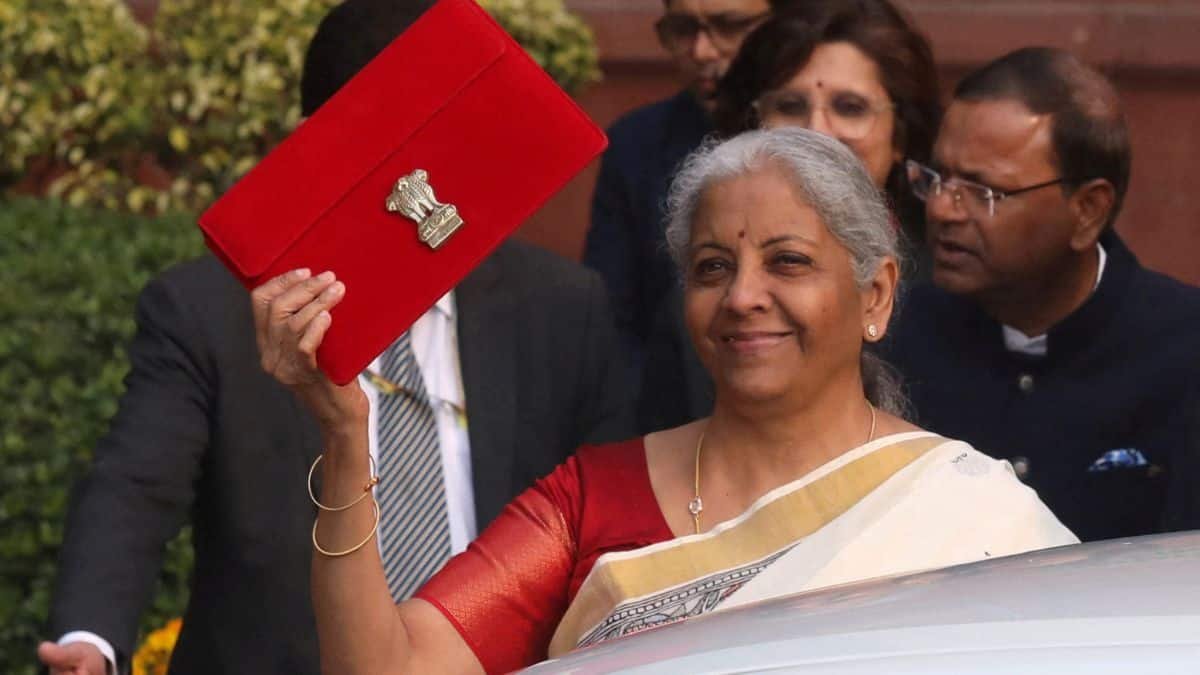
In the Union Budget 2026-27, Finance Minister Nirmala Sitharaman should focus on supply-side reforms aimed at improving an economy’s productive capacity over short-term fiscal fixes, according to analysts.
In the Union Budget 2026-27, Finance Minister Nirmala Sitharaman should focus on supply-side reforms over short-term fiscal fixes, according to Arvind Sanger, Managing Partner at Geosphere Capital Management.
Supply-side reforms refer to policy changes aimed at improving an economy’s productive capacity, not improving consumption or spending directly. While consumer-side interventions like stimulus or tax cuts —like last year’s GST cuts— are short-term measures, supply-side reforms are long-term and structural.
Sanger told CNBC TV-18 that India needs continued supply-side reforms to revive economic activity.
Sanger said, “Even if that means slightly higher fiscal deficit short-term… the only hope is a revival in economic activity, which eventually drives growth, rather than worrying too much about the short term FISC.”
Follow our live blog for all Budget 2026-27 updates
here
Sanger said that foreign investors face unique challenges in India, including double taxation for those without treaties.
“There’s a few minor things that I think India is uniquely punitive on,” said Sanger.
Broadly, supply-side reforms are aimed at making production cheaper, making manufacturers more competitive, making labour more productive, and removing bottlenecks and rigidities. They also include regulatory and ease-of-doing-business reforms aimed at reducing red tape.
200&&loadTaboolaIframe()})]]>
| Demand-side policies | Supply-side reforms |
|---|---|
| Focus on increasing spending in the economy | Focus on increasing productive capacity |
| Boost consumption and investment demand | Improve efficiency, productivity, and competitiveness |
| Short-term or cyclical impact | Medium- to long-term structural impact |
| Includes government spending, stimulus packages, and tax cuts | Includes labour reforms, tax reforms, deregulation, and privatisation |
| Used mainly during recessions or economic slowdowns | Used to raise long-term growth potential |
| Can raise inflation if supply is constrained | Helps contain inflation by easing supply bottlenecks |
| Results are visible relatively quickly | Results take time to materialise |
| Relies heavily on fiscal and monetary policy | Relies on structural and institutional reforms |
Last year, as India faced 50 per cent American tariffs —the highest in the world— the Narendra Modi government slashed GST rates on the vast majority of goods and services. Those tax cuts ahead of the festive season led to a surge in consumption spending that stimulated the economy.
But now that such a step has been taken, there is neither much room nor feasibility for such consumer-side actions.
ALSO READ —
India’s Union Budget 2026 to prioritise fiscal consolidation without hurting growth: EY
In an article for The Times of India, Deloitte India economist Rumki Majumdar said that the government should now look at the supply side of the economy, which is essential to sustain growth and attract private investment that has remained modest for years.
Supply-side improvements will be critical to rebuild global investor confidence, according to Majumdar.
“One of the most obvious key measures in this Budget is likely to be the continued push for capital expenditure, a priority for over six years. It not only boosts demand side by creating jobs and income but also reduces logistics cost and improves competitiveness. In parallel, the government has also hinted on reforms in customs duties to improve trade competitiveness and the ease of doing business,” noted Majumdar.
End of Article