

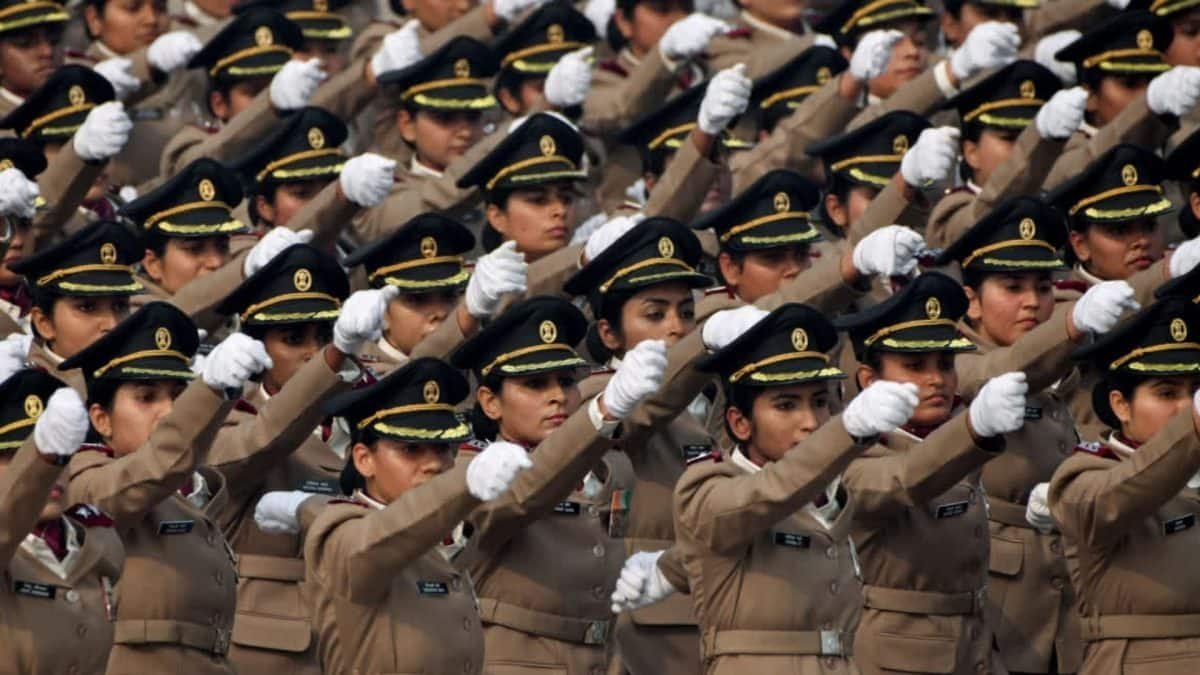
Supreme Court backs women SSC officers’ right to permanent commission, flags bias and grants pension relief, but clarifies no notional promotions to avoid disrupting armed forces structure
The Supreme Court of India has ruled that women serving as Short Service Commission (SSC) officers are entitled to permanent commission in the armed forces.
The court’s decision marks a big shift for women officers in the
Army, Navy and Air Force, many of whom had faced uncertainty over long-term careers. Permanent Commission allows officers to serve until retirement and access leadership roles, benefits that were often out of reach for women earlier.
Calling out systemic issues, the court observed that denying permanent roles to women officers was rooted in an unfair and biased evaluation framework. It emphasised that opportunities in the armed forces cannot remain limited by gender.
“Male Short Service Commission Officers (SSCOs) cannot assume that Permanent Commission will remain exclusively male,” the court noted.
Concerns over bias and evaluation
The bench said that women officers were often assessed under conditions that did not give them equal footing. Because they were historically ineligible for permanent roles, they were not given the same career-enhancing opportunities, which later impacted their evaluations.
It also pointed out that performance reports were written with a “preconceived assumption” that women would not continue long-term, placing them at a disadvantage compared to male officers.
In addition, the bench comprising of Chief Justice Surya Kant, Justice Ujjal Bhuyan and Justice Kotiswar Singh, struck down an annual cap limiting the number of women officers eligible for permanent commission to 250, calling it “arbitrary and unjustified.”
Relief for past and present officers
Beyond career progression, the judgment also offers relief to women who had already completed their service. Those released after 14 years will now be entitled to pension benefits, addressing a long-standing concern among officers who were earlier denied both permanence and financial security.
However, the court clarified that notional promotions in rank would not be granted, saying such a move could disrupt the functioning and hierarchy of the
armed forces.
For those still serving, the court clarified that permanent commission would be granted subject to standard criteria such as medical fitness and service records.
End of Article