

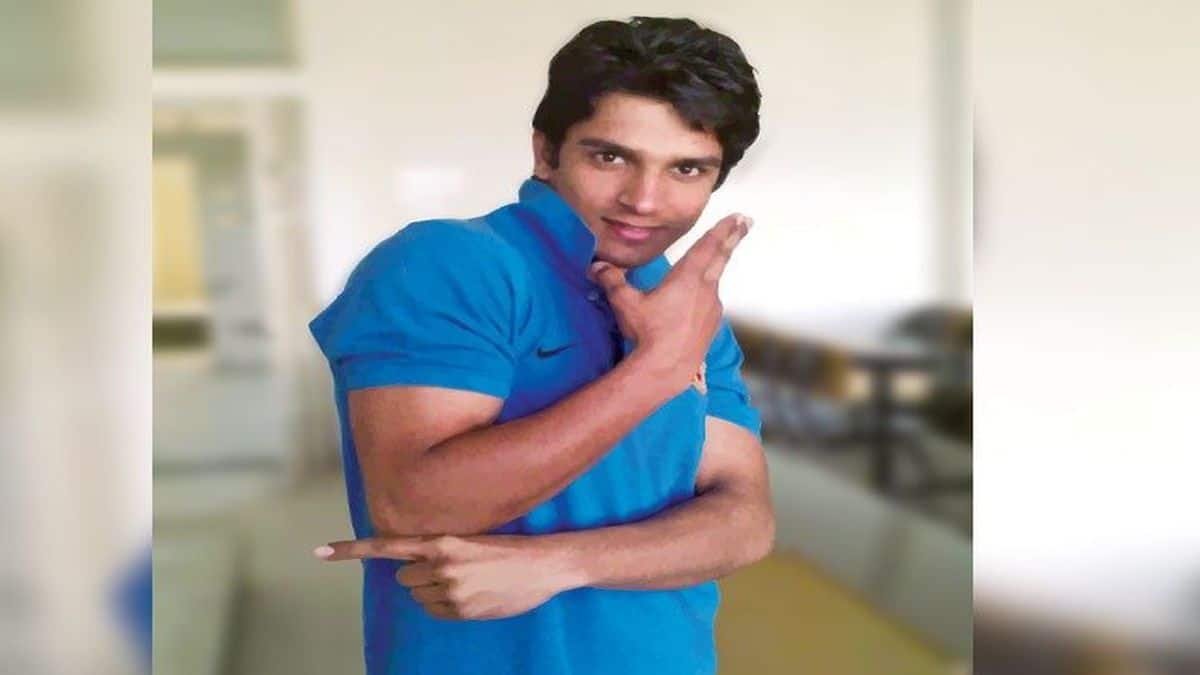
Harish Rana, at the centre of India’s first court-approved passive euthanasia case, was cremated in Delhi, closing a landmark chapter that reshaped debates on the right to die with dignity
Harish Rana, at the centre of India’s first court-approved passive euthanasia case, was cremated in Delhi’s Green Park Cremation Ground on Wednesday. He had passed away a day earlier at 4:10 pm at thr All India Institute of Medical Sciences (AIIMS) after doctors withdrew life support, allowing him to die naturally.
Rana, who had been in a coma for 13 years, was once a promising student at Panjab University, as described by his father. He suffered a fall from the fourth floor of a paying guest accommodation, resulting in severe brain injuries.
Ghaziabad, Uttar Pradesh: Harish Rana, first Indian allowed passive euthanasia, dies at AIIMS
His neighbour says, “Today, Harish took his last breath around 4 PM. His family was by his side until 2 PM, after which they left… The last rites will be performed by the family, but… pic.twitter.com/VLhEcq2KsK
— IANS (@ians_india) March 24, 2026
Although he was later discharged, the injury left him in a prolonged coma. Kept on life support and confined to his bed, he relied on a tracheostomy tube for breathing and a gastrojejunostomy tube for feeding.
A case that shaped legal history
Rana’s case became a milestone after the Supreme Court of India allowed passive euthanasia—permitting the withdrawal of life-sustaining treatment in specific circumstances.
Delhi: The mortal remains of Harish Rana, the first person in India permitted passive euthanasia, were cremated by his brother Ashish Rana and sister Bhavna pic.twitter.com/PFBc5WH97C
— IANS (@ians_india) March 25, 2026
The court’s ruling was the first real-world implementation of India’s passive euthanasia framework, reinforcing the principle of the “right to die with dignity.”
Beyond the personal loss, Rana’s case ignited widespread conversations across India on medical ethics, patient autonomy, and the role of courts in end-of-life decisions.
Passive euthanasia, which involves withdrawing or withholding treatment to allow a natural death, remains a sensitive and evolving issue in the country’s legal and healthcare systems.
End of Article