

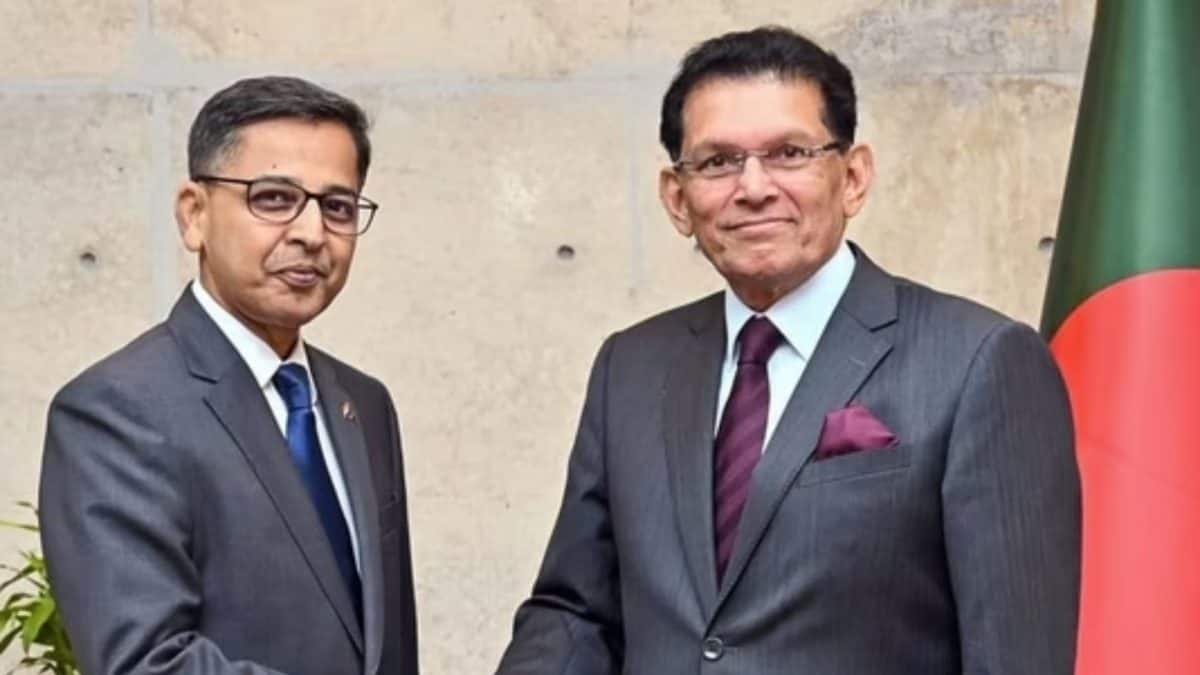
Bangladesh Foreign Minister Khalilur Rahman is set to begin a three-day visit to India on Tuesday. The visit comes as India and Bangladesh seek to strengthen ties following Dhaka’s political transition, with discussions expected to focus on security, trade, energy and connectivity.
Bangladesh Foreign Minister Khalilur Rahman is set to begin a three-day visit to India on Tuesday, marking the first high-level trip by a Bangladeshi minister since Prime Minister Tarique Rahman assumed office.
Officials say Rahman’s packed schedule in New Delhi reflects a broad-based engagement across key sectors.
Meetings with officials
He is expected to hold a series of meetings with External Affairs Minister S Jaishankar, National Security Adviser Ajit Doval, Commerce and Industry Minister Piyush Goyal, and Petroleum Minister Hardeep Singh Puri. The range of discussions is likely to cover security cooperation, trade, and energy.
Bangladeshi media reports suggest that Foreign Affairs Adviser Humayun Kabir will accompany Rahman, signalling the political significance attached to the visit.
India-Bangladesh ties
The trip follows closely on the heels of diplomatic engagement in Dhaka. Just a day earlier,
India’s High Commissioner to Bangladesh, Pranay Verma, met Rahman, with both sides discussing ways to expand cooperation.
According to official readouts, the focus remains on “people-centric cooperation” across sectors aligned with development priorities.
Verma also conveyed New Delhi’s intent to engage Dhaka through a “positive, constructive and forward-looking approach” based on mutual interest and benefit indicating India’s calibrated effort to rebuild momentum in ties following Bangladesh’s recent political transition.
Deepen diplomatic engagements
Diplomatic sources interpret these parallel developments, the ministerial visit and the envoy-level outreach as part of a coordinated strategy to deepen engagement at multiple levels, from leadership dialogue to sector-specific cooperation.
Rahman visited New Delhi in November last year in his earlier role as Bangladesh’s National Security Adviser to attend a meeting of the Colombo Security Conclave, ensuring continuity in security dialogue even before the change in government.
India has already signalled its willingness to work closely with the new leadership in Dhaka. Following the elections earlier this year, Prime Minister Narendra Modi congratulated Rahman, while senior Indian leaders attended his swearing-in ceremony which is widely seen as reaffirming continuity in India’s neighbourhood policy.
With key issues such as trade, connectivity, energy cooperation, and border management on the agenda, Rahman’s visit is expected to shape the next phase of India-Bangladesh relations, even as both countries navigate a sensitive political transition and evolving regional dynamics.
End of Article