

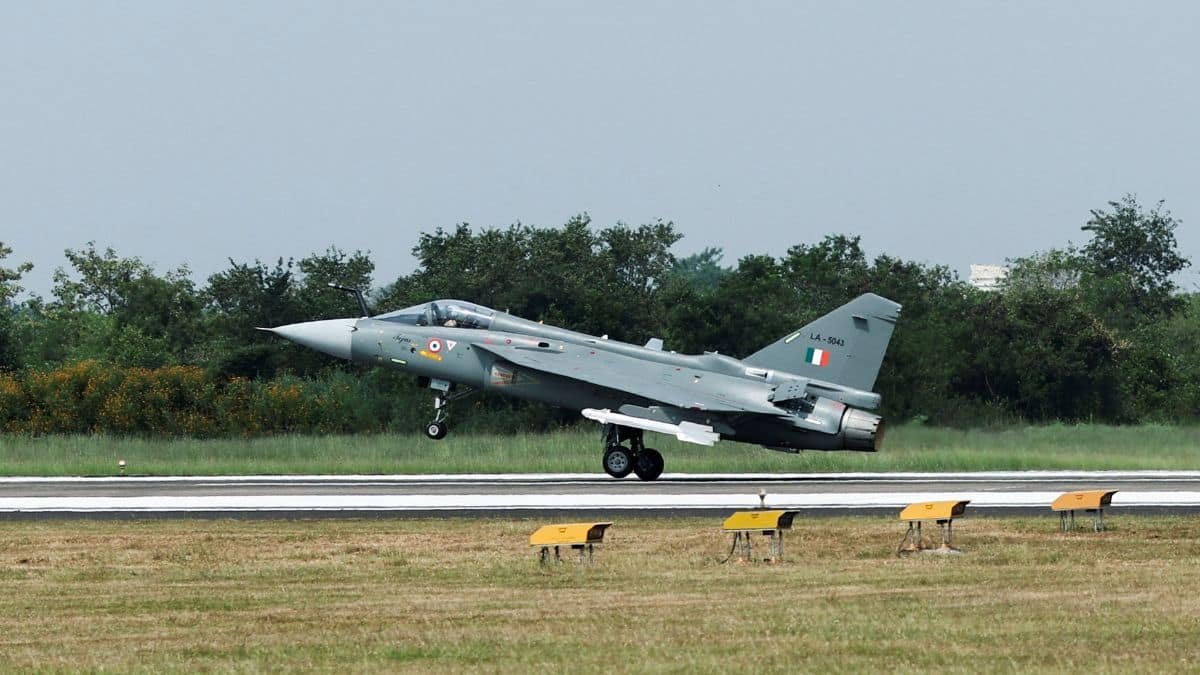
The GE Aerospace has announced it will set up a plant in India for the repair of Tejas fighter plane’s engines. The Tejas Mark 1A is powered by GE’s F404-IN20 engines.
GE Aerospace on Monday announced that it would set up a plant in India to repair the F404-IN20 engines powering the Tejas fighter planes.
The company said it has signed a contract with the Indian Air Force (IAF) to establish the facility. It said the facility will eliminate the need to depend on overseas repair centres and significantly improve turnaround times.
The facility will be owned, operated, and maintained by the IAF, while GE Aerospace will provide technical inputs, training, support staff, and the supply of necessary spares and specialised equipment, the statement said.
The Mark 1A variant of the Tejas is
powered by GE’s F404-IN20 engines but deliveries of the engines have been running years behind schedule.
GE Aerospace today announced a contract with the Indian Air Force (IAF) to establish an in-country depot facility for the F404 -IN20 engines that power IAF’s Light Combat Aircraft Tejas fleet. The facility will be set up by the IAF with technical inputs from GE Aerospace and is… pic.twitter.com/XdcvTI92Bl
— ANI (@ANI) April 13, 2026
In 2021, Tejas-manufacturer Hindustan Aeronautical Limited (HAL) signed a contract with GE to procure 99 F404-IN20 engines. By this month, however, GE has supplied only six engines — the first of which was delivered last year after a delay of two years.
The delayed delivery of engines has, in turn, led to
delays in the delivery of the Tejas Mk1A to the IAF.
Under the original timeline envisioned at the time the contracts were signed, HAL was supposed to deliver the first batch of Tejas Mk1A aircraft in 2024, but deliveries are now expected only by June or July after a delay of two years, according to The Print.
Originally, the IAF was expecting to receive up to 16 Tejas fighter planes a year.
India has doubled down on the indigenous Tejas programme over the years as ageing MiG-21 and Jaguar fighter aircraft have been phased out and the IAF’s fleet strength has continued to decline.
Currently,
the IAF’s numbers are at an all-time low. The situation is alarming as Pakistan and China continue to add fighters to their fleets, while India’s foreign procurement has moved at a snail’s pace and indigenous manufacturing has remained largely stalled.
First Published:
April 13, 2026, 12:17 IST
End of Article