

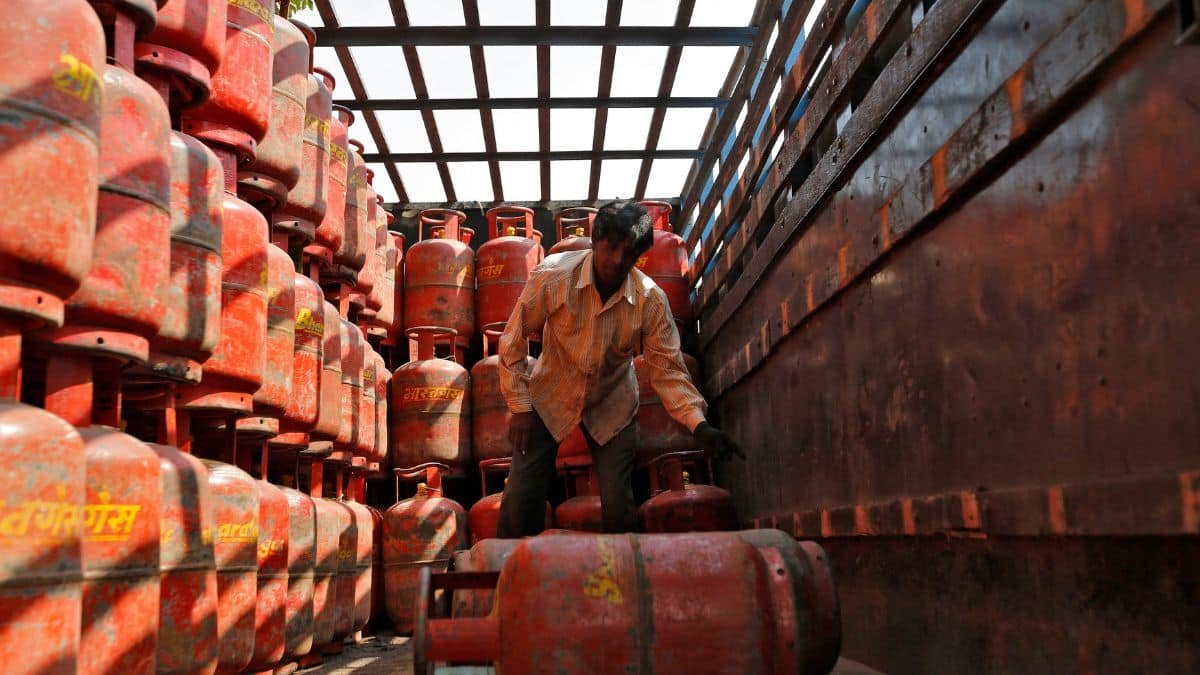
India’s LPG supply disruption could take up to four years to normalise amid Hormuz blockade, with damaged Gulf infrastructure, limited storage, and heavy import reliance worsening shortages and price pressures
The restoration of India’s disrupted Liquefied Petroleum Gas (LPG) supply chains may take between three to four years, as uncertainty persists over whether production facilities in West Asia have suffered permanent damage or temporary halts.
Speaking to Moneycontrol, a senior government official said that the timeline for a return to normalcy is increasingly bleak. The crisis stems from the ongoing blockade of the Strait of Hormuz and Iranian strikes on regional energy infrastructure, which have severely choked the flow of cooking gas to South Asia.
The ‘shut’ uncertainty
The official noted that inputs from global suppliers suggest a prolonged recovery period. The primary concern is the ambiguity surrounding the status of key production wells and processing units in the Gulf.
“Your LPG supply might take that long because some very critical supplies are shut down,” the official was quoted as saying. “What ‘shut’ exactly means is not fully clear—whether entire wells have been exhausted or production has stopped—but suppliers themselves are saying it will take at least three years.”
India’s strategic vulnerability
India’s strategic vulnerability has come sharply into focus amid the ongoing disruption, largely due to its heavy dependence on energy imports.
Nearly 60% of the country’s LPG consumption is sourced from overseas, and until recently, about 90% of these supplies passed through the Strait of Hormuz, making it a critical chokepoint.
Compounding the risk is India’s limited storage capacity, which covers barely 15 days of consumption against an annual demand of 33 million tonnes.
The impact is already being felt on the ground, with prices of a 14.2 kg domestic cylinder rising by Rs 60 since mid-March, while commercial cylinders have become costlier by Rs 115.
To manage the strain, the government has prioritised household consumption over industrial use and increased the gap between cylinder bookings. Although efforts to diversify sourcing have reduced dependence on the Gulf from 90 per cent to 55 per cent by late March, effective supply disruption is still estimated at 40 per cent to 50 per cent.
First Published:
April 16, 2026, 09:24 IST
End of Article