

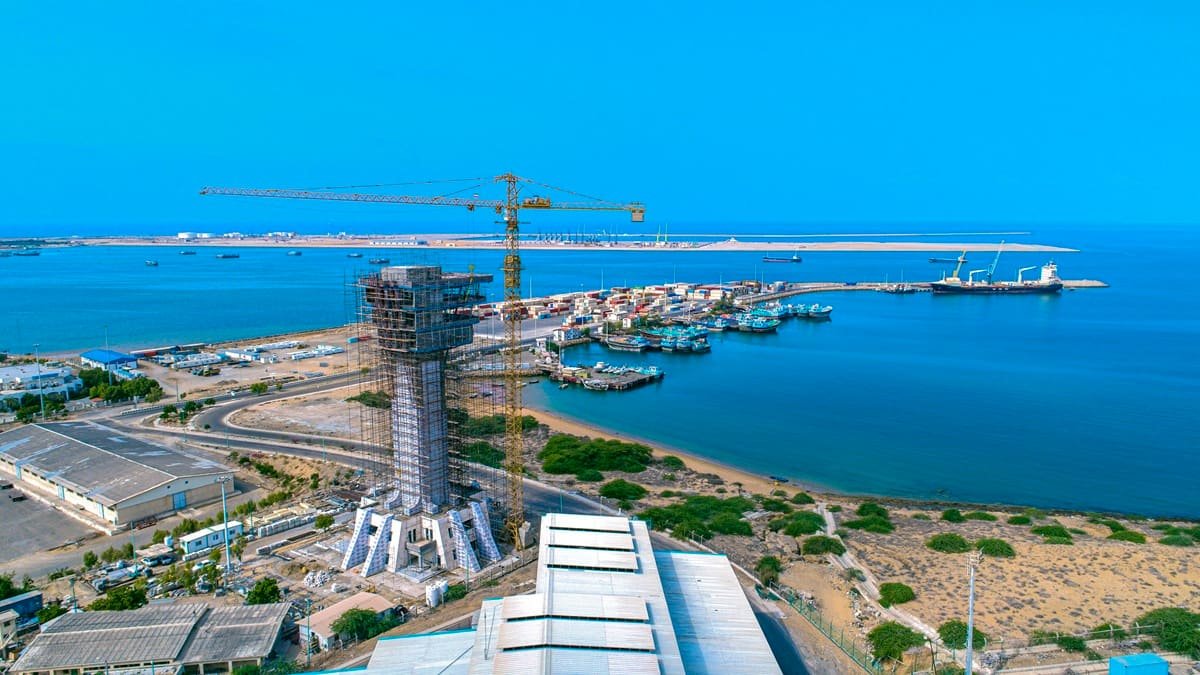
As uncertainty grows over India’s future role in Iran’s Chabahar port, experts say that any move to dilute or exit the project should not be seen as a strategic shift, but as a practical response to mounting external pressures.
As uncertainty grows over India’s future role in Iran’s Chabahar port, experts say that any move to dilute or exit the project should not be seen as a strategic shift, but as a practical response to mounting external pressures.
Prof. Swaran Singh of Jawaharlal Nehru University’s School of International Studies described
India’s possible stake sale as “tactical pragmatism” rather than a long-term policy change.
Speaking to Firstpost, Singh said that India’s engagement with Chabahar has always depended on temporary exemptions from US sanctions on Iran. With the waiver window now closed and chances of renewal appearing slim, India is left with limited choices.
In such a situation, he argues, a stake sale is a calculated step to reduce risks rather than a signal of shifting strategic priorities.
“Given the structural constraints and repeated exposure to US sanctions, including secondary sanctions, the move reflects risk minimisation, not a policy preference,” Singh said.
He pointed out that continued involvement in the project could expose Indian companies to legal, financial and reputational risks, especially in the absence of clear protection from sanctions.
The Chabahar port has long been seen as a key strategic asset for India, offering direct access to Afghanistan and Central Asia while bypassing Pakistan. India has invested around $620 million in the project as of now.
It is also linked to the International North-South Transport Corridor, which aims to connect India with Europe and Russia.
However, experts note that geopolitical realities often force governments to balance long-term goals with immediate constraints.
Singh’s assessment suggests that India’s current approach is shaped more by necessity than choice. As tensions in US-Iran relations persist, and with Washington maintaining strict sanctions on Tehran, New Delhi must carefully navigate its economic and diplomatic interests.
The possibility of transferring India’s stake to a local Iranian entity, with a clause to reclaim it later, reflects this cautious strategy. It allows India to step back temporarily without completely abandoning the project, keeping the door open for future re-engagement if conditions improve.
While such a move may help India avoid immediate risks, it also raises concerns about long-term implications. A reduced presence at Chabahar could impact India’s regional connectivity plans and create opportunities for other powers to expand their influence.
Chabahar is India’s strategic investment to maintain a balance of power in the region. Given its geographical proximity to Pakistan, and the China-operated Gwadar port, Chabahar provides India with a strategic edge.
Now, as the chances of a waiver extension remains minimal, a stake transfer appears to be the most viable and pragmatic option before New Delhi.
First Published:
April 27, 2026, 17:42 IST
End of Article