

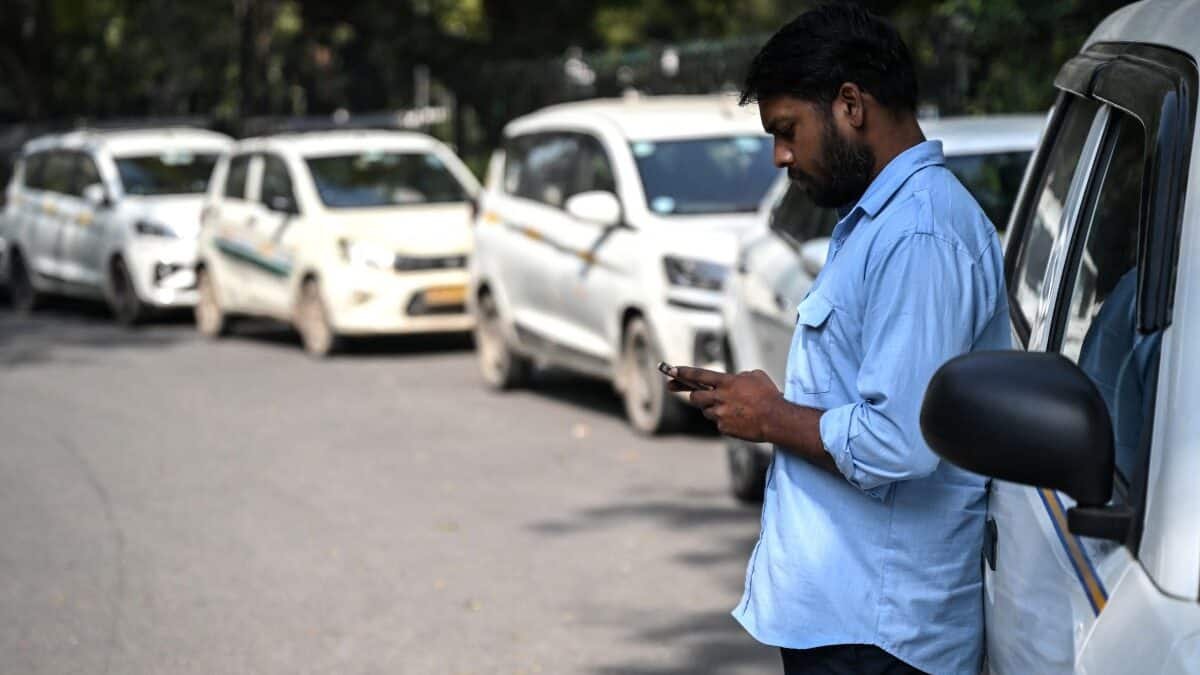
Nearly 70 transport unions launched a three-day strike across Delhi-NCR, disrupting travel as drivers protest rising fuel costs, stagnant fares and app-based aggregator payouts
Daily commuters across Delhi and the National Capital Region faced a chaotic Thursday morning as nearly 70 transport associations and commercial vehicle unions launched a coordinated three-day chakka jam (road blockade) strike.
The protest, which began on Thursday and will continue until Saturday, triggered disruption across parts of the capital, forcing thousands of commuters to scramble for alternate travel options during peak office hours.
However, the impact has remained uneven, with some areas witnessing a complete shutdown while others continued to operate with limited services.
Why drivers have gone on strike
The agitation has been called by the All India Motor Transport Congress (AIMTC), the apex body representing truckers, private bus operators and taxi associations, with strong backing from local groups such as the Chaalak Shakti Union.
Union leaders say commercial drivers are facing severe financial strain due to rising operating costs and shrinking earnings.
A key concern is the steady increase in CNG, petrol and diesel prices, along with the Delhi government’s recent decision to increase the Environment Compensation Cess (ECC) on commercial vehicles.
Drivers have also flagged stagnant fare structures, arguing that official taxi fares in Delhi have not seen any major revision in nearly 15 years and no longer reflect inflation or current running costs.
App-based cab drivers have also accused aggregators of exploitation, claiming payouts and incentives have been sharply reduced in recent weeks.
He warned that if the government does not issue a fare revision notification within two weeks, the protest could escalate into a much larger agitation.
Patchy disruption across Delhi
The strike’s impact has varied sharply across transit hubs.
At Sanjay Gandhi Transport Nagar, one of Delhi’s busiest commercial transport centres, operations came to a near standstill as heavy trucks stayed off the roads.
At IGI Airport’s Terminals 1 and 3, only limited app-based cab services were available, leading to long queues at prepaid taxi counters.
Delhi: The three-day taxi and auto strike in Delhi has reduced taxi availability at Indira Gandhi International Airport. Passengers are not facing major issues yet, but drivers protesting rising fuel prices say the strike’s impact could increase after 10 AM pic.twitter.com/escH63yBZB
— IANS (@ians_india) May 21, 2026
New Delhi Railway Station saw a mixed response, with some private cab operators joining the strike while autos remained available in parts of the station complex.
The biggest indirect impact was seen on the Delhi Metro network, where stations reported unusually heavy footfall as commuters switched to rail transport to avoid uncertainty on the roads.
Despite the scale of participation, the strike has exposed divisions within Delhi’s transport ecosystem.
While more than 68 transport associations joined the protest, several prominent auto-rickshaw unions chose to stay away.
Demands sent to Delhi government
The AIMTC has submitted formal representations to Delhi Lieutenant Governor Vinai Kumar Saxena and Chief Minister Atishi, demanding immediate intervention.
Their key demands include fair floor pricing regulations for app-based cab aggregators and an urgent review of fuel tax rates and commercial vehicle cess structures.
With two days still left in the strike window, transport authorities have advised commuters to rely heavily on the Delhi Metro and state-run DTC buses while monitoring local traffic advisories through Saturday.
First Published:
May 21, 2026, 11:40 IST
End of Article