

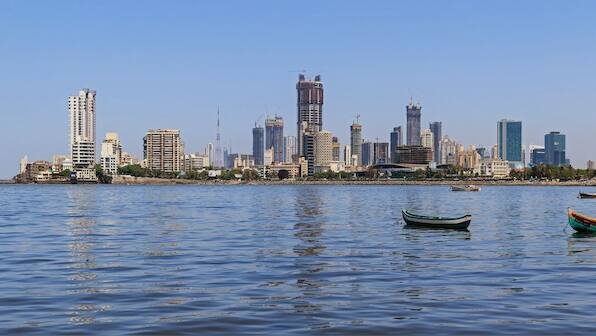
When Banda in Uttar Pradesh crossed 47°C multiple times this summer, local authorities regularly advised residents to avoid afternoon exposure, stay hydrated and remain indoors in well-ventilated spaces. Around the same time, parts of the Mumbai Metropolitan Region were recording “feels-like” temperatures between 45°C and 50°C because of extreme humidity. Yet in Mumbai, life largely went on as usual.
The contrast points to a growing blind spot in how India understands heat. Public attention and local authority warnings still rely largely on dry-bulb air temperature, the standard temperature recorded by weather stations. But some of the most dangerous heat doesn’t look extreme.
At times, it is the kind where moisture in the air prevents sweat from evaporating, making it harder for the body to cool itself and increasing the risk of heat exhaustion and
heatstroke. Such humid heat events are becoming more frequent across parts of India.
The rise of humid heat
A 2025 analysis by the Council on Energy, Environment and Water (CEEW) found that average
relative humidity during the summer months increased by more than four per cent in nearly half of India’s districts between 2012 and 2022, compared to the long-term average between 1982 and 2011.
“This is down to two main reasons: a generally warming world with increased moisture evaporation from soil, oceans and water bodies, and weakening cooling wind regimes like sea breezes. With every 1°C rise in temperature, air can hold about seven per cent more moisture,” says Athreya Shetty, independent weather forecaster. “Summer remains the main season, but even autumn and late spring are showing increasing instances of humid heat events.”
India’s eastern and western coastlines are especially vulnerable because sea breezes add moisture to already hot conditions. “When temperatures are between 30°C and 35°C and humidity rises to 60 or 70 per cent, especially in late summer, the risk increases sharply,” says Shetty.
Recent studies also suggest that shrinking temperature differences between land and sea are weakening the cooling effect of sea breezes in some regions. “This reduces the drop in temperatures when the sea breeze sets in, keeping conditions hotter for longer while raising humidity,” the forecaster explains.
Cities are amplifying the problem further. Concrete-heavy infrastructure traps heat long after sunset, while waste heat from vehicles, industries and air conditioners pushes temperatures higher. In dense urban areas, humidity can
sharply reduce night-time cooling, leaving people exposed to prolonged heat stress even after dark.
And this shift is no longer limited to coastal India. The same CEEW analysis found parts of north India becoming significantly more humid during summer, with cities such as Delhi, Jaipur, Chandigarh and Lucknow recording relative humidity increases of six to nine per cent over the last decade.
That’s not all. Scientists are also beginning to observe dangerous humid heat during the monsoon. A recent study published in Climate Dynamics, based on more than 80 years of weather data, found that the southwest monsoon now plays a major role in shaping the timing and geography of moist heatwaves across India. The study identified sharply rising risk along India’s coasts, with Kerala emerging as one of the country’s most vulnerable regions.
“Shorter bursts of humid heat are also increasingly being observed in inland cities, particularly during the monsoon,” says Dr Kashif Imdad, advisor to the Uttar Pradesh State Disaster Management Authority and associate professor at the Department of Geography, PPN (PG) College, CSJM University, Kanpur.
The lagging warning systems
Scientists increasingly rely on indicators such as
heat index and wet-bulb temperature to better understand actual heat stress. Heat index, often described as the “feels-like” temperature, combines air temperature and humidity to estimate how hot conditions feel to the human body. Wet-bulb temperature measures how effectively the body can cool itself through the evaporation of sweat. “Theoretically, wet-bulb temperatures beyond 30°C are considered extremely dangerous and a risk to life in prolonged exposures,” says Shetty.
The India Meteorological Department (IMD) also introduced a separate “Hot and Humid” warning category for coastal regions in 2023. But humidity is still only partially integrated into most Heat Action Plans and public heat advisories. “The IMD Heat Index framework is currently experimental and therefore cannot yet be fully integrated into formal policy and Heat Action Plan decision-making frameworks until standardised operational Heat Index values are officially finalised,” says Dr Imdad.
He adds that globally used heat metrics also need regional calibration before they can be fully applied in India, where outdoor exposure, housing conditions and access to cooling vary sharply across regions and income groups. Public awareness remains limited, too, with heat risk still largely associated with extreme temperatures alone.
At the same time, experts caution against treating humid heat and dry heat as interchangeable. “Findings from cities such as Lucknow suggest that during the peak summer months of April, May and June, when temperatures are extremely high, but humidity remains relatively lower, heat index values may not differ significantly from conventional temperature thresholds,” says Dr Imdad.
Still, as humid heat becomes more frequent, scientists and public health experts are calling for heat index and wet-bulb temperature to play a larger role in early warning systems, particularly in humid regions. The concern is no longer just how high temperatures rise, but how difficult it becomes for the body to cool itself.
First Published:
May 22, 2026, 11:46 IST
End of Article