

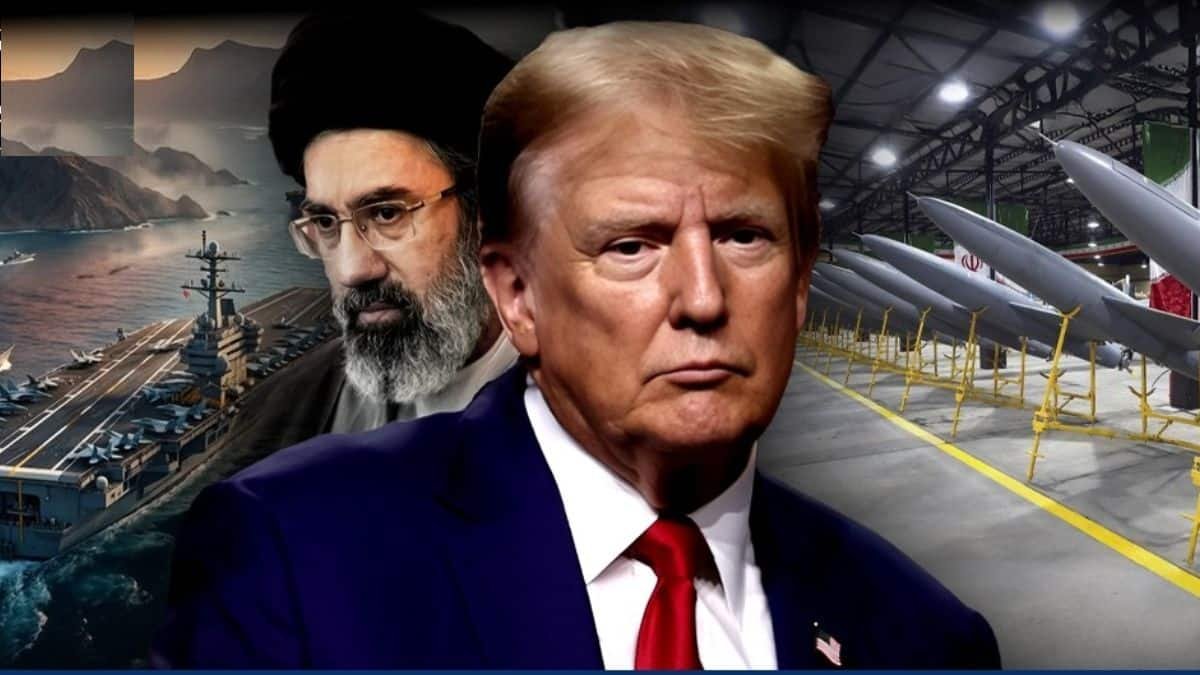
Iranian Parliament Speaker Mohammad Baqer Qalibaf told Pakistan army chief Asim Munir that Tehran would not compromise on its national rights despite ongoing negotiations with the United States.
Iran’s top negotiator and Parliament Speaker Mohammad Baqer Qalibaf told Pakistan army chief General Asim Munir during talks in Tehran on Saturday that the United States was not an honest party in negotiations to end their
warand Iran would not compromise on its national rights, state television reported.
The high-level discussions took place as Pakistan stepped up regional mediation efforts to reduce tensions between Tehran and Washington following weeks of war that disrupted global energy markets and severely affected shipping through the Strait of Hormuz.
Iranian state media reported that Munir also met President Masoud Pezeshkian in the presence of Foreign Minister Abbas Araqchi, with whom he reportedly held two separate meetings before departing Tehran.
The discussions focused on a 14-point proposal prepared by Iran, which Tehran considers the central framework for future negotiations, along with messages exchanged between both sides during recent diplomatic contacts.
Qalibaf said Iran would continue defending its “legitimate rights” both diplomatically and militarily, while accusing Washington of lacking sincerity in the negotiation process.
“We cannot trust a party that has no honesty at all,” he said, reiterating a long-standing Iranian position regarding US diplomacy.
The Iranian leader also warned that Tehran’s military capabilities had been rebuilt during the ceasefire period and cautioned against any renewed military action by Washington.
“If the United States foolishly restarts the war, the consequences will be more forceful and bitter,” Qalibaf was quoted as saying.
The meetings come amid fragile ceasefire efforts and ongoing diplomatic engagement involving regional actors, including Pakistan and Qatar, as concerns grow over the prolonged closure of the Strait of Hormuz — one of the world’s most critical oil shipping routes.
US Secretary of State Marco Rubio said on Friday that some progress had been made in negotiations but acknowledged that substantial differences remained unresolved. Iran’s foreign ministry also described the gaps between the two sides as “deep and significant”.
Despite weeks of conflict and military strikes, Iran is believed to have retained its stockpile of highly enriched uranium as well as key missile, drone and proxy capabilities, issues that remain central to US and Israeli security concerns.
With inputs from agencies
First Published:
May 23, 2026, 21:24 IST
End of Article