

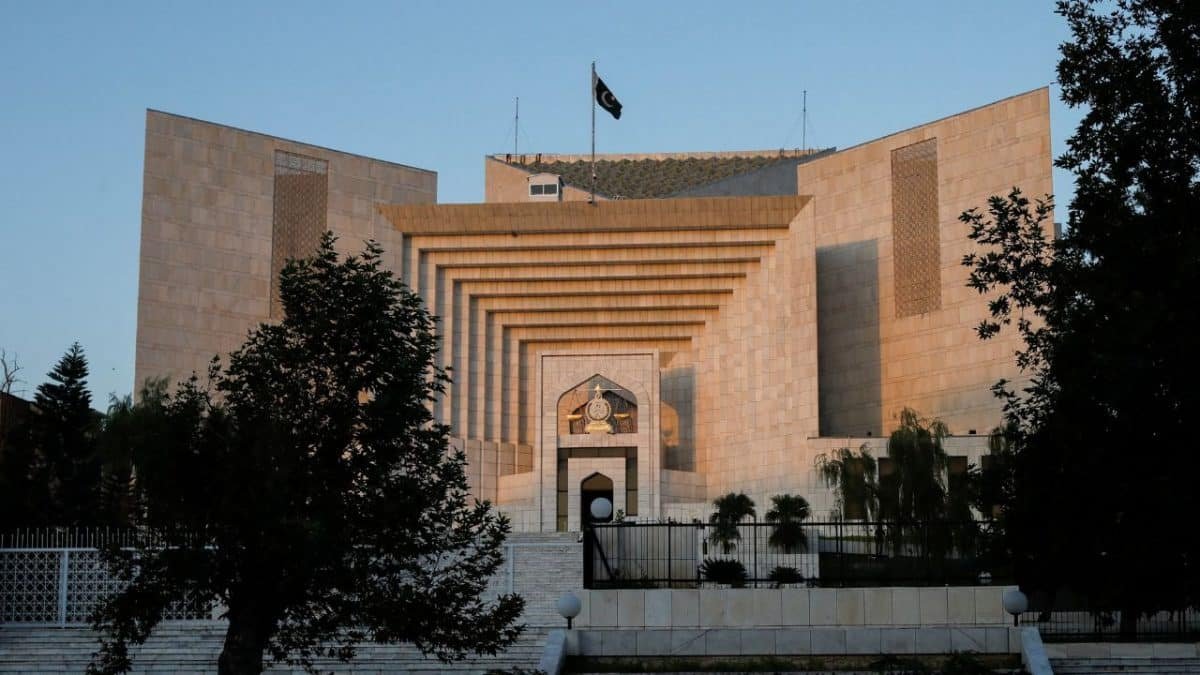
Two justices of Pakistan’s Supreme Court resigned after they expressed opposition to the newly imposed 27th Constitutional Amendment. They called the law a ‘grave assault’ on the country’s constitution
Two justices of
Pakistan’s Supreme Court resigned after they expressed opposition to the newly imposed 27th Constitutional Amendment. On Friday, Pakistan’s President Asif Ali Zardari approved the resignation of Supreme Court justices Mansoor Ali Shah and Athar Minallah, who wrote letters emphasising how problematic ‘undemocratic’ the amendment is.
Both judges forwarded their resignations to the Pakistani president shortly after the amendment was enacted into law. Both jurists argued that the
27th Amendment was a “grave assault on the Constitution of Pakistan”. However, the federal government called the judges’ resignations “political speeches” and the latter’s allegations “unconstitutional”.
In his 13-page resignation letter, Justice Shah called the controversial law an “assault on the Constitution that dismantles the Supreme Court, compromises judicial independence and weakens the country’s constitutional democracy.” The letter came a day after Pakistan’s National Assembly passed the amendment bill, changing the judicial structure and military command despite considerable opposition.
President Asif Ali Zardari has accepted the resignations of Supreme Court judges Justice Mansoor Ali Shah and Justice Athar Minallah.
— The President of Pakistan (@PresOfPakistan) November 14, 2025
What are the changes?
It is pertient to note that the 27th Constitutional Amendment fine-tunes the structure of the newly established
Federal Constitutional Court (FCC), clarifying the titles and ranking of the country’s top judges. The changes that were enacted dropped several clauses from the Senate-approved draft that had sought to alter oath-related provisions for various constitutional offices.
Another
key modification came in Clause 23, which amends Article 176 to include a proviso specifying that, “notwithstanding anything contained in the Constitution, the incumbent Chief Justice shall continue to be known as the Chief Justice of Pakistan during his term in office”.
A further addition was also made under Clause 56, which now defines the “Chief Justice of Pakistan” as “the senior among the Chief Justice of the Federal Constitutional Court and the Chief Justice of the Supreme Court”, hence, establishing a formal hierarchy between the two institutions.
What the judges argue
In his resignation letter, Justice Shah wrote that the amendment, passed “without debate or consultation”, creates an FCC above the Supreme Court and places the judiciary under executive influence, leaving the apex court “truncated and diminished”.
He maintained that he could not serve in a court “stripped of its
constitutional authority”, adding that continuing would amount to silently accepting a constitutional wrong. He lamented that his hope after the 26th Amendment had now “been extinguished”.
The justices went on to warn that judicial independence faces “the beginning of the end”, arguing that the nation loses its moral compass when the judicial system is constrained.
In his resignation letter, Justice Minallah rejected the 27th Amendment, saying the
Constitution he pledged to defend “no longer exists” and now survives only as a shadow without its spirit. He noted that he had warned the chief justice before the amendment’s passage, but his concerns were realised amid “silence and inaction”. Justice Minallah maintained that continuing in his office would betray his oath and dishonour the memory of the Pakistani Constitution.
End of Article