

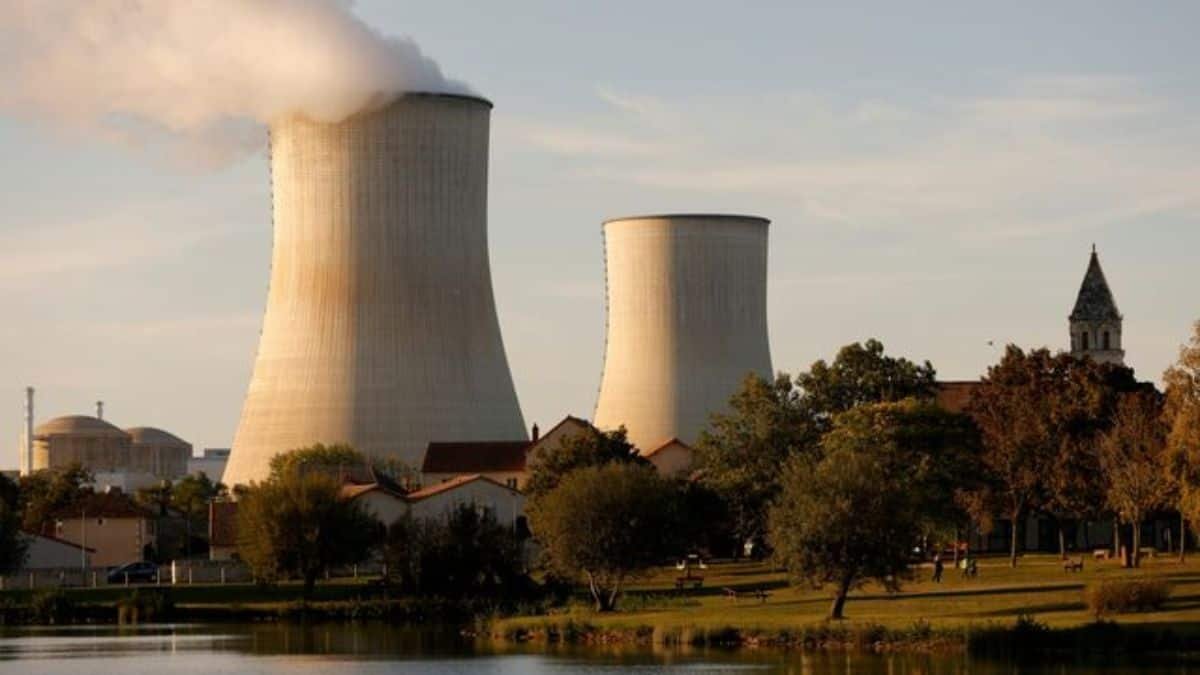
India is preparing to place fresh orders for a new fleet of domestically designed nuclear reactors as it opens the sector to private players and targets an eleven-fold jump in atomic power capacity to 100 GW by 2047, signalling a renewed push for energy security and decarbonisation
India is preparing to place fresh orders for a new fleet of locally designed nuclear reactors, as the government accelerates its push to sharply expand atomic power capacity while keeping costs under control, Bloomberg News reported on Wednesday, citing people familiar with the matter.
New Delhi is considering inviting bids to build up to 10 pressurised heavy water reactors (PHWRs) with a capacity of 700 megawatts each, marking the third bulk order of domestically developed reactors, the report said, adding that the discussions are still at a preliminary stage.
The bulk-order approach is aimed at strengthening the government’s negotiating power, standardising construction, and lowering per-unit costs, lessons drawn from earlier reactor programmes.
The planned expansion comes as India pursues an ambitious target of 100 gigawatts (GW) of nuclear power capacity by 2047, when it aims to become a developed nation. That would represent an eleven-fold increase from current levels and could require investments of nearly ₹19.3 trillion ($211 billion), according to government estimates.
India has already taken a major step towards that goal by opening its nuclear power sector to private companies following legislative changes, Shanti bill, passed in December. Until now, nuclear power generation was largely the exclusive domain of state-run entities.
The policy shift is expected to unlock private capital, improve execution efficiency and accelerate project timelines in a sector traditionally plagued by delays and cost overruns.
200&&loadTaboolaIframe()})]]>
Global nuclear revival adds momentum
India’s renewed focus on nuclear energy mirrors a global revival of atomic power, as countries seek stable, low-carbon electricity sources to complement renewables while meeting rising demand from electrification, artificial intelligence and data centres.
Nations such as China, South Korea, France and Bangladesh are expanding nuclear installations, while Japan has begun restarting reactors shut down after the Fukushima disaster in 2011.
According to Morgan Stanley Research, global nuclear power capacity could more than double to 860 GW by 2050, attracting investments of nearly $2.2 trillion across the value chain, with India expected to account for a significant share of that growth.
Domestic manufacturing boost
So far, the only foreign-built reactors operating in India are at Kudankulam in Tamil Nadu, where Russian firm Rosatom constructed two 1,000 MW units under agreements signed before India’s 2010 nuclear liability law. Four more units are under development at the site.
The renewed focus on indigenous reactors is expected to provide a major boost to India’s heavy engineering sector. Companies such as Larsen & Toubro, a key supplier of nuclear equipment, say discussions between suppliers and project developers have picked up pace.
What the Shanti bill changes
India’s renewed push into nuclear energy has been enabled by the Sustainable Harnessing and Advancement of Nuclear Energy for Transforming India bill, passed by Parliament in December, which significantly reshaped the country’s nuclear power framework.
The law allows private companies to build and operate nuclear power plants for the first time, ending the long-standing monopoly of state-run entities in atomic power generation.
It also eased stringent liability rules that had earlier deterred equipment suppliers and investors by exposing them to unlimited damage claims, replacing them with a capped and clearer liability structure.
The government said that these changes are crucial to attract long-term capital, speed up project execution and meet India’s ambitious target of 100 gigawatts of nuclear capacity by 2047.
End of Article