

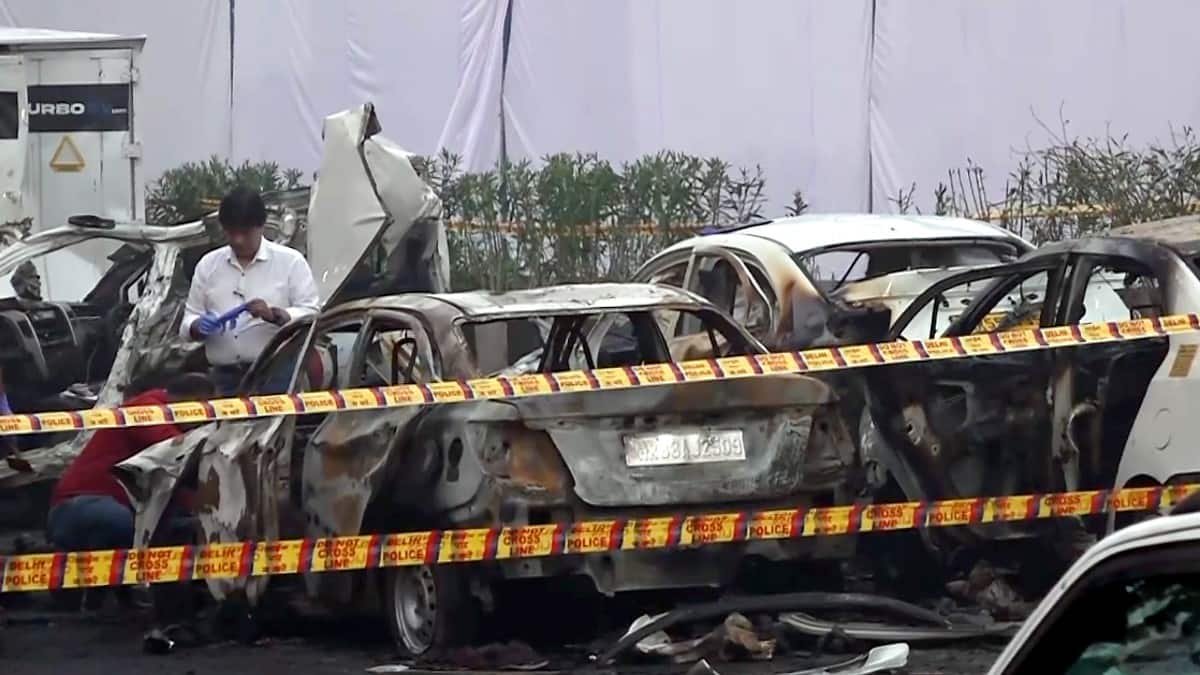
Initial assessments suggest TATP may have acted as the primary initiating charge in the improvised explosive device (IED) that tore through the vehicle, resulting in immense destructive force
Investigators probing the deadly car blast that killed 13 in the vicinity of the Red Fort in Delhi on Monday evening are now heavily focused on the presence of Triacetone Triperoxide (TATP), a highly volatile explosive infamously called the ‘Mother of Satan.’
Initial assessments suggest TATP may have acted as the primary initiating charge in the improvised explosive device (IED) that tore through the vehicle, resulting in immense destructive force.
Reports indicate the blast was felt up to 50 metres underground, and human remains were scattered over a similar radius on the surface. Police sources suggest the IED, which was observed as a large bag on the rear seat of the i20 car, contained an estimated 2-3 kg of TATP and was bulked up with ammonium nitrate and fuel oil, potentially increasing the total explosive weight to between 40 and 50 kilogrammes.
‘Mother of Satan’ aka Triacetone Triperoxide (TATP)
TATP is an unstable explosive known for its extreme sensitivity to heat, friction, shock, or even static electricity, making it exceedingly dangerous to handle, transport, or assemble.
It has become the explosive of choice for terror groups globally due to two key factors: its ease of manufacture from commonly available household precursor chemicals like acetone and hydrogen peroxide, and its immense power.
Security officials note that TATP-based charges can generate up to 80% of the explosive power of TNT, giving the IED a “military-grade” equivalent impact. Its use in the Delhi blast, if confirmed by the final report from the National Security Guard (NSG) and forensic teams, would significantly sharpen the direction of the ongoing probe.
#WATCH | Delhi | CCTV footage of the car blast near the Red Fort that claimed the lives of 8 people and injured many others.
Source: Delhi Police Sources pic.twitter.com/QeX0XK411G
— ANI (@ANI) November 12, 2025
Accidental detonation theory gains ground
The inherent volatility of TATP lends considerable weight to the theory that the explosion may have been accidental.
Given its sensitivity, investigators believe the device may not have required a traditional detonator; simple heat buildup within the vehicle or friction could have been enough to set it off.
This hypothesis is further supported by the minimal recovery of shrapnel at the scene. While car bombs often use the vehicle’s own metal components as fragmentation, the evidence suggests a high-energy, non-shrapnel-based explosive compound was the primary cause.
This accidental blast theory is being seriously considered alongside other possibilities, especially in light of the alleged bomber’s known awareness of the material’s instability.
Investigation widens to terror links
The individual driving the car, identified as
Dr Umar Nabi, died in the blast, and investigators are now deeply focused on his links and the possible network behind him.
The discovery of TATP, which has been linked to major global terror attacks—including the London, Paris, and Manchester bombings—highlights the potential for a sophisticated terror module operating within the capital.
Furthermore, the wider investigation has reportedly uncovered traces of RDX and over 350 kg of ammonium nitrate elsewhere, along with a blueprint detailing a plan to load 32 vehicles with explosives for synchronised attacks.
These developments suggest the Red Fort explosion may be one element of a much larger, active threat being aggressively pursued by multiple security agencies.
End of Article