

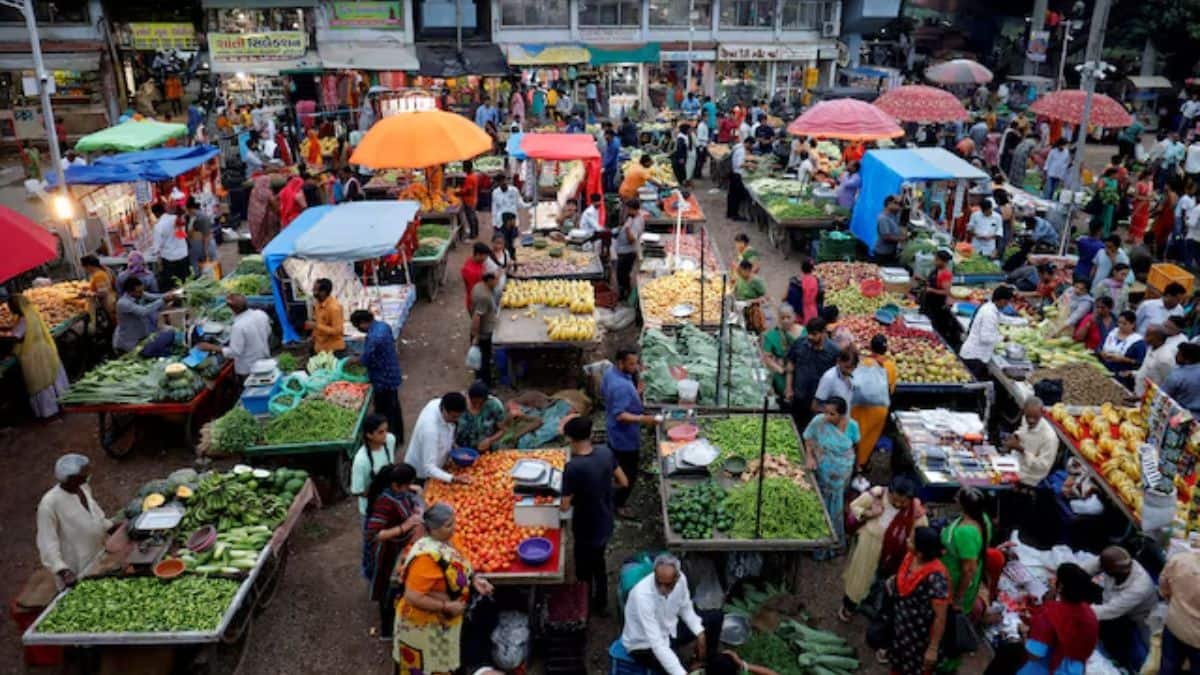
India’s inflation is expected to rise modestly in the coming financial year, but remain well within the Reserve Bank of India’s (RBI) tolerance band, the Economic Survey 2025–26 said on Thursday, flagging a weaker rupee as a potential source of imported price pressures even as soft global commodity prices and easing food inflation provide relief.
Tabled in Parliament during the Budget Session, the Survey said headline inflation is projected to gradually move closer to the RBI’s 4 per cent target over the next two years. Projections by the RBI and the International Monetary Fund (IMF) point to a progressive normalisation of prices after a sharp disinflation phase seen in FY26.
“The depreciation of the currency could pave the way for imported inflation. However, global commodity prices are expected to remain soft, thereby limiting the impact,” the Survey noted, adding that subdued crude oil prices and ample global supply are likely to cap external cost pressures.
According to RBI estimates, headline inflation is forecast at 3.9 per cent in the first quarter of FY27 and 4 per cent in the second quarter. The IMF expects inflation to average 2.8 per cent in FY26 before rising to around 4 per cent in FY27.
In December 2025, the central bank had revised its FY26 inflation projection sharply downward to 2 per cent from 2.6 per cent, citing a strong kharif harvest, healthy rabi sowing and favourable weather conditions. Below-normal temperatures for much of 2025 and above-normal monsoon rainfall boosted reservoir levels and foodgrain stocks, helping keep food inflation in check.
200&&loadTaboolaIframe()})]]>
Inflation to be higher in FY27
The Survey said both headline inflation and core inflation, excluding volatile food and fuel components, are likely to be higher in FY27 compared with FY26, reflecting a normalisation from unusually low levels rather than a resurgence of price pressures. Core inflation excluding precious metals is also expected to edge up, though underlying demand-side pressures remain contained.
Globally, inflation has moderated sharply from post-pandemic highs. Advanced economies have largely stabilised inflation in the 2–3 per cent range, while emerging markets, including India, have seen a notable deceleration driven by easing food and energy prices and timely monetary tightening by central banks.
India has stood out among major emerging market and developing economies (EMDEs), recording one of the steepest declines in headline inflation, around 1.8 percentage points, while maintaining strong growth. GDP growth averaged 8 per cent in the first half of FY26, underlining the economy’s ability to cool prices without sacrificing momentum. Global rating agencies have also cited India’s credible inflation-targeting framework while upgrading the country’s outlook.
Lowest inflation rate since CPI series began
Domestically, retail inflation measured by the Consumer Price Index (CPI) fell to 1.7 per cent in FY26, its lowest level in years. The decline was led by a sharp correction in food prices, particularly vegetables, pulses and spices, aided by robust agricultural output and targeted policy measures. While core inflation appeared sticky, the Survey said much of the persistence was due to firm prices of precious metals such as gold and silver. Excluding these, underlying inflationary pressures were more subdued.
“India recorded the lowest inflation rate since the beginning of the CPI series,” the government said.
Looking ahead, food inflation is expected to remain moderate, supported by strong crop output, improved stock positions and government measures to ensure fertiliser availability and contain input costs. The continued pass-through of GST rate rationalisation is also expected to ease cost-side pressures.
Weaker rupee could add to imported inflation
Risks, however, persist. A weaker rupee could add to imported inflation, especially if global financial conditions tighten. That said, the World Bank’s October 2025 Commodity Prices Outlook projects global commodity prices to decline by about 7 per cent in FY27, largely due to subdued crude oil prices amid oversupply, although geopolitical tensions remain a key uncertainty.
At the same time, prices of select base metals such as copper, aluminium and iron are expected to rise moderately, driven by demand from green technologies, data centres and infrastructure, alongside supply constraints. Precious metals are likely to remain firm amid global uncertainty, though the Survey suggested that the sharp gains seen in 2025 may not be sustained.
Overall, the Economic Survey struck a reassuring note, saying inflation is unlikely to emerge as a macroeconomic concern despite a mild uptick in FY27. With strong growth momentum, anchored inflation expectations and effective monetary management, policymakers believe India is well placed to manage price pressures while sustaining economic expansion.
End of Article