

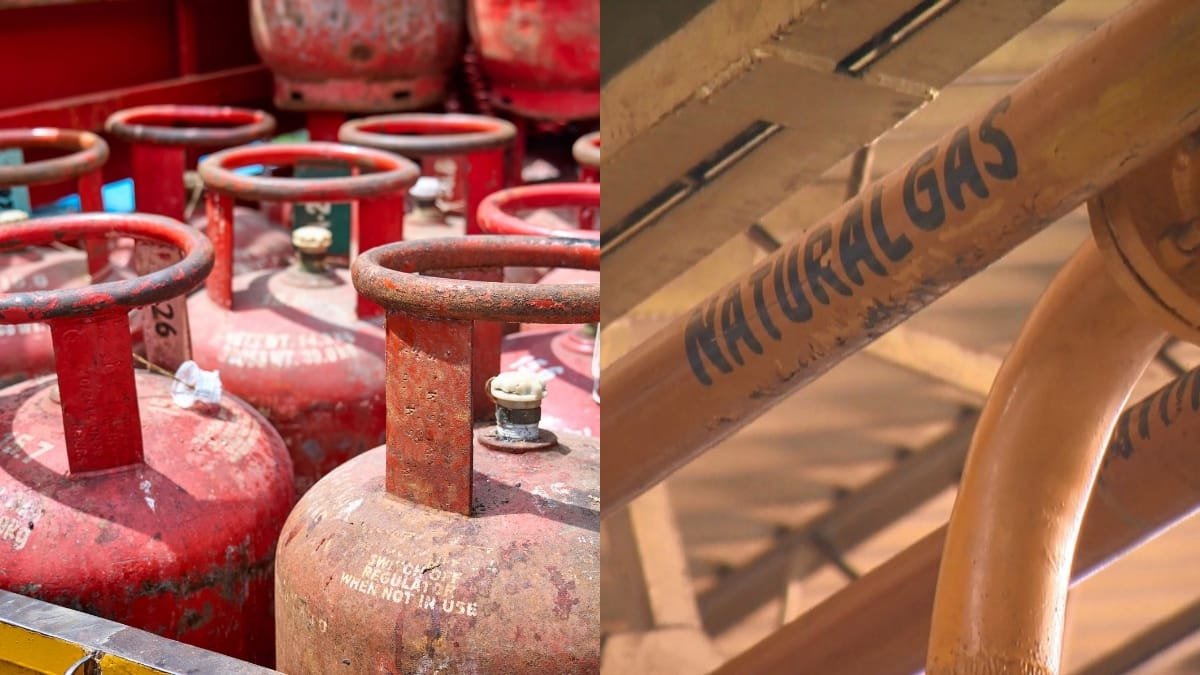
Switching from LPG cylinders to PNG at home in India is a simple process managed by your local city gas distributor. This guide explains how to apply, the documents needed, installation steps, estimated costs, and key points to know before shifting to piped natural gas.
The Centre is accelerating efforts to expand natural gas pipelines across the country and reduce reliance on a single fuel source.
This initiative comes amid global oil supply disruptions due to the ongoing crisis in West Asia, promoting
PNG as a more reliable, cost-effective, and eco-friendly alternative for both homes and businesses.
What is PNG and why switch?
Unlike
LPG cylinders, PNG is supplied directly to your home through underground pipelines. This removes the need for cylinder storage and frequent replacements.
Key benefits:
-
Environmentally friendly: Burns almost completely, reducing emissions.
-
Cost-effective: Households can save hundreds of rupees per month compared to LPG cylinders (₹912–₹913 for a 14.2 kg refill in cities like Mumbai and Delhi).
-
Convenience: Continuous supply without the hassle of ordering or replacing cylinders.
How to apply for a PNG connection?
Consumers can apply for a
PNG connection through various channels offered by City Gas Distribution (CGD) companies, including email, customer portals, letters, or call centres.
Major providers include Indraprastha Gas Limited, Mahanagar Gas Limited, GAIL (India) Limited, and Bharat Petroleum Corporation Limited.
Applying for PNG online is straightforward. Here’s how:
-
Visit your local gas provider’s website (e.g., Indraprastha Gas Limited, Mahanagar Gas Limited).
-
Go to the “New PNG Connection” section.
-
Fill in personal and address details and upload required documents (Aadhaar, address proof).
-
Pay the installation or registration fee.
-
Submit the application and note your reference number.
After approval, you’ll receive a Business Partner (BP) Number, a unique identifier for managing your account. The service provider will install a pipeline,
gas meter, valves, and regulator at your home. Once installed, you get uninterrupted natural gas supply for cooking and other domestic needs.
Documents required for PNG connection
To apply, you need:
Photo ID (any one): Aadhaar, PAN, voter ID,
passport, or driving licence
Address proof (any one): Electricity bill, BSNL bill, rent agreement, ration card, or property tax receipt
Ownership proof (any one): Registered property document, sale deed, society letter, or property tax receipt
Tenants: No Objection Certificate (NOC) from landlord + landlord’s ownership proof
Other: Passport-size photographs
Can you keep both LPG and PNG?
As per the latest directives, any person having a PNG connection will not be allowed to retain a domestic LPG connection or take refills of
LPG cylinders from government oil companies or their authorised distributors.
Cost:
-
Refundable, interest-free security deposit + installation charges
-
Standard connection: ≤ ₹6,000
-
Smart meter connection: up to ₹9,000
Applications can be submitted via email, customer portals, letters, or call centres of City Gas Distribution (CGD) companies like Indraprastha Gas Limited, Mahanagar Gas Limited, GAIL (India) Limited, and Bharat Petroleum Corporation Limited.
What to do If LPG isn’t delivered?
In the event of a delay in
LPG cylinder delivery, consumers should first allow for the standard delivery window of two to three days.
If the cylinder is not delivered within this period, they are advised to contact their distributor for an update.
Consumers may also reach out to the official LPG helpline for assistance or register a complaint through the provider’s website or mobile application.
If the issue remains unresolved, it can be escalated through the appropriate grievance redressal channels.
Switching to PNG offers convenience,
environmental benefits, and cost savings, and with the government encouraging households in pipeline-ready areas to make the move, the transition is gaining momentum.
End of Article