

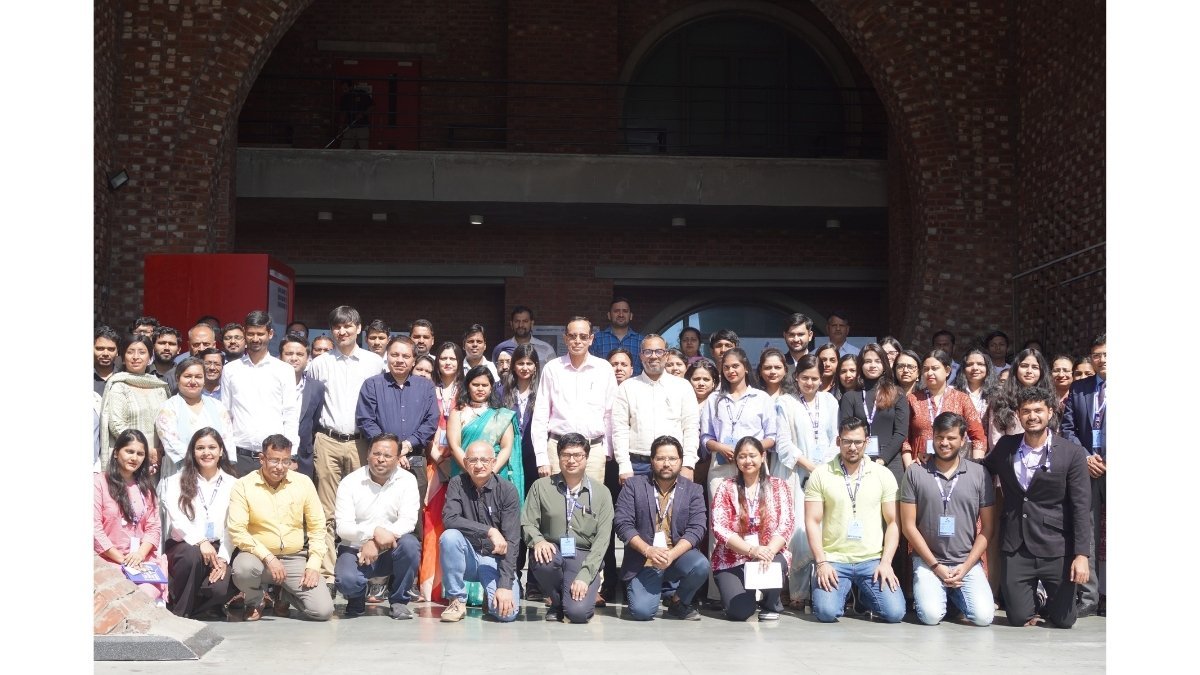
IIM Kashipur Concludes SMSIF 2026 Conference with a Strong Call for Sustainable and Inclusive Growth
New Delhi [India], April 13: The Indian Institute of Management Kashipur successfully concluded the Second International Conference on Sustainability Management Strategies for India’s Future (SMSIF 2026), held from April 9th to 11th, 2026. Over three intellectually enriching days, the institute emerged as a vibrant confluence of ideas, bringing together academia, industry, and policymakers to collectively reimagine India’s sustainable future.
The conference witnessed a dynamic blend of research paper presentations, thematic discussions, keynote sessions, and academic deliberations, fostering meaningful intellectual exchange and the dissemination of cutting-edge research. Participants engaged in rigorous discussions, gained fresh perspectives, and contributed to a growing body of knowledge addressing sustainability challenges across sectors. The conference featured keynote addresses from eminent speakers on the mentioned domains, enriching the overall experience of the delegates.
The conference commenced with a welcome address by Prof. Somnath Chakrabarti, who reflected on India’s remarkable economic trajectory while emphasizing the need for development that is inclusive, responsible, and environmentally conscious, in alignment with the vision of Viksit Bharat 2047. He highlighted the importance of collaborative platforms like SMSIF in fostering innovation and dialogue for a resilient future.
Delivering a address, Prof. Neeraj Dwivedi, Director of IIM Kashipur, articulated a comprehensive understanding of sustainability—one that integrates economic resilience, social equity, and ethical governance. He underscored that sustainability is no longer peripheral but central to leadership and institutional development.

The conference highlights were presented by Prof. Alka Arya, who explained the concept of sustainable development and traced its historical and global evolution. She connected these ideas to sustainable management practices and aligned them with the vision of Viksit Bharat 2047. She emphasized key thematic tracks and discussed the green initiatives implemented on campus. She encouraged continued collaboration and engagement among participants to translate ideas into impactful action.
The conference was graced on the first day by Prof. Rama Mohana R Turaga of the Indian Institute of Management Ahmedabad, who delivered an insightful keynote on governance for environmental sustainability. Reflecting on India’s progress and future trajectory, he emphasized that sustainability has become an integral part of both business strategy and academic curricula, while commending IIM Kashipur for hosting such a timely and impactful conference.
Adding a rich intellectual dimension on the first day, Prof. B. Mahadevan from Indian Institute of Management Bangalore explored the enduring relevance of Indian Knowledge Systems. Drawing from classical texts such as the Arthashastra and from ancient Indian architecture, he illustrated how ancient wisdom continues to encourage contemporary public policy and management practices. The first day featured many extended abstract presentations across various thematic tracks also.
On the second day, Prof. Haritha Saranga, Professor at IIM Bangalore, emphasized the growing importance of sustainability in both research and practice, particularly in the Indian context. She highlighted the need for advancements in renewable energy transitions, sustainable agriculture, and coordinated policy frameworks to address emerging challenges. Bringing an industry perspective, Mr. Subramanian Chidambaran, Chief Strategy and Sustainability Officer from Cummins India, highlighted the critical balance between growth, consumption, and efficiency. He stressed that energy efficiency and responsible consumption must be central to sustainable growth strategies.
The third day continued with multiple presentation sessions across diverse themes, providing scholars and researchers with opportunities to present their work and engage in meaningful academic discussions.
Throughout its three-day span, SMSIF 2026 served as a platform for knowledge creation and exchange, reinforcing the importance of integrating sustainability into management education, corporate strategies, and public policy frameworks.
The conference highlighted the need for sustained collaboration among academia, industry, and government, reaffirming that the journey toward a resilient, inclusive, and sustainable India is a shared and collective responsibility.
If you object to the content of this press release, please notify us at [emailprotected]. We will respond and rectify the situation within 24 hours.