

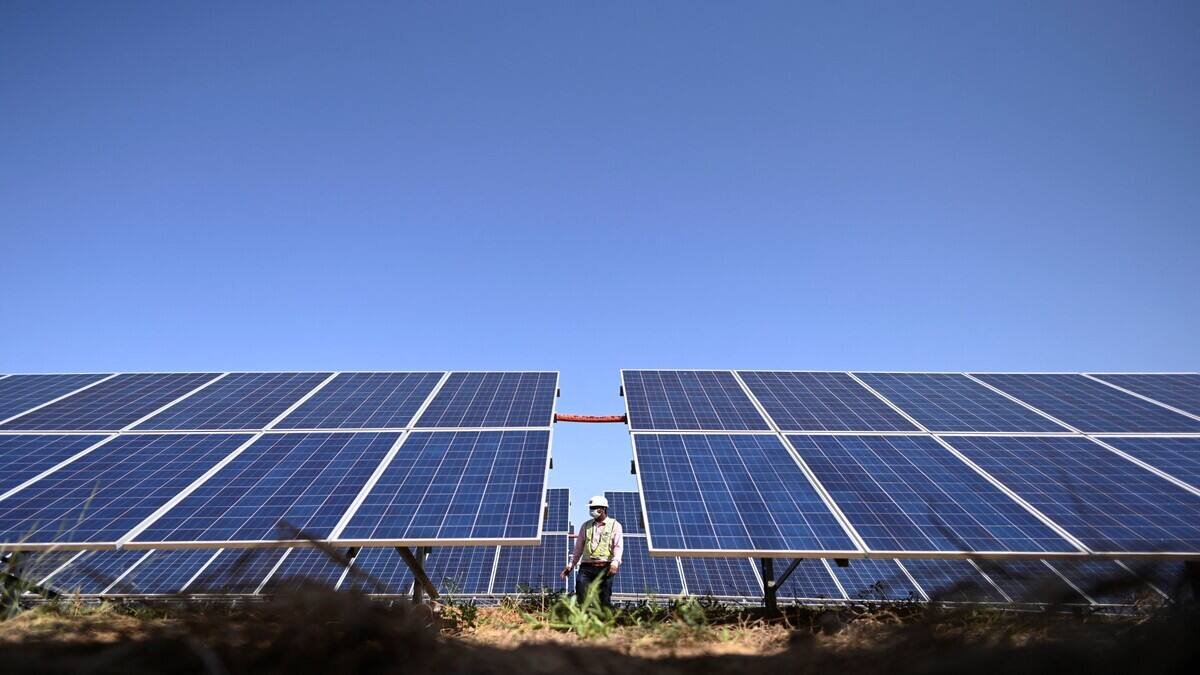
India’s renewable energy push is gathering pace as Rajasthan’s 60 GW clean energy pipeline highlights both surging investment and the urgent need for expanded transmission infrastructure
India’s renewable energy expansion is entering a decisive infrastructure-building phase, with the country’s leading solar hub, Rajasthan, emerging as a key driver of both clean power growth and transmission network upgrades as developers and planners work in tandem to scale up capacity.
According to regulatory filings, renewable energy projects totalling around 60 gigawatt (GW) in Rajasthan are currently awaiting transmission connectivity. Rather than signalling a slowdown, the development underscores the rapid acceleration of clean energy investments in one of India’s most resource-rich renewable corridors.
The desert state has become central to India’s long-term energy transition strategy, with vast solar potential estimated at about 179 GW. Much of this capacity is concentrated in high-irradiation districts including Jaisalmer, Bikaner, Barmer and Jodhpur, which have rapidly transformed into major renewable energy hubs.
Data submitted by the national transmission planner, Central Transmission Utility of India Ltd (CTUIL), shows strong investor momentum in the state’s clean energy sector. So far, applications for grid connectivity have reached around 130 GW, while transmission systems for about 73 GW are already planned or under implementation.
CTUIL said that efforts are underway to align transmission planning with the surge in project proposals, with coordination mechanisms being strengthened to ensure smoother integration of large-scale renewable capacity into the national grid. The remaining gap — around 60 GW of applications without confirmed transmission links — reflects the pipeline of projects now moving through advanced stages of development.
The challenge has also prompted regulatory engagement to improve flexibility and efficiency in project execution. In a notable move, the Central Electricity Regulatory Commission (CERC) recently permitted a 400 MW solar project in Bikaner to withdraw its connectivity application if required and recover associated bank guarantees, in view of transmission delays.
The approach is expected to enhance confidence among investors and accelerate project execution timelines.
India has set an ambitious target of nearly doubling its non-fossil fuel-based power capacity to 500 GW by 2030. States like Rajasthan are expected to play a central role in achieving this goal, acting as both generation hubs and export centres for clean electricity to high-demand regions across the country.
With strong solar potential, a growing project pipeline, and expanding transmission planning, Rajasthan’s evolving energy landscape is increasingly being seen as a blueprint for India’s next phase of green growth.
First Published:
April 13, 2026, 15:14 IST
End of Article