

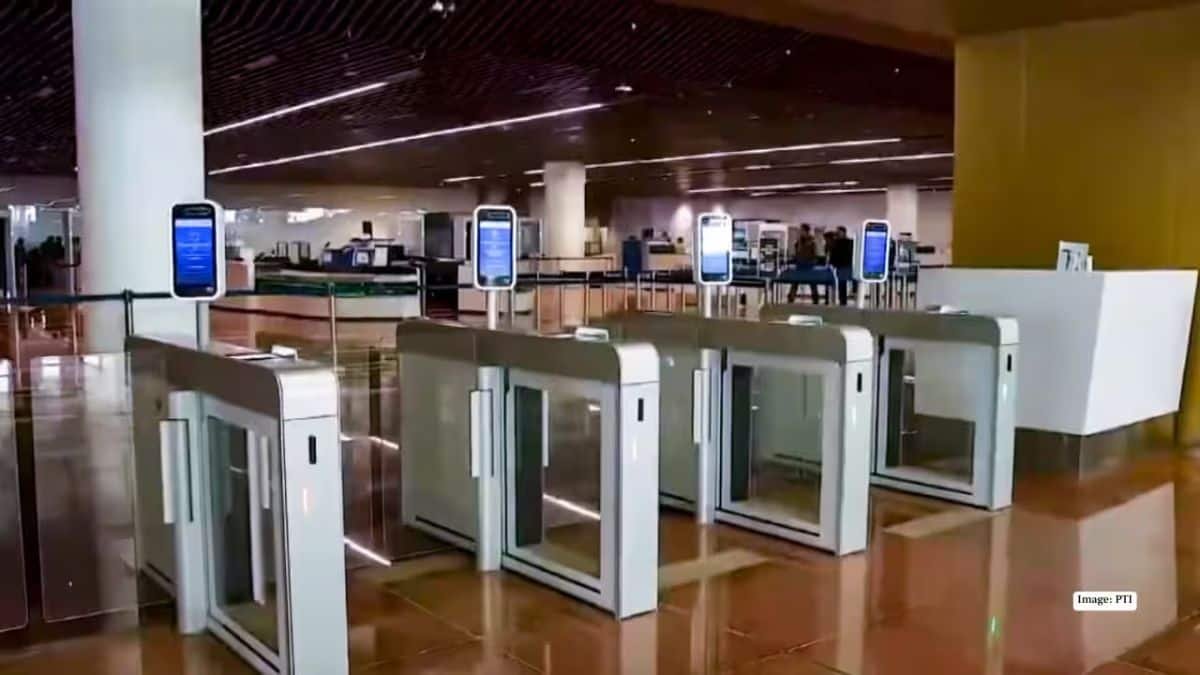
Prime Minister Narendra Modi will inaugurate the much-awaited Noida International Airport on March 28, marking a major milestone for India’s aviation sector.
Prime Minister Narendra Modi is set to inaugurate Phase I of the Noida International Airport on March 28, 2026, marking a major milestone in expanding aviation infrastructure in the National Capital Region (NCR).
Located along the Yamuna Expressway in Uttar Pradesh’s Gautam Buddha Nagar district, the airport has been developed at an estimated cost of ₹11,200 crore and is expected to emerge as a key international gateway for the region.
The project, also known as Jewar airport, is a greenfield development near the town of Jewar and is designed to serve the Delhi-NCR area. Situated around 75 km from New Delhi, it will become the NCR’s second international airport after Indira Gandhi International Airport, enhancing connectivity, particularly for western Uttar Pradesh.
In a related move to strengthen access, the Cabinet Committee on Economic Affairs, chaired by Modi, on March 10 approved a revised cost of ₹3,630.77 crore for a connectivity project linking the airport to the Delhi-Mumbai Expressway. The greenfield corridor will connect Jewar airport via the Delhi-Faridabad-Ballabhgarh-Sohna spur, and will be developed under the Hybrid Annuity Model across Uttar Pradesh and Haryana.
The new airport and its supporting infrastructure are expected to significantly improve regional transport links and support economic growth in the NCR.
The airport is being developed by YIAPL, a wholly-owned subsidiary of Zurich Airport International AG, in collaboration with the Government of Uttar Pradesh and the Government of India under a public-private partnership (PPP) model. The concession period commenced on October 1, 2021, for a period of 40 years, an official release from the Ministry of Civil Aviation said.
The airport is licensed for all-weather operations under the public use category. It has a 3,900 m x 45 m runway with a 10/28 orientation, equipped with an Instrument Landing System (ILS ) and Aeronautical Ground Lighting (AGL ) system, enabling round-the-clock operations. The airport has parking stands for 24 Code C and 2 Code D / F aircraft and is equipped with ARFF Category 9 facilities capable of handling wide-body aircraft such as the Boeing 777-300ER.
Noida International Airport is being developed in four phases, including a multi-modal cargo hub. In the first phase, consisting of one runway and one terminal, the airport will have an annual capacity to handle approximately 12 million passengers. Upon completion of all phases, the airport will be able to handle 70 million passengers per year, making it a major aviation hub for the National Capital Region and Western Uttar Pradesh, a release stated.
The development of Noida International Airport is part of the Ministry of Civil Aviation’s broader vision of building a robust aviation ecosystem. Over the past decade, India’s civil aviation sector has expanded significantly, with the number of operational airports increasing from 74 in 2014 to 164 today, with India becoming the world’s third-largest domestic aviation market.
With inputs from agencies
End of Article