

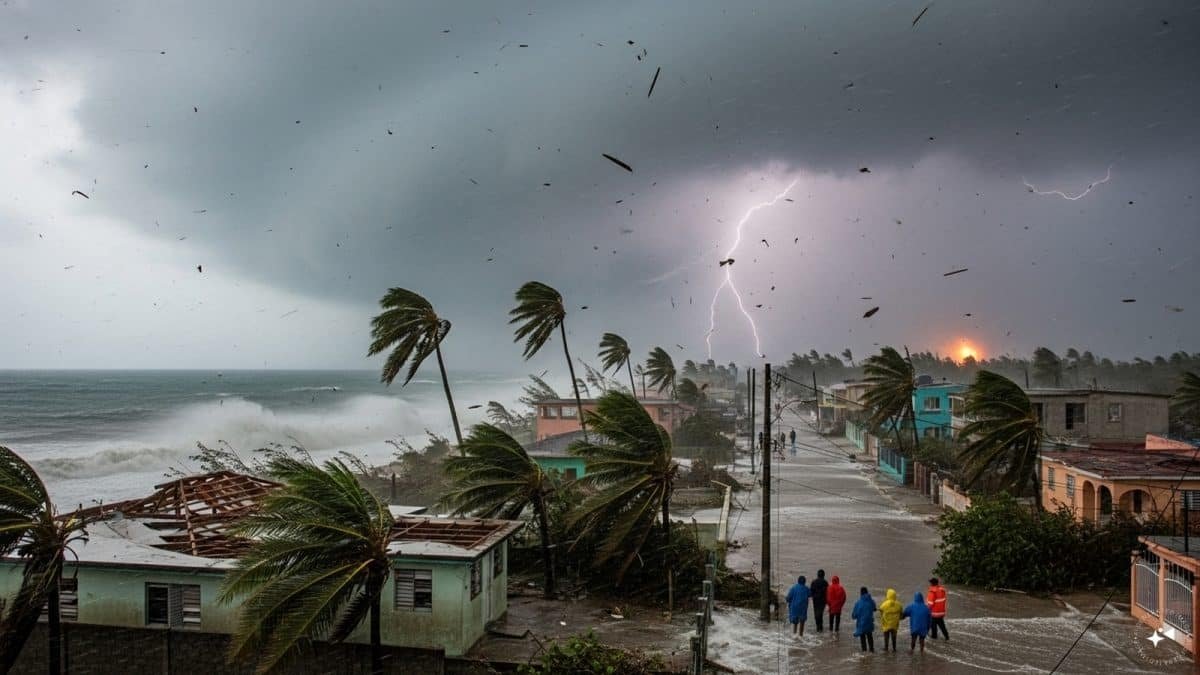
Melissa formed over the Caribbean, where ocean temperatures are at their hottest in October after months of summer heat. Even after reaching Category 4, Melissa strengthened again, which is extremely rare. As it neared Jamaica, it showed no signs of slowing down, even though land usually weakens hurricanes
Hurricane Melissa has shocked scientists and forecasters by becoming one of the strongest storms ever seen in the Atlantic. The massive storm reached Category 5 strength as it moved toward Jamaica, showing almost no signs of weakening. Experts say it’s the result of nearly perfect conditions coming together, and a warning of how climate change is fueling stronger and faster-growing hurricanes.
The science behind it
Melissa formed over the Caribbean, where ocean temperatures are at their hottest in October after months of summer heat. “It’s basically sitting over the warmest water the Atlantic has to offer right now,” said hurricane expert Brian McNoldy. Those warm waters give hurricanes their power, as the heat from the ocean rises and fuels the storm’s spinning engine.
Above the storm, cold air in the upper atmosphere adds another layer of energy. The boundary between the lower and upper atmosphere, called the tropopause, is higher and colder over the tropics—especially over the Pacific—but this time the Atlantic matched those extreme conditions. That helped Melissa’s clouds grow taller and colder, feeding even stronger convection inside the storm.
All these factors lined up perfectly. “This is taking advantage of every possible condition it can right now,” McNoldy said.
Why was it so dangerous
Melissa’s rise in power was not just strong—it was fast. The storm went from a tropical storm to a major hurricane in less than a day, with its wind speeds jumping by 70 miles per hour. This kind of rapid growth, known as rapid intensification, makes hurricanes especially dangerous because it leaves people and governments little time to prepare.
Even after reaching Category 4, Melissa strengthened again, which is extremely rare. As it neared Jamaica, it showed no signs of slowing down, even though land usually weakens hurricanes. “It looks like it doesn’t even know Jamaica is there,” McNoldy said.
Scientists estimate that climate change added about 10 mph to Melissa’s winds, making it 50 percent more destructive. Warmer air and oceans mean more moisture and energy for storms, leading to heavier rain and stronger winds.
“We’re living in a world where human-caused climate change has changed the environment in which these hurricanes grow,” said Daniel Gilford of Climate Central. “Melissa is a clear example of that.”
End of Article