

Australia’s reputation as one of the safest countries in the world has long been tied to its stringent firearm regulations.
For nearly three decades, the country avoided the kind of large-scale gun violence that has become a recurring feature elsewhere.
That record was jolted on Sunday when
a mass shooting at Sydney’s Bondi Beach left at least 15 people dead, forcing a renewed examination of whether Australia’s gun laws — often described as among the toughest globally — are still adequate in their current form.
The Bondi terror incident, which targeted a Jewish celebration near the waterfront, marked the most serious mass shooting in Australia since 1996.
How Australia’s modern gun control was introduced
Australia’s modern gun control framework emerged from the Port Arthur massacre in Tasmania in April 1996, when a lone gunman armed with semi-automatic weapons
killed 35 people and seriously injured 23 others at a historic tourist site.
At that time, the country was grappling with a pattern of repeated mass shootings. Between the late 1970s and the mid-1990s, Australia had experienced 13 mass shooting incidents in just 18 years.
Measured against population size, the situation was especially alarming. Researchers later found that Australia’s per-capita incidence of mass shootings during that period exceeded that of the United States.
The scale of the Port Arthur tragedy proved to be a decisive moment.
Within less than two weeks of the massacre, the federal government and all state and territory governments agreed on a unified approach to firearms regulation.
The result was the National Firearms Agreement (NFA), which set minimum standards for gun ownership across the country.
Under the agreement, semi-automatic rifles and shotguns were prohibited, a nationwide licensing system was imposed, and all firearms were required to be registered.
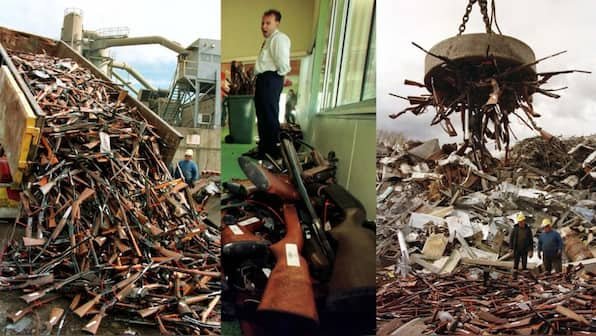
The reforms also included a large-scale gun buyback programme. Around 650,000 firearms were surrendered and removed from circulation, while more than one million guns were destroyed in total.
Estimates suggest this amounted to roughly one-third of the privately owned gun stock in Australia at the time.
Despite opposition from some quarters, the reforms were implemented nationwide.
What the data shows
In the years that followed the 1996 reforms, Australia witnessed a dramatic shift in gun violence trends.
According to a 2018 study conducted by researchers from the University of Sydney and Macquarie University, the country did not experience a single mass shooting — defined as an incident involving five or more fatalities, excluding the perpetrator — for 22 years after the NFA came into effect.
The researchers described this outcome as statistically significant rather than coincidental. Their analysis calculated that the likelihood of such a prolonged absence of mass shootings occurring purely by chance was extremely low.
Associate Professor Philip Alpers, a co-author of the study from the University of Sydney, addressed claims that the decline could be attributed to randomness.
“Gun lobby-affiliated and other researchers have been saying for years that mass shootings are such rare events it could have been a matter of luck they dropped off in the wake of Australia’s gun control laws,” he said.
“Instead, we found the odds against this hypothesis are 200,000 to one.”
The study concluded that Australia’s approach mirrored standard public health practices, focusing on risk reduction following a catastrophic event.
By limiting access to high-powered weapons, strengthening oversight, and removing large numbers of firearms from circulation, the country significantly reduced the probability of mass-casualty shootings.
Gun-related deaths more broadly also remained low by international standards. According to the Australian Institute of Criminology, between July 2023 and June 2024, Australia recorded between 31 and 33 gun-related homicides nationwide.
This translated to a rate of approximately 0.09 deaths per 100,000 people.
By comparison, data from the United States Centers for Disease Control and Prevention shows that the US recorded an average of 49 gun homicides per day through 2023.
How gun ownership in Australia rose despite strict laws
Despite Australia’s low rates of gun violence, the number of legally owned firearms has increased steadily over the past two decades.
Research published earlier this year by the Australia Institute found that approximately four million guns are now held legally across the country. This figure exceeds the number of firearms in private hands prior to the 1996 crackdown.
The growth in gun ownership has occurred within the framework of strict regulation. Under Australian law, individuals must apply for a licence, demonstrate a legitimate reason for owning a firearm, and register each weapon.
Self-defence is not considered a valid reason.
Licences are typically issued for purposes such as farming, pest control, occupational use, or participation in organised shooting sports.
Nevertheless, the increase in firearms has raised concerns among policymakers and advocacy groups, particularly in light of the Bondi shooting.
Gun Control Australia president Tim Quinn addressed this tension in a blog post following the Bondi attack. “Events like this feel unimaginable here, which is a testament to the strength of our gun laws,” he wrote.
“It is essential that we ask careful, evidence-based questions about how this attack occurred, including how any weapons were obtained and whether our current laws and enforcement mechanisms are keeping pace with changing risks and technologies.”
How firearm regulation works across Australia
Although the NFA sets baseline standards, responsibility for administering gun laws rests with individual states and territories.
This means that while licensing and registration are mandatory nationwide, the specific categories of licences and enforcement mechanisms vary by jurisdiction.
In New South Wales, for example, several types of firearm licences are available, each linked to a specific purpose.
Members of gun clubs may apply for recreational licences, which permit firearm use only for sporting or recreational activities. Farmers and agricultural workers may apply for licences tied to land management needs.
Licence holders are legally restricted to using their firearms solely for the purpose stated in their application. Applicants must demonstrate a “genuine reason” for owning each weapon, and authorities assess factors such as character, background, and ongoing compliance.
Criminology lecturer Maya Gomez of Swinburne University of Technology noted that this framework places limits not just on ownership, but also on the quantity and type of firearms held.
Following the Bondi shooting, she said scrutiny may focus on whether the reasons provided during licensing align with the number and nature of the weapons involved.
In addition to state-level systems, Australia has been working to establish a National Firearms Register to consolidate gun ownership data across jurisdictions.
While the NFA requires firearms to be registered, there is currently no fully integrated nationwide database. A four-year programme aimed at merging records began last year, with work underway to reconcile data from different states and territories.
Australian Prime Minister Anthony Albanese acknowledged that the task has been complicated by outdated systems in some regions. “In some cases, some state jurisdictions still had paper identification. That was what we were dealing with,” he said.
“We are responding in a really practical way. If there’s more that can be done, we will do it. We will do whatever is necessary.”
What we know about the guns used in the Bondi Beach shooting
The attackers were identified by local media outlets as
Sajid Akram and his son Naveed Akram, though police did not formally release their names.
Security officials confirmed that one of the suspects had been known to authorities but had not been assessed as an immediate threat prior to the attack.
The father, aged 50, had reportedly held a firearms licence since 2015 and had six registered weapons. Police did not disclose detailed information about the firearms used, but footage from the scene appeared to show a bolt-action rifle and a shotgun.
New South Wales Police Commissioner Mal Lanyon told reporters that, under existing regulations, the licence held by one of the suspects entitled him to possess the weapons he owned.
What next
In the aftermath of the shooting, federal and state leaders signalled that changes to firearms legislation were under active consideration.
Albanese said
he would raise the issue with cabinet, specifically flagging potential limits on both the number of weapons permitted under a single licence and the duration of licences.
“People’s circumstances can change,” he said. “People can be radicalised over a period of time. Licences should not be in perpetuity.”
“If we need to toughen these (laws) up, if there’s anything we can do, I’m certainly up for it,” he added.
At the state level, New South Wales Premier Chris Minns suggested that parliament could be recalled to accelerate legislative changes. “We want to make sure that prospective reform and change in New South Wales has a lasting impact,” he said.
“If you’re not a farmer, if you’re not involved in agriculture, why do you need these massive weapons that put the public in danger and make life dangerous and difficult for New South Wales police?”
Minns later reiterated that while no immediate announcement had been made, action was forthcoming.
“It’s time we have a change to the law in relation to the firearms legislation … but I am not ready to announce it today. You can expect action soon,” he said.
Australia’s response to gun violence has frequently been cited internationally as evidence that large-scale reform is possible.
Following the Christchurch mosque attacks in New Zealand in 2019 — where an Australian-born extremist killed 51 people — New Zealand adopted a similar approach. Within weeks, it banned semi-automatic weapons and assault rifles and launched a nationwide buyback programme, despite political resistance.
With inputs from agencies
End of Article