

Prime Minister Narendra Modi will touch down in Norway on Monday for a two-day (May 18-19, 2026) visit.
This visit represents the first time an Indian prime minister has set foot on Norwegian soil in forty-three years — the last being Indira Gandhi’s visit in June 1983.
The visit comes at a time when Europe is locked in an existential security crisis as global supply chains undergo structural de-risking, and the compounding effects of climate change are accelerating interest in green technologies and the Arctic.
Alongside a comprehensive bilateral itinerary, Oslo is hosting the highly anticipated 3rd India-Nordic Summit, bringing together Modi and the leaders of Norway, Denmark, Finland, Iceland, and Sweden.
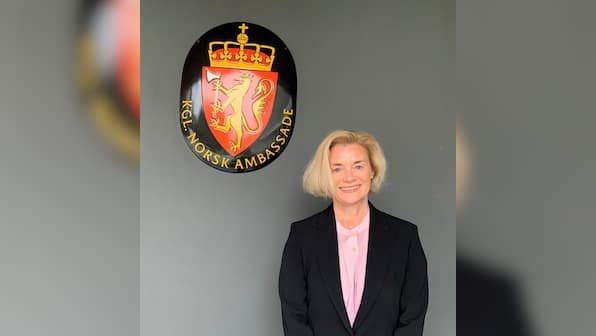
To map the contours of this historic visit, Firstpost caught up with the Norwegian Ambassador to India, Her Excellency May-Elin Stener, for an exclusive, wide-ranging interaction.
With Firstpost, Stener broke down the mechanics of the “Nordic pivot,” clarified the structural nuances of the blockbuster $100 billion EFTA-TEPA trade pact, and explained how Europe views India’s unique position as a diplomatic bridge between the Global South and the West.
The historic 43-Year interregnum & the “Nordic pivot”
For decades, India’s continental European strategies focused predominantly on traditional heavyweights like Paris, Berlin, and Moscow. However, New Delhi steadily realised the importance of pivoting towards the high north of the continent.
The five Nordic nations boast a combined GDP exceeding $1.9 trillion, and they lead global benchmarks in green hydrogen, maritime innovation, deep-tech, sustainable ocean governance, and geo-thermal energy.
When asked about the significance of ending this 43-year diplomatic hiatus and how Oslo perceives India’s structural role in the evolving European security and economic architecture, Stener spotlighted the historic gravity of the moment.
“The last visit by an Indian Prime Minister was in 1983, so this visit by Prime Minister Modi is truly historic. We warmly welcome him to Norway on 18 May and look forward to many positive outcomes and strengthened Norway-India relations.”
The India-Nordic summit process began in Stockholm in 2018 and continued in Copenhagen in 2022. The United States is the only other country that maintains an equivalent summit-level framework with Nordic nations.
The 3rd edition of the summit was originally planned for last year but was postponed following
the April 2025 Pahalgam terrorist attack.
Despite the delay, the momentum behind this institutional framework has only grown. The summit format provides a unique multilateral venue where a highly advanced regional bloc interfaces directly with the world’s fastest-growing major economy.
Commenting on the evolution of this mechanism, Stener observed, “It is an important forum for us to discuss topics of global relevance and allows us to explore how the Nordic countries can support and be part of India’s growth story. From Norway’s perspective, the agenda is focused on strengthening partnerships in green transition, including renewable energy, maritime and climate solutions. We also see strong potential in expanding collaboration in digital innovation, including health tech, and the Blue Economy.”
This synergy is no longer merely transactional. As supply chain resilience and democratic values take the stage globally, the European continent is actively looking eastward for anchor partnerships.
Stener contextualised India’s growing systemic weight in European calculations.
“Norway sees India as an increasingly important geopolitical and economic partner in a changing global order, especially as Europe seeks reliable partnerships beyond its immediate neighbourhood. India’s scale, democratic institutions, technological expertise and growing international influence make it a significant partner for the Nordic region and Europe,” she said.
EFTA-TEPA vs Sovereign wealth investments
One pillar of this renewed relationship is the landmark Trade and Economic Partnership Agreement (TEPA), signed between India and the European Free Trade Association (EFTA) bloc — which comprises Norway, Switzerland, Iceland, and Liechtenstein.
The agreement contains a historic, legally binding commitment to channel $100 billion in foreign direct investment into India over a 15-year horizon, projected to generate over one million jobs.
#DidYouKNow #IndiaNordicSummit
The #IndiaEFTATEPA Trade and Economic Partnership Agreement is one of 🇮🇳’s largest investment promotion frameworks, with a $100-billion investment commitment over 15 yrs from EFTA countries, expected to generate 1 million jobs in India. #NorwayIndia pic.twitter.com/vJI39uVZSb— Ambassador May-Elin Stener (@NorwayAmbIndia) May 13, 2026
However, widespread speculation has emerged regarding how this $100 billion commitment interfaces with Norway’s famed Government Pension Fund Global (GPFG) — the world’s largest sovereign wealth fund, which manages over $1.6 trillion in assets.
Observers have wondered whether Oslo would leverage the fund to meet these targets, particularly by diversifying into India’s rapidly expanding Digital Public Infrastructure (DPI) and green energy grids.
Stener provided clarification on this point, delineating private capital from sovereign investments, stating, that “the investment chapter of the TEPA relates to foreign direct investment, meaning investment by private-sector companies, many of which are seeing opportunities in the Indian market.”
Nevertheless, the Ambassador highlighted the massive, standalone confidence that Norway’s public sovereign wealth fund has in the Indian economic story.
“The Norwegian Government Pension Fund Global is one of the largest sovereign wealth fund investors in India. It invests only in publicly listed companies, across almost all sectors. The value of its investments in the Indian stock market is currently at USD 30.8 billion (divided among 495 investments),” she observed.
“The investments have more than doubled in value since 2020, testifying to the Fund’s expectations of solid, long-term growth in the Indian economy. But these investments are not counted as part of the commitment under TEPA.”
This distinction reveals a two-pronged economic relationship: while Norway’s public fund holds a substantial $30.8 billion position in India’s capital markets, the TEPA framework acts as an independent pipeline designed to draw in private Norwegian capital into Greenfield projects, manufacturing units, and technology joint ventures.
The “Green Strategic Partnership”
As Modi navigates his third term as prime minister and Norwegian Prime Minister Jonas Gahr Støre navigates a volatile European landscape, the qualitative nature of the relationship has transformed.
When asked to characterise this “new chemistry,” Stener chose two precise terms to define the contemporary era of Oslo-New Delhi engagement, opining, “Let me use two words to define the Oslo-Delhi relationship today: strategic and future-oriented.
India and Norway have worked closely in sectors such as shipping, fisheries, health and multilateral affairs.
While these traditional areas are extremely important, the partnership is now expanding into newer domains, including green transition, digital technologies, maritime innovation, Arctic research, clean energy and start-up and innovation collaboration.”
This modernisation of ties is being institutionalised through an overarching bilateral architecture, with Stener revealing to Firstpost that, “we plan to strengthen the relationship between Norway and India by creating a ‘Green Strategic Partnership’. This will focus on accelerating the green transition by building green industries and jobs, improve energy security and promote a circular economy. It will also encourage more investment and research.”
“At a time marked by heightened geopolitical competition, conflict in Europe, and increasing pressure on the rules-based international order, both Norway and India recognise the importance of rules-based cooperation, sustainable growth and multilateralism, and that shared perspective informs our partnership to a great extent,” she added.
The science of Arctic governance
As climate change accelerates polar ice melt, the Arctic has shifted from a remote scientific frontier to a vital geopolitical theater.
India’s engagement with the region dates back to the signing of the Svalbard Treaty in 1920. Today, India operates a year-round research facility, the Himadri station, located at Ny-Ålesund in Norway’s Svalbard archipelago.
Indian scientists are focused on studying the direct links between Arctic melt patterns and the variability of the Indian Monsoon system, which is critical for South Asian food security.
Concurrently, the retreat of polar ice has opened up conversations surrounding the Northern Sea Route (NSR) as a potential alternative to traditional maritime lanes,
especially given recent disruptions.
When asked about the potential for broader conversations regarding
the commercial utilisation of the Northern Sea Route, Stener maintained a measured position, saying, “Norway’s position has consistently been that any increased activity in the Arctic must be governed by international law and the established Arctic governance structures.”
“Our dialogue with India on Arctic issues is substantial and primarily focused on scientific cooperation and research.”
Pioneering green shipping & the net-zero maritime corridors
While the Arctic remains focused on scientific research, India’s extensive 7,500-kilometre coastline is the primary staging ground for industrial maritime cooperation.
Norway is a world leader in “green shipping,” pioneering the development of electric ferries, autonomous cargo vessels, and alternative low-carbon fuels like green ammonia and hydrogen.
India’s maritime vision, driven by initiatives like the Sagarmala port-development programme, is seeking to fully modernise its port infrastructure.
The question on many industry lips ahead of the Oslo summit is whether the two nations will formalise “Green Shipping Corridors” — designated maritime routes explicitly mapped for zero-emission or low-carbon commercial vessels.
Stener highlighted the intense momentum,“Norway and India have a strong, longstanding maritime cooperation. We are seeing increased political engagement, industry and regulatory dialogue, and concrete commercial outcomes. India is a key strategic market for the Norwegian maritime industry.”
In June 2025, India’s first national pavilion at Nor-Shipping in Oslo, led by Minister of Ports, Shipping and Waterways Sarbananda Sonowal, fostered dialogue at the ministerial level.
This was taken forward by Norwegian Minister of Fisheries and Ocean Policy Marianne Sivertsen Næss’s visit to India during India Maritime Week in October.
“Green shipping remains a core priority for Norway. Norway collaborates closely with India in the International Maritime Organization and in the GreenVoyage2050 programme, including working towards a consensus on the IMO’s Net-Zero Framework,” she added.
“We have an especially strong focus and collaboration on green maritime, to enable the transition to new and alternative fuels and retrofit legacy port and ship infrastructure. Specific outcomes of the visit will be announced in due course, but I can say there is strong momentum towards more concrete cooperation in sustainable maritime transport.”
Combating plastic pollution in a Blue Economy
A critical component of this sustainable maritime strategy is the India-Norway Task Force on Blue Economy for Sustainable Development, established in 2019 by Modi and then-Norwegian Prime Minister Erna Solberg.
For coastal states across India, marine plastic pollution and the degradation of near-shore ecosystems pose a direct threat to millions of livelihoods. Stener provided an update on the India-Norway Marine Pollution Initiative, confirming its formal extension and outlining its operational successes.
“One of the pillars of the collaboration is the India-Norway Marine Pollution Initiative, which is a partnership between the Norwegian Embassy and India’s Ministry of Environment, Forest and Climate Change,” she said.
“Since it began, the India-Norway Marine Pollution Initiative has supported five major projects involving Indian and Norwegian organisations. These projects address different stages of marine and plastic pollution, from reducing waste at the source to managing and recycling it at the end of its life.”
“This work has helped improve recycling and circular economy practices, strengthened waste management systems in municipalities, created tools to track plastics and chemicals in rivers, and encouraged public participation through large-scale plastic clean-up drives.”
The initiative has been extended to 2030, and the partners are now working together to expand the partnership further, including to topics like ghost fishing gear, reducing plastic waste in coastal cities and expanding work to new states, added Stener.
Turning to fisheries, a sector central to India’s coastal economy, the Ambassador described a relationship driven primarily by corporate dynamics and market forces, stating, “… at present, cooperation mainly takes place in the form of general dialogue and knowledge sharing, rather than specific joint initiatives. Much of the Indo-Norwegian engagement in fisheries is commercially driven.”
“That being said, sustainable fisheries is still closely linked to other important areas of cooperation, particularly our work on marine pollution and sustainable ocean planning. Marine spatial planning in particular contributes to more sustainable and resilient management of marine resources and coastal communities.”
Stener pointed to the fact that Norway-India cooperation on fisheries has been historically strong, dating back to the very first bilateral project in Kerala in 1952, which played a foundational role in developing India’s modern fisheries sector.
India as a diplomatic bridge
The 3rd India-Nordic Summit takes place in a fundamentally altered European security landscape.
Following Russia’s full-scale invasion of Ukraine, the Nordic region underwent its most significant strategic realignment since World War II, with Sweden and Finland abandoning decades of military non-alignment to formally join the Nato alliance.
For Norway, which shares a land border with Russia in the High North, this shift is deeply local. Concurrently, India has consistently advocated for a return to dialogue and diplomacy, while positioning itself as a vital voice for the Global South.
New Delhi’s growing diplomatic footprint in West Asia — manifested through frameworks like the I2U2 [India, Israel, the United Arab Emirates, and the United States] and the India-Middle East-Europe Economic Corridor (IMEC) — has elevated its status as an indispensable global interlocutor.
Stener spoke candidly about the existential nature of the current security challenges facing northern Europe and highlighted why India’s multi-aligned diplomatic credibility is so highly valued in Oslo.
“For the first time since World War II, there is a war of conquest in Europe. For Norway, the invasion of Ukraine is existential. Russia is our neighbour, and the war is almost at our doorstep. The Nordic countries have adapted to the changing security landscape in Europe. For a small country like Norway, there is no alternative to an international order based on multilateralism and international law. For us, not reacting firmly to Russia’s invasion could have long-lasting and dangerous implications for our security.”
In this fragmented environment, Norway views India as a critical stabilising force capable of communicating across historical divides.
“Today’s global challenges must be addressed through broader diplomatic engagement across regions. India maintains strong relationships and enjoys credibility both in the Global South and among Western partners. India and Norway, and in fact, all the Nordic countries, are partners working together towards a more sustainable and peaceful world.”
“We welcome India’s growing engagement in West Asia and see it as a positive factor for regional and global stability. India has longstanding historical, economic and people-to-people ties with the region, and its expanding role reflects its increasing global influence,” she added.
Also Watch:
As Modi arrives in Oslo, the agenda is clear.
The days of treating India-Nordic ties as an auxiliary sub-segment of European diplomacy are over.
“We believe there can be even closer collaboration between India and the Nordic countries on regional and global issues that concern us all, and our dialogue at the Summit will reflect this,” Stener concluded.
First Published:
May 18, 2026, 12:07 IST
End of Article