

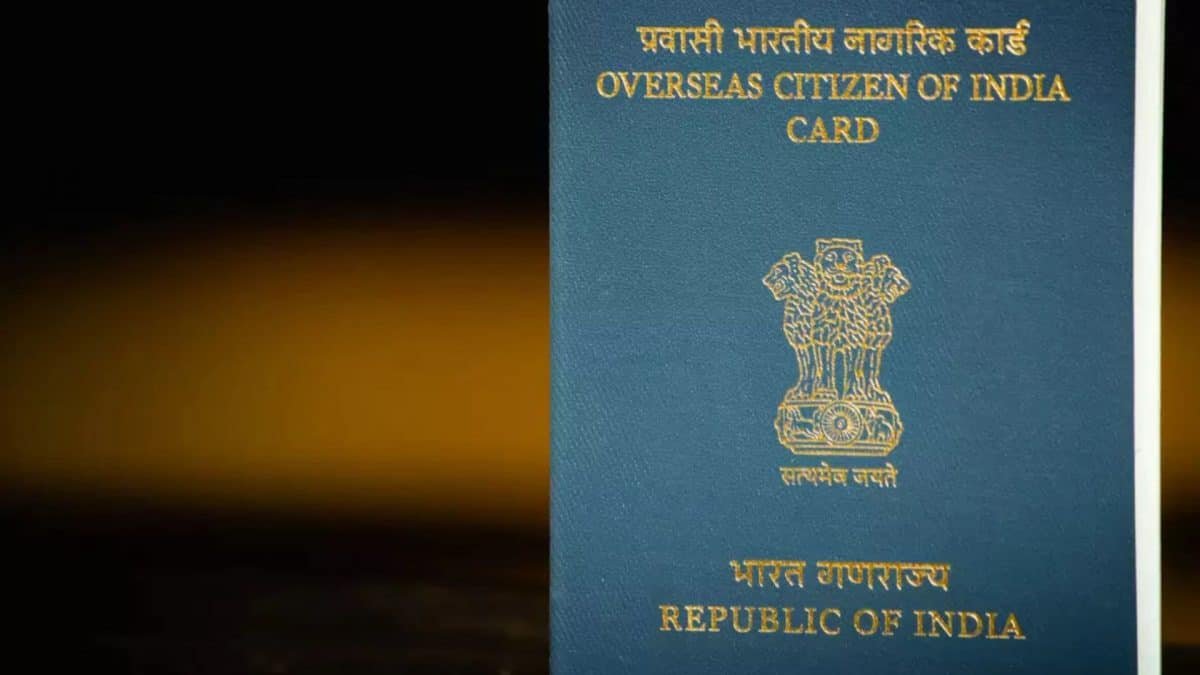
India has overhauled the Overseas Citizen of India (OCI) programme with new global fees, stricter passport update rules, and expanded eligibility. Here’s everything you need to know
The Ministry of Home Affairs (MHA) has overhauled the Overseas Citizen of India (OCI) programme after more than a decade. The revised framework, effective from April 1, brings a standardised global fee structure, stricter compliance requirements for passport updates, and an expanded eligibility window for parts of the Indian diaspora.
Officials say the changes are designed to modernise diaspora administration, improve biometric verification systems, and streamline services across more than 100 Indian missions and consulates worldwide.
Unified global fee structure introduced
A major feature of the reform is the replacement of varied mission-specific charges with a uniform global fee system.
Under the new structure, fresh OCI applications submitted abroad will cost $275 (or local currency equivalent), while applications filed within India will be priced at Rs 15,000. Re-issuance of OCI cards following a passport change or personal detail update will now cost $25.
In cases of loss or damage, duplicate OCI cards will be issued for $100. Meanwhile, conversions from the older Persons of Indian Origin (PIO) cards to OCI status have been set at $100.
Strict ’three-month rule’ for passport updates
The revised rules also introduce a mandatory compliance requirement for all OCI cardholders regarding passport updates.
Cardholders must now update their OCI profiles on the government portal within three months of receiving a new foreign passport. Failure to comply within the 90-day window will attract a $25 penalty.
Authorities have linked this requirement to upgraded biometric verification systems, which will support faster “e-gate” immigration processing at Indian airports by ensuring real-time matching of passport and OCI data.
Expanded eligibility for Sri Lankan diaspora
India has also extended OCI eligibility to fifth and
sixth-generation members of the Indian-origin Tamil community in Sri Lanka.
Previously limited to fourth-generation descendants, the revised rule allows a broader section of the diaspora to apply, particularly those from communities with limited historical documentation.
Sri Lankan government-issued records will now be accepted as valid proof of ancestry, easing long-standing documentation challenges for applicants. Officials said the move could allow hundreds of thousands of people to reconnect with their ancestral roots through long-term, multi-entry visa access to India.
Residency rule removed for select categories
The government has also scrapped the earlier six-month residency requirement for certain OCI-related processes. The decision is aimed at facilitating smoother participation in initiatives such as the Vaibhav Fellowship, which brings global Indian-origin scientists and researchers to collaborate with Indian institutions.
The removal of residency constraints is expected to reduce administrative delays and improve mobility for high-skilled diaspora professionals.
Officials have warned that under the new regime, failure to update information within stipulated timelines could lead to delays or questioning at immigration checkpoints in major Indian cities such as Delhi and Bengaluru.
Despite the tighter rules, the OCI card continues to remain one of India’s major diaspora engagement tools.
First Published:
April 27, 2026, 11:17 IST
End of Article