

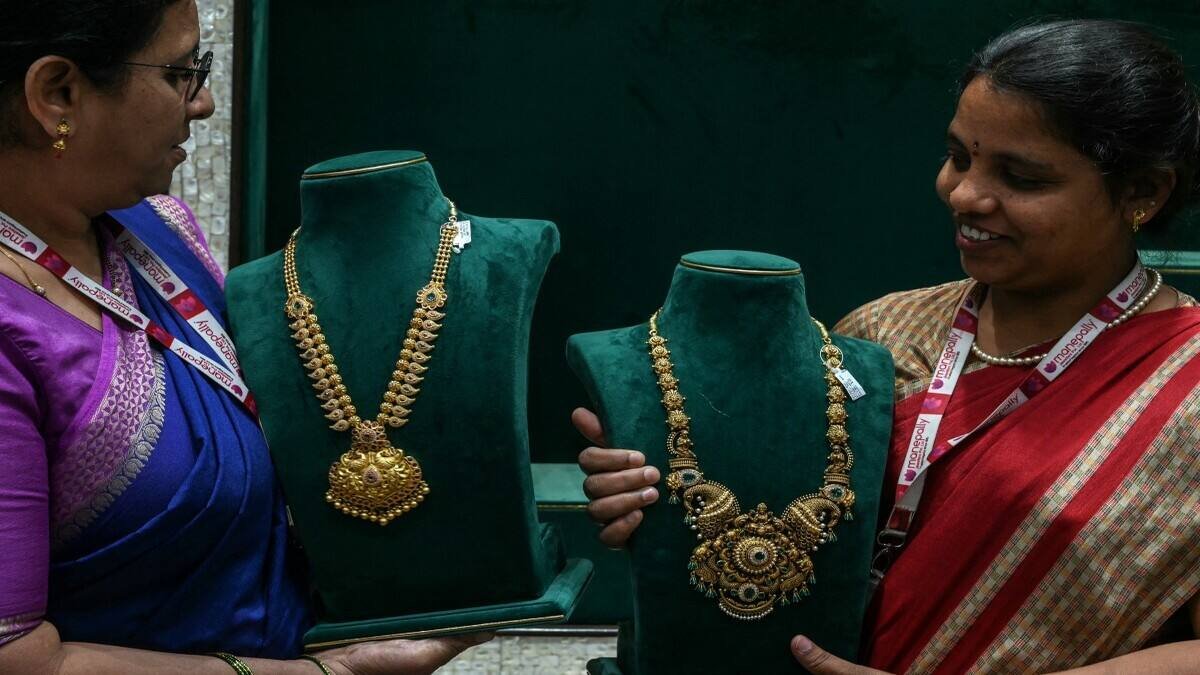
Prime Minister Narendra Modi’s call for Indians to avoid “non-essential” gold purchases for a year may sound like a temporary wartime austerity appeal. But beneath the rhetoric lies a much deeper economic anxiety in New Delhi, where India’s decades-old dependence on imported gold is colliding with soaring oil prices, geopolitical turmoil in West Asia and growing pressure on the country’s foreign exchange reserves.
Addressing a rally in Hyderabad on Sunday,
Modi urged citizens to conserve fuel, revive work-from-home practices, avoid unnecessary overseas travel and reduce purchases of imported goods — including gold — as India navigates a global supply shock triggered by the continuing conflict in West Asia.
“In the current situation, we must place great emphasis on saving foreign exchange,” Modi said, while also urging people to use public transport, cut cooking oil consumption and reduce fertiliser use.
But while appeals for fuel conservation may find some traction, asking Indians to cut gold buying could prove far more difficult.
That is because gold in India is no longer merely a cultural purchase tied to weddings and festivals. Increasingly, it has become a financial hedge against uncertainty — and in 2026, Indians are buying more gold for investment than for jewellery for the first time on record.
Gold is no longer just tradition — it is now a fear trade
Data released last month by the World Gold Council (WGC) showed a dramatic shift in India’s gold market.
Investment demand for gold surged 54 per cent year-on-year in the March quarter to 82 tonnes, overtaking jewellery demand, which fell nearly 20 per cent to 66 tonnes. Total gold demand rose 10 per cent despite record-high prices.
For decades, Indian gold consumption was overwhelmingly dominated by jewellery purchases linked to weddings, festivals and household savings traditions. But that pattern is changing rapidly.
The reasons are not difficult to understand.
Domestic gold prices have nearly doubled since the start of 2025, while Indian equity markets have delivered relatively muted returns. At the same time, geopolitical instability, fears of inflation and concerns over currency weakness have driven investors toward safer assets.
Gold exchange-traded fund inflows jumped 186 per cent in the March quarter, with holdings touching record highs. Purchases of bars and coins nearly matched jewellery demand — an unprecedented development in India’s modern gold market.
In effect, Indians are increasingly treating gold less as adornment and more as insurance.
That shift makes Modi’s appeal politically and economically challenging.
A macroeconomic problem disguised as a cultural habit
India’s obsession with gold has long frustrated policymakers.
The country imports nearly all the gold it consumes, making the metal one of India’s largest import bills after crude oil and electronics. During periods of
elevated oil prices, gold imports become especially problematic because they worsen the trade deficit and put pressure on the rupee.
The timing of Modi’s appeal is therefore significant.
India is already grappling with rising energy costs after prolonged disruption around the Strait of Hormuz pushed up crude prices globally. The country imports nearly 90 per cent of its crude oil requirements, making it particularly vulnerable to external shocks.
Adding large gold imports to that equation creates a double strain on foreign exchange reserves.
Industry executives and bullion dealers believe the disruption may not be entirely accidental.
Several market participants suspect authorities are informally attempting to curb gold inflows to narrow the trade deficit and support the rupee, one of Asia’s weaker-performing currencies this year.
The numbers explain why.
India imported roughly 60 tonnes of gold every month in the last financial year, with monthly import bills averaging around $6 billion. In April, however, imports likely fell to about $1.3 billion.
That decline offers temporary relief to policymakers struggling to manage external-sector pressures. But sustaining such restraint voluntarily may prove another matter altogether.
Why Indians may not stop buying gold
India’s relationship with gold is deeply embedded in social and economic behaviour.
In rural India, gold remains a parallel savings instrument. In urban India, it is increasingly becoming a portfolio hedge. Across income groups, it serves as a store of value during uncertainty.
Even when prices soar, Indians rarely abandon gold entirely. Instead, they adapt.
The WGC noted that consumers are shifting toward lighter-weight jewellery, lower-carat products and exchange-based purchases using old jewellery. Around 40–60 per cent of jewellery transactions now reportedly involve exchanging existing gold.
Meanwhile, borrowing against gold rather than selling it is becoming increasingly common. Outstanding retail loans backed by pledged jewellery at banks rose 124 per cent year-on-year to Rs 4.3 trillion by February.
That trend reveals something important: households still see gold as an appreciating financial asset worth holding on to.
There is also a psychological dimension to the current gold rush.
At a time when global conflicts are escalating, inflation risks remain elevated and financial markets appear volatile, gold provides emotional reassurance in ways few other assets can.
Modi’s message effectively asks citizens to sacrifice a traditional and financial safety net in the interest of national macroeconomic stability.
Historically, that has been a difficult sell.
India has tried this before
This is not the first time New Delhi has attempted to curb gold imports.
Successive governments have raised import duties, imposed restrictions on bullion imports and promoted financial alternatives such as sovereign gold bonds and gold monetisation schemes.
Yet demand has endured.
Higher duties often led to increased smuggling. Restrictions temporarily slowed imports but rarely altered long-term consumer behaviour.
What may change demand more effectively this time is not government persuasion, but price itself.
Gold prices in India have risen so sharply that affordability is already under pressure. Jewellery demand in the March quarter fell to its second-lowest first-quarter level since 2000.
Even so, Indians spent a record Rs 999 billion on jewellery during the quarter because of higher prices.
That paradox captures India’s gold story perfectly: people may buy less gold by volume, but they are rarely willing to stop buying it altogether.
The larger message behind Modi’s appeal
Modi’s speech was not merely about gold. It was a broader attempt to prepare Indians psychologically for a prolonged period of global economic stress.
His calls to reduce fuel use, revive work-from-home practices, favour rail transport and cut overseas travel all point to a government increasingly focused on conserving foreign exchange as geopolitical instability disrupts energy markets and supply chains.
But among all the measures he proposed, gold may be the hardest target of all.
Because for millions of Indians, buying gold is not seen as economic excess.
It is seen as security.
First Published:
May 11, 2026, 09:23 IST
End of Article