

India firmly rejected Dutch concerns over minority rights during PM Modi’s Hague visit, even as both sides elevated ties to a strategic partnership and signed 17 agreements spanning semiconductors, trade and green energy
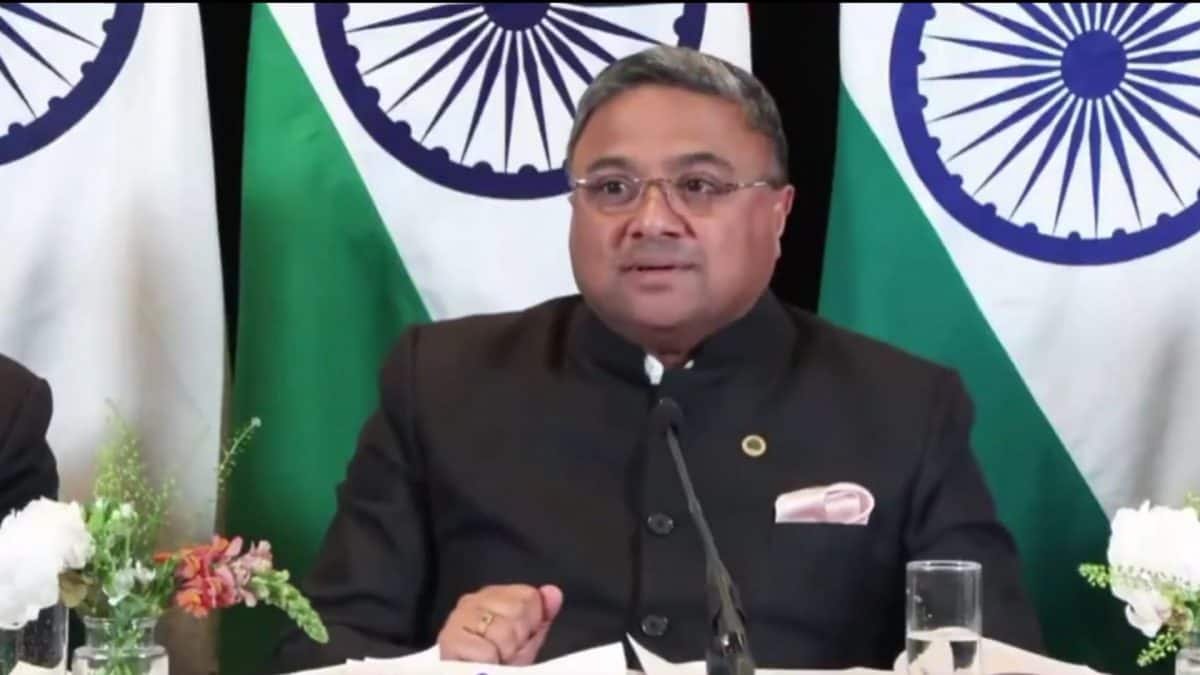
In a diplomatic counteroffensive, India’s Ministry of External Affairs (MEA) Secretary (West), Ambassador Sibi George, strongly rejected concerns raised by Dutch Prime Minister Rob Jetten regarding the treatment of minorities in India.
The exchange took place in The Hague on Saturday, just as Prime Minister Narendra Modi concluded the Netherlands leg of his multi-nation diplomatic tour. Addressing the media following a bilateral summit that officially elevated Indo-Dutch ties to a “Strategic Partnership,” Ambassador George dismissed the Dutch Prime Minister’s statements, attributing them to a fundamental misreading of the cultural and social fabric of the Indian republic.
‘Islam flourished, Jews never persecuted here’
Using historically grounded language, George spoke about India’s unique civilisational role as a safe haven for global communities fleeing systemic oppression across centuries.
“These questions show a lack of understanding about India. Jews never faced persecution here. We have 30 million Christians. Islam flourished. Attacked minorities have always come here,” he said.
Breaking: Amb. Sibi George responds to Dutch PM’s statement of concern on Indian minorities
“These questions show a lack of understanding about India. Jews never faced persecution here. We have 30 million Christians. Islam flourished. Attacked minorities have always come here.” pic.twitter.com/vAaHhuCmmE
— Shashank Mattoo (@MattooShashank) May 17, 2026
The diplomatic friction emerged during closed-door dialogues where Jetten, leading a newly formed centrist-led coalition in the Netherlands, brought up Western institutional reports concerning human rights and religious freedoms in South Asia.
Also read |
Exclusive | Netherlands foreign minister says India is a logical partner; PM Modi’s visit a milestone
Indian officials close to the delegation noted that while New Delhi remains open to constructive international economic partnerships, it consistently pushes back against external moralising or interference in its internal domestic affairs.
Despite the brief rhetorical friction over internal demographics, both delegations moved quickly to isolate the dispute, keeping the primary focus on expanding their $27.8 billion bilateral trade relationship and advancing joint investments in clean energy and semiconductors.
17 milestone pacts signed
The diplomatic itinerary culminated in the finalisation of 17 wide-ranging outcomes and MoUs designed to institutionalise the new Strategic Partnership.
Chief among the commercial pacts was an agreement signed between Tata Electronics and Dutch semiconductor giant ASML to support India’s upcoming semiconductor fabrication facility in Dholera, Gujarat, marking ASML’s first-ever direct ecosystem partnership with India.
The two nations also formalised a comprehensive five-year Roadmap on Strategic Partnership (2026–2030) alongside a dedicated India-Netherlands Roadmap on Green Hydrogen Cooperation.
Further bilateral pacts covered technical collaboration on the massive Kalpasar water management project in Gujarat, critical mineral sourcing, and enhanced logistics connectivity between major Indian and Dutch ports.
Adding a distinct cultural dimension to the deals, the Dutch government officially facilitated the restitution of a highly valued Indian cultural treasure, returning 24 historic, Chola-era copper plates bearing royal charters to the Indian delegation.
First Published:
May 17, 2026, 12:06 IST
End of Article