

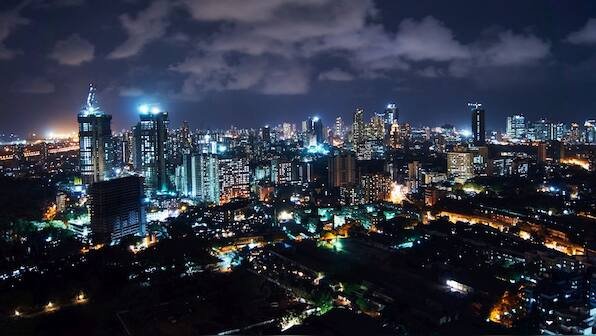
India is reeling from intense heat. Maximum temperatures are climbing, but the country’s heat crisis does not end at sunset.
The India Meteorological Department (IMD) has forecast unusually warm nights, with above-normal minimum temperatures across most of India, except parts of Maharashtra and Telangana.
“Higher overnight temperatures have become increasingly prominent in recent years, but they continue to receive far less attention than daytime heat,” says Athreya Shetty, independent weather forecaster.
So, what is a warm night?
The IMD defines a warm night as one in which minimum temperatures remain significantly above normal. Officially, a warm night is declared when the nighttime minimum remains 4.5 degrees Celsius to 6.4 degrees Celsius above normal, while a severe warm night is recorded when minimum temperatures rise more than 6.4 degrees Celsius above normal.
During
heatwave conditions, these are often observed following days when maximum temperatures cross 40 degrees Celsius.
A 2025 study published in ScienceDirect, using surface observations and climate model data, found that between 1980 and 2020, warm nights increased by two to eight days per decade, particularly in northeast, northwest and peninsular India.
A district-level analysis by the Council on Energy, Environment and Water (CEEW) in 2025 highlights the same trend. It also found that the increase is especially pronounced in India’s larger cities.
Mumbai recorded 15 additional very warm nights per summer between 2012 and 2022, Bengaluru 11, Bhopal and Jaipur seven each, while Delhi experienced six.
El Niño years saw spikes in both very hot days and very warm nights, though the increase was more pronounced for warm nights. “With 2026 shaping up as a developing El Niño year, its warming effects are often felt with a lag of six to eight months, making winter 2026 and summer 2027 important periods to watch,” says Shetty.
Why are warm nights increasing?
Nights are warming under the combined effects of global climate change and local urbanisation. Greenhouse gases trap outgoing heat that would otherwise escape into the atmosphere after sunset, making nights warmer overall. In Indian cities, the problem is amplified by the
urban heat island effect.
“Concrete, asphalt and glass absorb heat during the day and release it slowly after dark, while dense clusters of high-rise buildings restrict airflow and trap warmth near the surface. Roughly 60 per cent of the warming in urban nighttime temperatures can be linked to local heat retention, with the remaining 40 per cent driven by broader greenhouse gas warming,” says Shetty.
Rising humidity makes it worse. Moist air retains heat more effectively than dry air, slowing how quickly temperatures fall after sunset. While coastal regions typically record relative humidity levels of 60-70 per cent, parts of north India have seen a noticeable rise.
Between 2012 and 2022, relative humidity levels have increased from around 30-40 per cent to 40-50 per cent. The same CEEW analysis shows cities such as Delhi, Chandigarh, Jaipur, and Lucknow recording surges of six to nine per cent.
“Higher humidity also increases dependence on air conditioning, which releases waste heat outdoors, creating a feedback loop that can further raise urban temperatures,” according to Shetty.
Warm nights are beginning to overlap more often with daytime heatwaves, creating dangerous compound heatwaves, where scorching days are followed by unusually hot nights with little relief in between.
A recent study, published in ScienceDirect, found that between 2001 and 2024, Srinagar recorded the highest frequency of daytime and compound heatwaves among India’s 100 smart cities. Dahod in Gujarat saw the most intense compound heatwaves, while Varanasi recorded the most intense night-time heatwaves.
How hot nights affect the body
Cooler overnight temperatures help regulate body temperature and support restful sleep. But when nights remain hot, the body loses its usual recovery period after extreme daytime heat.
The effect is worse in humid conditions, when high moisture in the air reduces the efficiency of sweating, the body’s primary cooling mechanism, making it harder to cool down.
“That can increase the risk of dehydration, sleep disruption, cardiovascular strain and heat-related illnesses,” says Dr Manjusha Agarwal, consultant in internal medicine at Gleneagles Hospital, Mumbai. The risks are particularly acute for older adults, children, and people with heart or respiratory conditions. “Repeated warm nights can also worsen fatigue, irritability and cumulative heat stress,” says Dr Agarwal.
Where India’s heat plans may be falling behind
India has
Heat Action Plans (HAPs), which are early warning systems and preparedness frameworks for extreme heat events. However, they remain focused largely on daytime heat and heatwaves, even as prolonged and overnight heat exposure becomes more common.
The challenge is particularly acute in rapidly urbanising cities, where dense construction and shrinking green cover worsen nighttime heat retention. “Cities such as Pune, which are seeing extensive high-rise development and loss of green cover, are becoming increasingly vulnerable to rising night-time temperatures,” says Dr Shantini Aniruddha Bokil, head of department, civil engineering, at MIT-WPU.
Large, densely built metropolitan areas such as Delhi, Ahmedabad, Lucknow, Chennai and Surat are especially prone because they experience strong urban heat island effects.
Coastal cities such as Mumbai and Chennai also face persistently warm nights, as high humidity limits cooling after sunset.
The 2025 modelling study suggests warm nights could increase by 10 to 13 days per decade between 2015 and 2100, pointing to a growing mismatch between heat risks and current preparedness measures.
In recent years, the IMD has begun explicitly flagging above-normal nighttime temperatures in its heat bulletins. But planning still leans heavily on emergency advisories, even as the risk is increasingly shaped by how cities are built.
“Urban form strongly influences how much heat cities retain at night,” says Dr Sarita Sachdeva, executive director and dean of research at Manav Rachna International Institute for Research and Studies.
Measures such as cool roofs, reflective pavements, greater tree cover and better ventilation corridors can help cities cool more efficiently after dark. For now, as nights grow warmer, the gap between how India experiences heat and how it plans for it is only widening.
First Published:
April 18, 2026, 11:33 IST
End of Article