

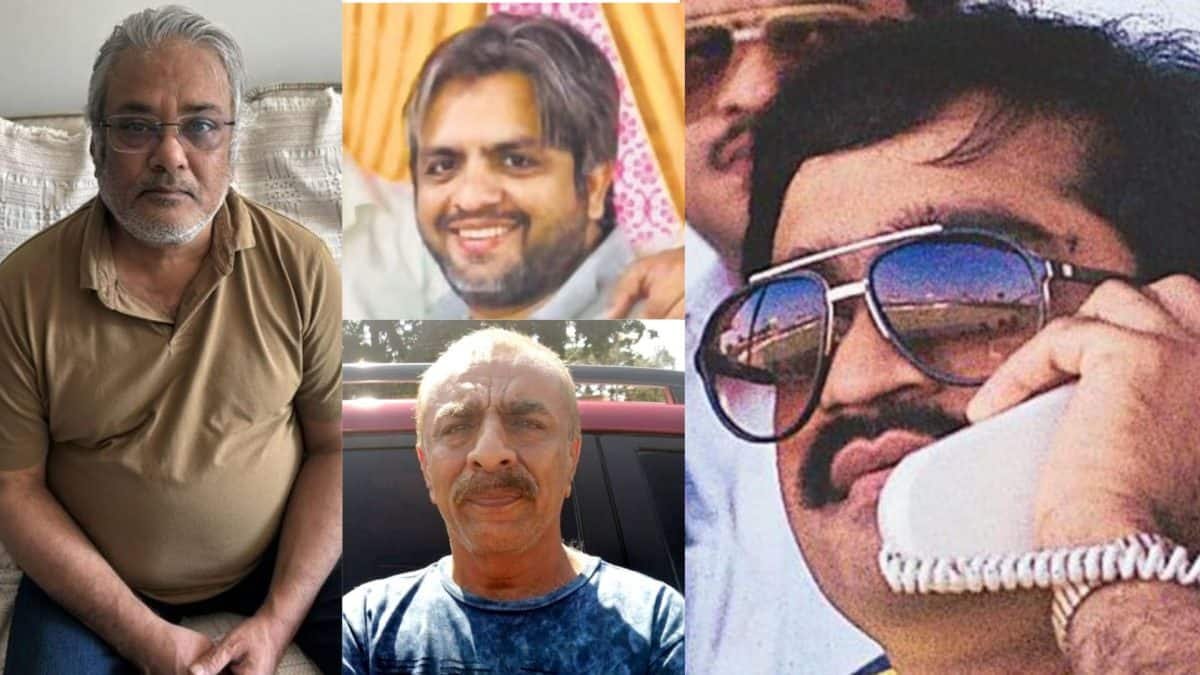
Gangster Salim Dola’s arrest in Turkey is the latest arrest in the Dawood circle by the Indian government. Several inner circle gangsters, like Yunus Ansari, Farooq Takla, and Munaf Halari, to name a few, have been hunted down overseas and brought back to India for trial
Early on Tuesday, a special aircraft landed at Delhi Technical Airport carrying Salim Dola, the alleged mastermind of Dawood Ibrahim’s international narcotics and logistics wing. His arrest in Istanbul is being seen as a major breakthrough for Indian intelligence and marks the latest chapter in a decade-long effort to track down and bring back men once believed to be safely beyond the country’s reach.
Since 2014, India has steadily shifted from diplomatic protests to detailed extradition dossiers, gradually dismantling the D-Company’s global network piece by piece. The latest arrest of Dola adds another layer to that tightening net.
The latest catch: Salim Dola
Dola’s detention in Istanbul, carried out through a
coordinated operation involving Indian and Turkish agencies, is the most recent high-profile success. He is accused of overseeing the syndicate’s overseas drug operations and is believed to have pivoted the network deeper into high-value synthetic narcotics, effectively acting as its financial and logistics head.
#WATCH | Delhi: Close aide of Dawood Ibrahim, Salim Dola, brought to Narcotics Control Bureau (NCB) Headquarters. He was recently apprehended in Istanbul and has now been deported to India. https://t.co/I1y4sZcMQk pic.twitter.com/o5nis69US4
— ANI (@ANI) April 28, 2026
The Himalayan link: Yunus Ansari
Even before the focus shifted to Turkey, Indian agencies were tightening pressure closer to home. In 2019, Yunus Ansari was
arrested in Kathmandu.
Often described as a key cross-border operator, he was allegedly involved in fake Indian currency networks and hawala channels that helped sustain D-Company’s regional financing structure.
The big fish: from Bali to Dubai
The momentum picked up sharply in 2015 with the arrest of
Chhota Rajan in Bali, Indonesia. A former Dawood aide who later became a rival, Rajan was extradited to India and faced multiple serious charges under murder and organised crime laws.
Soon after, cooperation from Gulf countries increased.
In 2018, Farooq Takla, an accused in the 1993 Mumbai blasts case and long-time Dawood associate, was deported from Dubai. He is believed to have played a key role in managing logistics and communication within the syndicate.
In 2020, Ejaz Lakdawala, another senior underworld figure linked to the D-Company ecosystem, was brought back from Bangkok after years of operating extortion networks across countries including Thailand and Canada.
The logistics and money handlers
The crackdown has gone beyond headline gangsters, targeting those who handle funds, travel routes, and offshore coordination.
In 2020, Munaf Halari was intercepted while travelling on a Pakistani passport via Kenya. He is believed to have managed overseas movement and routed money through layered financial channels for the network.
In 2022, Salim Fruit, a relative of Chhota Shakeel, was arrested by the NIA in a case involving property deals and alleged terror financing linked to D-Company’s financial ecosystem.
Between 2019 and 2021, Riyaz Bhati, often seen in high-society circles, was repeatedly arrested in extortion and intimidation cases, with investigators linking him to wider syndicate operations.
Choking the assets
At the same time, agencies also moved against the financial backbone of the network. Between 2018 and 2021, properties linked to the late Iqbal Mirchi were seized in India and the UK, in a coordinated effort that significantly weakened a key laundering channel of the D-Company.
From mid-level operatives picked up across Mumbai and Gujarat between 2016 and 2025 to major arrests like Salim Dola today, India is no longer reacting to Dawood’s network; it is actively dismantling it.
First Published:
April 28, 2026, 13:49 IST
End of Article