

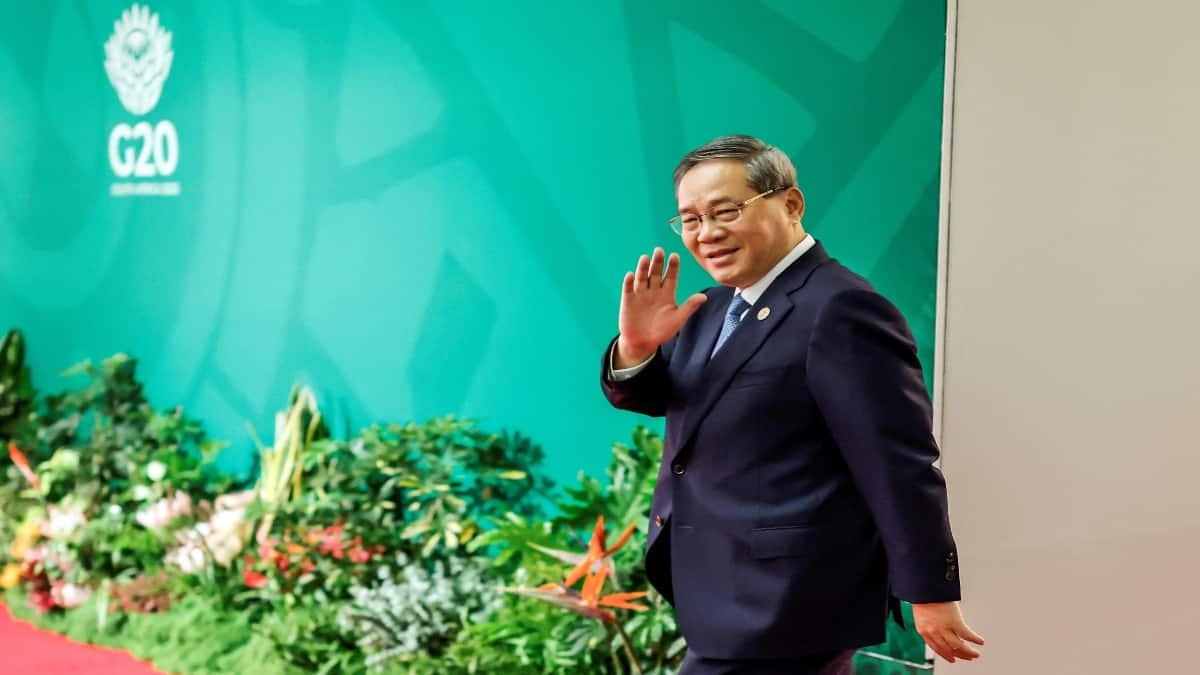
The proposed alliance, called the “international economic and trade co-operation initiative on green minerals,” seeks to promote collaboration among countries that supply, process, or consume rare earths
China is moving to consolidate its dominance over the global rare earths market by proposing an international alliance for rare earth development, with at least 19 countries already on board.
According to a Financial Times report, Chinese Premier Li Qiang unveiled the initiative at the G20 summit in South Africa, emphasising cooperation with resource-rich nations to control key supply chains.
Rare earths, essential for the production of modern technologies from smartphones to electric vehicles, have long been a source of strategic leverage for China.
Western companies’ access to these minerals was a central issue during the trade tensions between Beijing and Washington, and the new alliance appears aimed at consolidating China’s stronghold while fostering ties with mineral-rich partners.
The proposed initiative, called the “international economic and trade co-operation initiative on green minerals,” seeks to promote collaboration among countries that supply, process, or consume rare earths.
According to Li, the alliance will not only enhance supply chain security but also encourage sustainable development and green technology adoption.
Among the 19 countries involved are Cambodia, Nigeria, Myanmar, and Zimbabwe, along with the UN Industrial Development Organization (UNIDO), which will provide support on technical and industrial fronts.
By bringing together producers and stakeholders, Beijing aims to create a structured framework that could challenge US influence in the sector.
The premier said he welcomed “active participation from all parties” but did not provide a dollar figure or many other specifics in the initiative, which comes as the US works to build its own alliances to secure critical mineral supply chains to counter China, reported Financial Times.
Beijing supported “the distribution of benefits” from the rare earth supply chain and “better safeguarding the interests of developing countries, while also being prudent in its use for military and other purposes to prevent security risks,” Li was quoted as saying.
Beijing pushed the US to a standstill in the trade war by implementing export licences with strict controls on rare earths. The US contends that, as part of the recent truce, China has agreed to issue general licences that would allow companies to import rare earths more freely, though the details are still under negotiation.
China rationale behind alliance
Premier Li did not elaborate on the practical implications of the green mineral initiative.
China’s commerce ministry issued a supporting document that offered few specifics, noting only that the development of critical mineral industries should comply with World Trade Organization rules.
However, the Communist Party’s Study Times newspaper outlined China’s rationale for international rare earth alliances in May.
The piece, authored by Hu Jun, head of a think tank under the Ministry of Ecology and Environment, noted that President Xi has repeatedly called for international cooperation on green minerals — such as lithium, graphite, and rare earths — at global summits in recent years.
Hu wrote, “The United States and other western countries are intent on reshaping the global green mineral resource supply chain to curb China’s resource imports.”
He added that these Western-led mineral alliances have gradually extended to include African countries such as Zambia and Angola.
“As competition among major powers intensifies,” Hu argued, China should “promote international co-operation in green minerals” and particularly “further expand co-operation with developing countries.”
He also noted that China’s domestic reserves of upstream minerals such as cobalt, nickel, copper, and manganese account for less than 5 per cent of the global total, making imports essential to meet most of the country’s demand.
With inputs from agencies
End of Article