

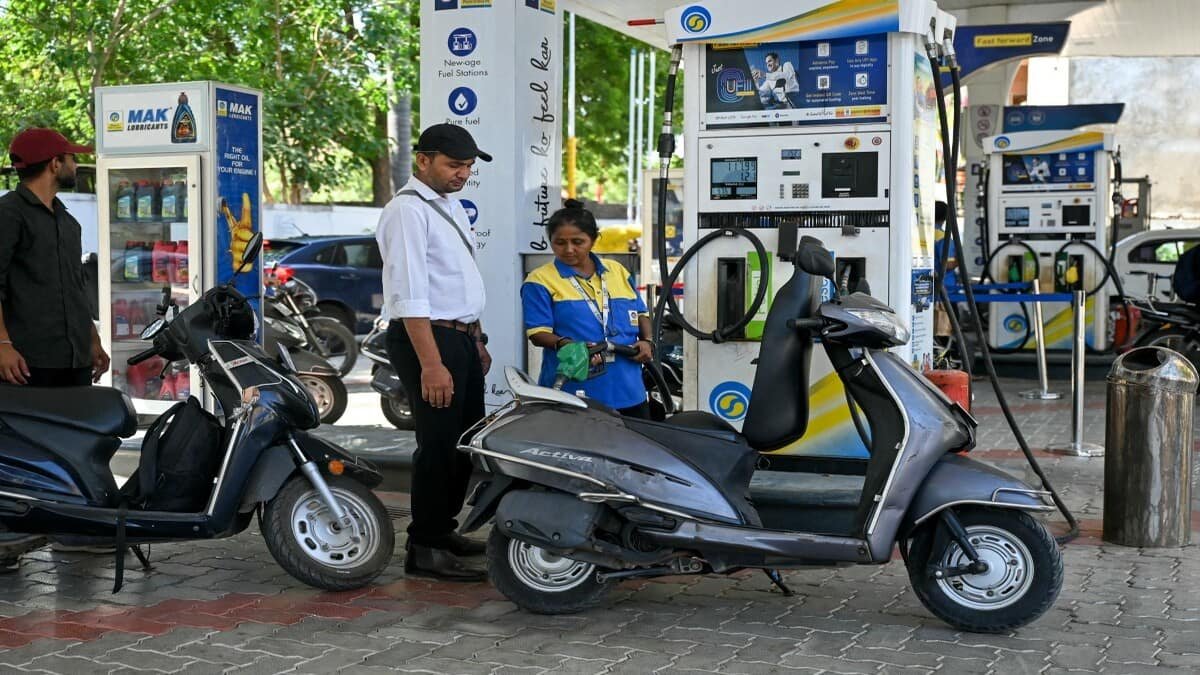
India’s state-run fuel retailers raised petrol and diesel prices for the fourth time in May as higher global crude oil prices driven by the Iran war increased pressure on refiners and consumers
Petrol and diesel prices were raised again on Monday as state-run oil marketing companies (OMCs) continued to pass on rising global crude oil costs to consumers amid the ongoing Iran war and disruptions in energy supplies from West Asia.
The latest increase marks the
fourth fuel price hike since May 15, taking cumulative increases in petrol and diesel prices to nearly Rs 7.5 per litre after daily revisions resumed following a prolonged freeze.
Petrol prices were increased by Rs 2.61 per litre and diesel by Rs 2.71 per litre, according to dealers.
In Delhi, petrol prices rose to Rs 102.12 per litre from Rs 99.51, while diesel rates increased to Rs 95.20 from Rs 92.49. Prices vary across states depending on local taxes.
What petrol and diesel cost now in major cities
After Monday’s revision, petrol prices in Mumbai rose to Rs 111.21 per litre and diesel to Rs 97.83. In Kolkata, petrol now costs Rs 113.51 and diesel Rs 99.82, while Chennai prices stand at Rs 107.77 for petrol and Rs 99.55 for diesel.
Fuel prices are now at their highest levels since May 2022, raising concerns over inflationary pressures and higher transportation and logistics costs across the economy.
The latest hike comes amid elevated global crude oil prices, tighter refining margins and a weakening rupee, all of which have significantly raised import costs for fuel retailers. Brent crude had surged above $110 per barrel during the peak of the conflict before easing slightly on hopes of a potential US-Iran peace agreement.
State-run Indian Oil Corporation, Bharat Petroleum Corporation and Hindustan Petroleum Corporation, which together control nearly 90 per cent of India’s fuel retail market, had largely shielded consumers from higher global prices during the early months of the conflict.
However, company executives say mounting under-recoveries forced the recent revisions. ONGC Director (Exploration) Sushma Rawat said oil marketing companies were absorbing losses of nearly Rs 1,000 crore per day while keeping retail prices unchanged.
“The government has given relief to the people for 76 days, during which prices were not increased. But the OMCs were taking a hit of almost Rs 1,000 crore a day. How long can that continue?” Rawat told ANI.
Freight and inflation concerns rise
Industry executives warned that sustained fuel price increases could ripple through freight rates, food prices and overall supply-chain costs in the coming months.
Vineet Agarwal, Managing Director of Transport Corporation of India (TCI), told Firstpost in comments shared on May 15 that India had largely absorbed the global crude oil shock to protect consumers and contain inflation, but the widening gap between international crude prices and domestic fuel rates had become increasingly difficult to sustain.
“Fuel-price volatility is now structural,” Agarwal said, adding that businesses would need to focus on improving asset productivity, accelerating multimodal freight and reducing diesel dependence.
He also warned that geopolitical tensions in West Asia had embedded a lasting risk premium into crude oil markets, making a structurally higher fuel-price environment more likely even if prices temporarily cool.
India imports nearly 85 per cent of its crude oil requirements, making domestic fuel prices highly sensitive to geopolitical disruptions and currency fluctuations.
The latest revision follows increases of Rs 3 per litre on May 15, around 90 paise on May 19, and another 87-91 paise hike on May 23.
Agarwal said the government still had several policy options, including excise duty cuts, targeted subsidies and calibrated retail hikes, though each carried economic trade-offs.
“Calibrated price increases combined with structural reforms to improve energy efficiency represent the most sustainable path forward,” he said.
With inputs from agencies.
First Published:
May 25, 2026, 06:58 IST
End of Article