

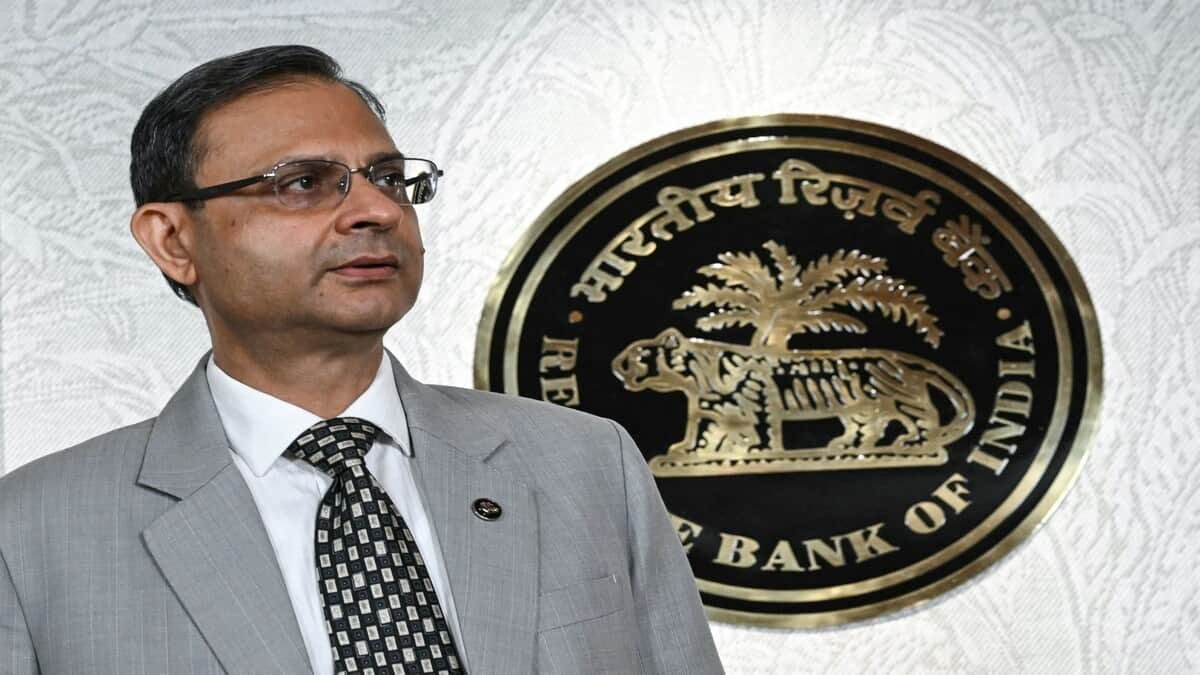
India’s forex reserves stand at $690.69 billion, but recent declines in gold and foreign currency assets highlight rising external pressure as PM Narendra Modi calls for restraint on gold purchases, fuel use and foreign travel amid global volatility
India’s foreign exchange reserves are under close watch after Prime Minister Narendra Modi urged citizens to curb non-essential gold purchases, reduce fuel consumption and avoid unnecessary foreign travel, as global energy prices and geopolitical tensions strain external balances.
India’s forex reserves stand at around $690.69 billion, according to the latest Reserve Bank of India (RBI) data.
While the headline figure still keeps India among the world’s largest reserve holders, recent weekly movements point to growing sensitivity to global commodity prices and valuation changes in key assets such as gold and foreign currency holdings.
The decline was driven mainly by lower gold reserves and foreign currency assets, underscoring India’s exposure to global swings in crude oil and bullion prices. Foreign currency assets, the largest component of reserves, fell by $2.80 billion to $551.83 billion amid continued dollar strength. Gold reserves declined more sharply by $5.02 billion to $115.22 billion, according to the data for the week ended May 1, 2026.
Why gold and oil dominate India’s external stress
The timing of the reserve data is significant, coming just as the Prime Minister has intensified calls for domestic restraint on high-import consumption items.
Addressing a public meeting in Hyderabad on Sunday, Modi urged citizens to postpone overseas travel and weddings abroad, reduce fuel usage and avoid non-essential gold purchases for at least a year.
India imports more than 85 per cent of its crude oil requirement and over 90 per cent of its gold consumption, making both commodities among the largest contributors to foreign exchange outflows.
This twin dependence — on oil for energy and gold for household demand — lies at the core of India’s external vulnerability.
Gold imports under scrutiny as demand shifts
India consumes
around 700 to 800 tonnes of gold annually, while domestic production is negligible at roughly 1 to 2 tonnes. The remainder is met through imports, making gold one of the country’s largest import items after crude oil.
Recent data from the World Gold Council (WGC) show India’s gold market is undergoing a structural shift.
In the March quarter of 2026, total gold demand rose 10 per cent year-on-year to 151 tonnes, even as prices surged. In value terms, demand nearly doubled to a record Rs 2.27 trillion.
More importantly, investment demand has overtaken jewellery demand for the first time on record.
Investment buying — including bars, coins and exchange-traded funds (ETFs) — surged 54 per cent year-on-year to 82 tonnes, while jewellery demand fell nearly 20 per cent to 66 tonnes due to affordability pressures.
Gold ETFs saw record inflows, while bar and coin demand nearly matched jewellery consumption, signalling a shift from cultural buying to financial hedging.
This shift is significant for policymakers, as investment demand tends to be more price-sensitive but also more macro-driven, rising during periods of uncertainty — conditions that currently prevail.
Oil losses add to fiscal pressure
The pressure on external accounts is not limited to gold.
State-run oil marketing companies — Indian Oil, Bharat Petroleum and Hindustan Petroleum — are reportedly absorbing daily under-recoveries of Rs 1,600–1,700 crore due to unchanged retail fuel prices despite rising global crude costs.
Total losses are estimated to have crossed Rs 1 lakh crore, according to PTI reports.
This highlights a broader policy constraint: while fuel prices are being held steady to shield consumers, the financial burden is accumulating within the system, adding indirect pressure on fiscal and external balances.
Why the government is pushing behavioural restraint
Against this backdrop, Modi’s appeal for behavioural changes —
from cutting fuel use to postponing gold purchases — reflects a broader strategy of managing external vulnerability through domestic consumption restraint.
Unlike tariff or trade measures, such appeals aim to influence demand patterns directly in an economy where household consumption drives a large share of imports.
However, the effectiveness of such measures remains uncertain.
Gold in India is not merely a discretionary purchase but a form of savings, insurance and intergenerational wealth transfer. Similarly, fuel consumption is closely tied to mobility and economic activity.
That makes sustained voluntary restraint difficult, especially when global uncertainty itself tends to increase demand for safe-haven assets such as gold.
First Published:
May 11, 2026, 13:34 IST
End of Article