

Talk of a possible “super” El Niño in 2026-27 is already grabbing headlines. In early 2026, scientists began observing warming across multiple parts of the Pacific Ocean, with more heat building below the surface. Winds are starting to move that heat around. Together, these signals have pushed up the probability of a stronger El Niño this year.
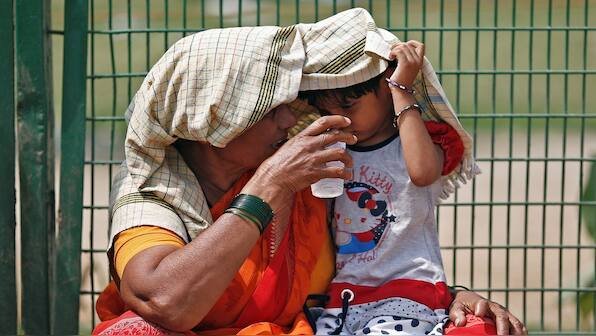
India’s summers are already scorching. In Banda, Uttar Pradesh, temperatures touched 47.4°C on April 25, among the highest recorded this year. Across much of the country, daytime highs have ranged between 40 and 45°C the past few days, with the India Meteorological Department reporting
heatwave conditions in multiple states.
Such extremes often feed concerns about a weak monsoon, especially in years when an El Niño is expected. The label tends to land the same way each time, with fears of a weak monsoon and crop losses in a country where rainfall still drives agriculture, water, and power.
But this reading gets ahead of the science.
While an
El Niño is often linked to weaker monsoons, that relationship isn’t clean. “Calling an El Niño ‘super’ does not necessarily indicate severe droughts and significant agricultural losses in India,” says Pritha Datta, assistant professor, Indian Institute of Technology Kharagpur. A stronger El Niño can raise the risk, but it doesn’t decide the outcome.
We explain this phenomenon and its possible impact on India this year.
What is El Niño?
El Niño is a periodic warming of the central and eastern Pacific Ocean that alters wind patterns and influences rainfall patterns from South America to South Asia. Events are classified by how much ocean temperatures rise above normal.
“About 0.5°C is considered weak, 1°C moderate, 1.5°C strong, and 2°C or more very strong. A ‘super El Niño’ is not a formal scientific category, but an informal term being used because this year’s event is expected to fall into the very strong range,” says Reema Kasera, senior research scholar at Delhi Technological University and co-author of a study on how the timing of El Niño onset affects Indian monsoon rainfall.
But these are still forecasts. They don’t tell you what will happen in India. Look at the past. According to the Ministry of Earth Sciences, since 1950, there have been 16 El Niño years, but only seven of them saw below-normal monsoon rainfall in India.
Even among the strongest events, such as 1982, 1997 and 2015, the pattern doesn’t hold consistently. India saw below-normal rainfall in 1982 and 2015. “However, the 1997 event, despite being one of the strongest on record, did not lead to drought. In fact, the monsoon rainfall was near normal,” adds Kasera.
The shift that year came from the Indian Ocean. A strong positive
Indian Ocean Dipole (IOD) developed alongside El Niño, offsetting its usual drying effect. Clearly, the monsoon is not driven by a single factor. It responds to several signals interacting at the same time.
What actually shapes the monsoon
The intensity and timing of the Indian Ocean Dipole (IOD), a pattern of uneven warming across the Indian Ocean, can either enhance or suppress rainfall. The strength of the Somali Jet, a low-level wind that carries moisture towards India, controls how much moisture reaches the subcontinent. The Madden-Julian Oscillation (MJO), which brings periods of more and less rain as it moves, influences active and break phases of the monsoon.
“Add to that the position of the monsoon trough and the frequency of low-pressure systems over the Bay of Bengal, which shape where the rain actually falls, especially over eastern and central India,” says Kasera.
Research from the Indian Institute of Tropical Meteorology (IITM), Pune, points to another shift. In a study published in Scientific Reports, researchers found that the El Niño-monsoon relationship is no longer uniform across the country. It has remained moderately stable over South India, strengthened over North India, and weakened significantly over central India, the core monsoon zone.
Even its impact on agriculture varies. “El Niño years can bring less rainfall, which may reduce crop yields, especially for water-dependent crops like rice. But the effects vary across regions and years. Soil moisture, temperature, and access to irrigation can buffer or amplify rainfall deficits,” says Datta.
What farmers experience on the ground depends on more than seasonal totals. Distribution matters, so does timing. A season can end near normal and still be difficult if long dry spells fall at the wrong time.
Together, they often decide whether a weak monsoon on paper turns into a difficult season, or a manageable one.
What to watch out for in 2026
Even the development of a “super” El Niño remains uncertain. The signals are strong, but they don’t always play out as expected. Ocean and atmospheric systems can still shift course. Sudden wind bursts, which can intensify El Niño, are difficult to predict. Conditions in other ocean basins can also influence the outcome.
This is why some researchers are cautious about letting a single label dominate early discussion. “It’s more useful to focus on local rainfall patterns, temperature, and short-term forecasts rather than relying only on labels like El Niño,” says Datta.
That doesn’t make El Niño forecasts irrelevant. They still provide an early signal. Governments and farmers use them to plan: manage water, adjust crops, and prepare for variability. But treating a “super” El Niño as a direct sign of drought in India oversimplifies a much more complex system.
As the monsoon approaches, forecasts will sharpen. The headlines will follow. But the more useful question is not whether an El Niño turns “super.” It is what signals actually line up when the monsoon arrives. Because in India, that is what ultimately decides the season.
First Published:
April 29, 2026, 12:17 IST
End of Article