

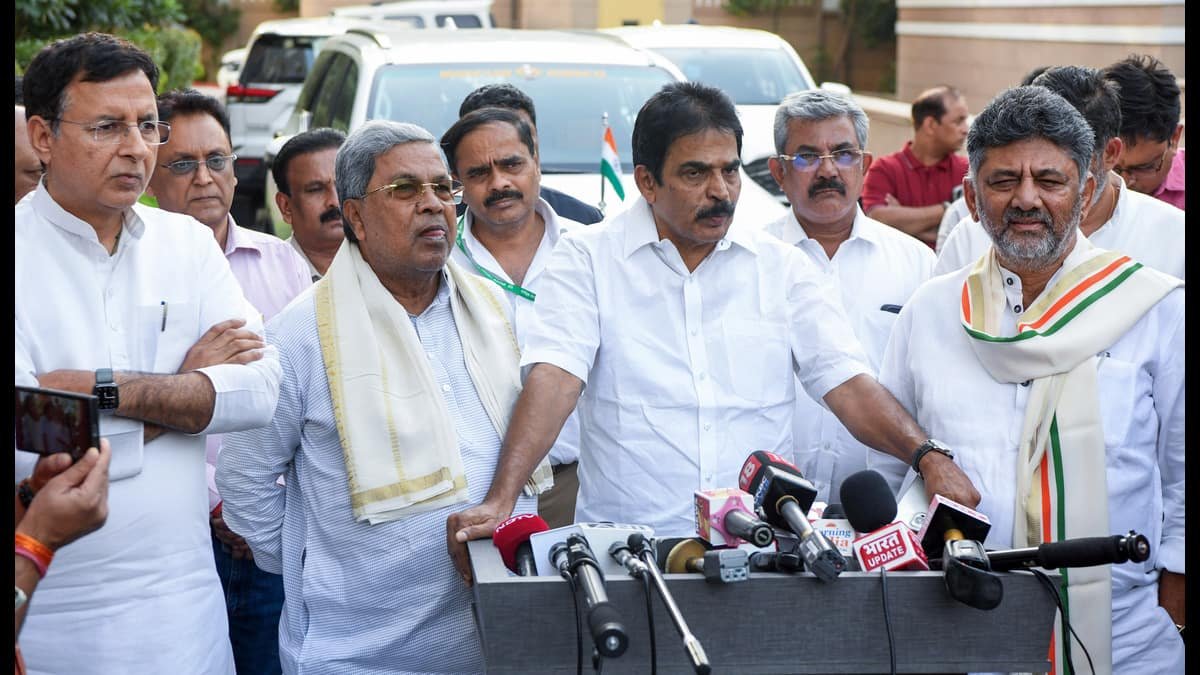
The reported leadership change comes after months of speculation over a power-sharing arrangement within the Congress government in Karnataka.
Karnataka Chief Minister Siddaramaiah is likely to step down from his post on Friday, with Deputy Chief Minister DK Shivakumar expected to take over as the next chief minister, CNN-News18 reported.
The long-running tussle over Karnataka’s top post is understood to have been resolved after the Congress central leadership reportedly backed Shivakumar’s claim unanimously.
According to sources cited in the report, Siddaramaiah has been asked to take up a national role within the party, while Shivakumar is expected to succeed him as chief minister. Siddaramaiah’s son is also likely to be appointed deputy chief minister, sources added.
Congress leadership discusses transition
Earlier in the day, the Congress held a marathon six-hour meeting but publicly maintained that discussions were focused only on upcoming Rajya Sabha and MLC elections.
“Discussions were held regarding the Rajya Sabha and MLC elections. There is no truth to any other speculation,” Congress general secretary KC Venugopal told reporters after the meeting.
Despite the public denial, speculation over a leadership transition intensified following reports that the party high command had reached a consensus on the issue.
Long-running power-sharing tussle
The leadership issue in Karnataka has remained unresolved for more than a year, with Shivakumar’s supporters repeatedly claiming that the Congress leadership had agreed to a rotational chief minister arrangement when the party formed the government after the 2023 Assembly elections.
Shivakumar, one of the Congress’s most influential leaders in Karnataka, was seen as a strong contender for the chief minister’s post in 2023. According to his supporters, he agreed to take the deputy chief minister’s role only after being assured that he would be elevated to the top post after two-and-a-half years.
Congress cautious over AHINDA support base
However, the Congress leadership remained cautious about altering the power structure due to Siddaramaiah’s strong support among the AHINDA social coalition — comprising minorities, backward classes and Dalits — which played a major role in the party’s sweeping victory in Karnataka.
Even after Siddaramaiah completed two years in office in November, the party opted to maintain status quo amid concerns that a leadership change could trigger political backlash among key voter groups, particularly ahead of elections in neighbouring Tamil Nadu.
First Published:
May 26, 2026, 22:02 IST
End of Article