

The 2026 Kerala Assembly election has emerged as one of the most seismic developments in recent Indian history.
With the Congress-led United Democratic Front (UDF) set to form the government after crossing the majority mark in the 140-member Assembly,
the CPI(M)-led Left Democratic Front (LDF) has been unseated after a decade in power.
This electoral outcome does more than mark a routine change of government in Kerala.
It signals the end of Communist rule in any Indian state for the first time since 1977, closing a long chapter that once saw the Left as a major force shaping both state and national politics.
How decisive was the UDF victory in Kerala?
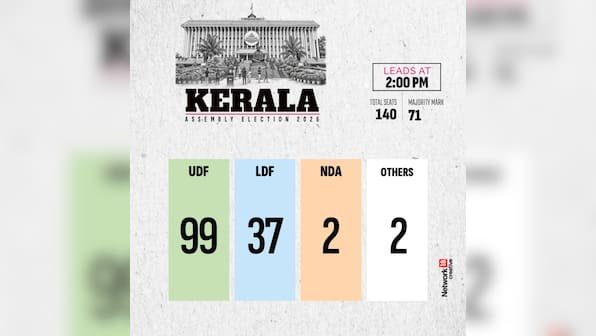
As counting progressed on Monday, trends indicated a commanding advantage for the UDF across Kerala’s constituencies. The alliance secured between 97 and 100 seats, comfortably surpassing the halfway mark of 71 required to form the government.
In contrast, the LDF was restricted to approximately 38 to 41 seats, reflecting a significant erosion of its support base compared to the previous election.
The BJP-led National Democratic Alliance (NDA), despite efforts to expand its presence, managed to secure only 1 to 2 seats, while a small number of constituencies went to independents and minor parties, including the Revolutionary Marxist Party of India (RMPOI).
Party-wise trends also illustrated the scale of the UDF’s performance. The Indian National Congress emerged as the single largest contributor within the alliance, with more than 60 seats either won or leading.
Its allies, including the Indian Union Muslim League (IUML), Kerala Congress factions, and the Revolutionary Socialist Party (RSP), added significantly to the tally.
On the Left side, the CPI(M) and CPI bore the brunt of the losses, with their combined strength falling sharply.
The election witnessed a voter turnout of 78.27 per cent, a figure that highlights Kerala’s reputation for high political participation.
Polling took place in a single phase on April 9, and given the state’s history of closely contested elections, even minor swings in vote share translated into substantial changes in seat distribution.
Celebrations began early at Congress offices as trends aligned with expectations. The party’s confidence had been visible even before the final results were declared. MP Shashi Tharoor articulated this sentiment, stating, “I was very confident we are going to win we are going to score a comfortable win of above 75 seats.”
However, on the question of leadership, he refrained from endorsing any individual, remarking, “I know exactly what you’re trying to get me to say. I’m not saying any of that.”
He elaborated on the party’s internal decision-making process. “We have a standard practice in the Congress Party. After the election results, the victorious MLAs will be met by an envoy or representative of the president of the party. That person will get the sense of what the MLAs want the high command will take that into account and make a final decision. Thereafter, they are not bound by any rules or limits. They can choose anything that they want.”
What factors contributed to the LDF’s defeat after two terms?
Kerala’s electoral history has typically been characterised by an alternating pattern between the LDF and the UDF. This cycle was disrupted in 2021 when Pinarayi Vijayan secured a second consecutive term, largely credited to the government’s handling of crises such as floods and the Covid-19 pandemic.
However, the attempt to extend this into a third term faced significant resistance. Anti-incumbency sentiment, often referred to in the state as a cyclical voter response, resurfaced strongly after a decade of uninterrupted rule.
Sections of the electorate appeared to seek a shift, consistent with Kerala’s historical tendency to rotate power between the two major alliances.
Economic management emerged as a central issue in the campaign. The LDF government faced criticism over rising public debt and fiscal stress. Reports of delays in disbursing social security pensions and government salaries became politically significant, particularly among beneficiaries of welfare schemes and public sector employees.
The issue of employment also featured prominently. The steady migration of young Keralites to destinations in Europe and the Gulf was highlighted by the opposition as indicative of limited job creation within the state. This narrative resonated with voters concerned about long-term economic prospects.
Governance-related concerns further complicated the LDF’s position. Allegations regarding transparency in major infrastructure projects and claims of favouritism in institutional appointments were repeatedly raised during the campaign.
While these allegations varied in scope and impact, they contributed to a broader perception challenge for the incumbent administration.
Electoral dynamics also shifted in key regions. In districts such as Malappuram and Ernakulam, there was a noticeable consolidation of minority votes in favour of the UDF. This shift offset the gains the LDF had made among these groups in previous elections.
Despite the broader trend, some individual performances stood out. Chief Minister Pinarayi Vijayan retained his Dharmadam seat, though with a reduced margin compared to 2021.
On the other hand, several ministers were defeated, including Water Resources Minister Roshy Augustine, whose loss marked the end of a long electoral run.
Among the UDF’s prominent victories, Ramesh Chennithala secured a substantial win in Haripad with a margin exceeding 23,000 votes, while VD Satheesan was widely seen as a key strategist behind the alliance’s campaign.
How did the BJP-led NDA perform in Kerala?
While the state has traditionally witnessed a bipolar contest between the LDF and UDF, the BJP-led NDA has been attempting to establish itself as a third force.
In this election, the NDA managed to maintain its vote share in the range of approximately 10 to 16 per cent across various constituencies. This consistent presence has made several seats more competitive, even if it has not translated into a significant increase in Assembly representation.
The BJP’s campaign emphasised economic issues, job creation, and governance concerns, particularly in urban and semi-urban areas. However, the electoral system and the consolidation of votes between the two major alliances limited its ability to convert vote share into seats.
Why is this result historically significant for the Left in India?
The implications of the Kerala verdict extend far beyond state boundaries. With the LDF losing power, India will no longer have a Communist chief minister for the first time in nearly five decades.
The Left’s political journey in India has been both influential and distinctive. In the country’s first general elections in 1951-52, the Communist Party of India emerged as the largest opposition grouping in Parliament, marking an early indication of its organisational strength.
A landmark moment followed in 1957, when Kerala elected a Communist government through democratic means — the first instance of its kind in a major country. This achievement positioned the state as a pioneering example of electoral communism.
The Left’s influence expanded significantly in subsequent decades. In 1977, the CPI(M) established a government in West Bengal, initiating what would become a 34-year uninterrupted tenure — the longest continuous rule by any party in an Indian state.
Jyoti Basu served as chief minister for over two decades before passing the leadership to Buddhadeb Bhattacharya.
Tripura emerged as another key stronghold. From 1993 onwards, the Left maintained a sustained presence in power, with leaders such as Dasarath Deb and later Manik Sarkar overseeing long periods of governance.
At the national level, the Left reached the peak of its parliamentary strength in 2004, securing 59 Lok Sabha seats. During this period, it played a crucial role in supporting and influencing the United Progressive Alliance (UPA-I) government.
Its interventions shaped debates on economic policy and international agreements, including its opposition to the Indo-US civil nuclear deal. The withdrawal of support in 2008 marked a turning point.
The subsequent years saw a steady decline. In the 2009 general elections, the Left’s tally dropped significantly, and the downward trend continued in 2014 and 2019. Its representation in Parliament has since been reduced to a small number of seats, many secured with the backing of regional allies.
Electoral setbacks at the state level further accelerated this decline. In 2011, the Left lost power in West Bengal after a prolonged period in office, with the Trinamool Congress capitalising on a wave of political change.
In 2018, the BJP ended the Left’s long rule in Tripura, a shift it reinforced in the subsequent election.
Kerala remained the final major state where the Left retained power, returning to government in 2016 and again in 2021.
The 2026 result now marks the end of that last stronghold.
What does the future hold for Kerala and the Left?
For Kerala, the immediate outcome is the formation of a new government led by the UDF after a decade in opposition. The alliance’s campaign focused on economic recovery, governance accountability, and employment generation — issues that appear to have resonated strongly with voters.
The process of selecting the next chief minister will follow the Congress party’s established procedures, involving consultations with elected legislators and the central leadership.
For the Left, the challenge is more structural. The absence of a state government reduces its ability to influence policy and political discourse at both regional and national levels.
Historically, its strength in states such as West Bengal, Kerala, and Tripura enabled it to exert influence disproportionate to its parliamentary numbers. That advantage is now significantly diminished.
Despite the electoral setback, the Left continues to maintain a presence in Parliament, though its numbers remain limited.
With inputs from agencies
First Published:
May 04, 2026, 14:31 IST
End of Article