

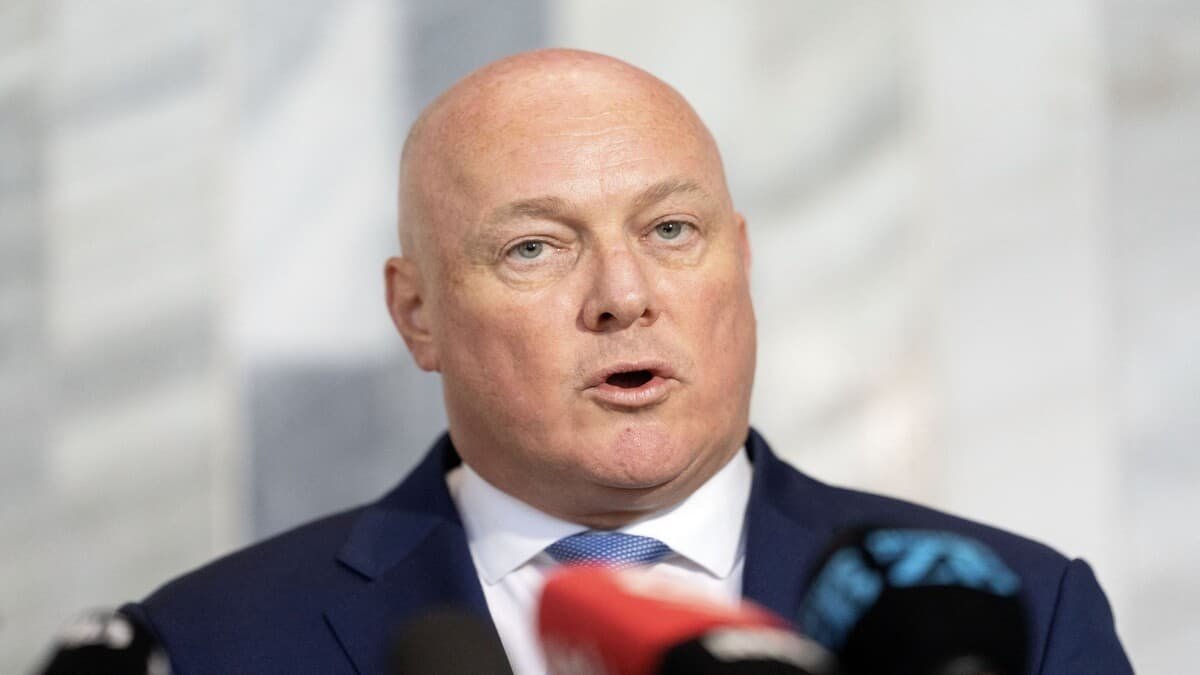
New Zealand Prime Minister Christopher Luxon defends a landmark free trade agreement with India ahead of its April 27 signing, despite rising political opposition and concerns over immigration provisions
New Zealand Prime Minister Christopher Luxon has called for bipartisan backing of the free trade agreement (FTA) with India, pushing back against criticism from political rivals and coalition partners just days before its formal signing in New Delhi.
Trade and Investment Minister Todd McClay confirmed that legal verification of the agreement has been completed, with both sides set to sign the deal on April 27. The pact, concluded in December, is expected to take up to 12 months to come into force.
The agreement aims to significantly boost trade ties between Wellington and New Delhi, with projections suggesting bilateral merchandise trade could more than triple to NZD $8.57 billion within five years. Luxon has framed the deal as critical for New Zealand exporters seeking better access to one of the world’s fastest-growing major economies led by Prime Minister Narendra Modi.
Under the FTA, tariffs on 95 per cent of New Zealand’s timber and wood exports to India will be eliminated immediately, with remaining duties phased out over seven years. Overall, about 57 per cent of New Zealand exports will become duty-free upon implementation, rising to 82 per cent over time.
The deal is particularly significant for New Zealand’s wood processing sector, which has struggled with declining access to key markets in recent years. Industry leaders say tariff certainty in India could help diversify exports away from heavy reliance on China.
However, the agreement has sparked political tensions at home. Opposition leader Chris Hipkins has criticised the government for pushing ahead without broader parliamentary consensus, calling the move “recklessly irresponsible.”
Coalition partner New Zealand First, led by Winston Peters, has also withheld support, raising concerns over immigration provisions linked to skilled workers.
Luxon, however, has dismissed the criticism, defending the agreement as economically vital and rejecting claims that its provisions are overly permissive. He has urged lawmakers across party lines to support what he described as a generational opportunity to deepen ties with India and secure long-term growth for New Zealand exporters.
With inputs from agencies.
First Published:
April 20, 2026, 12:33 IST
End of Article