

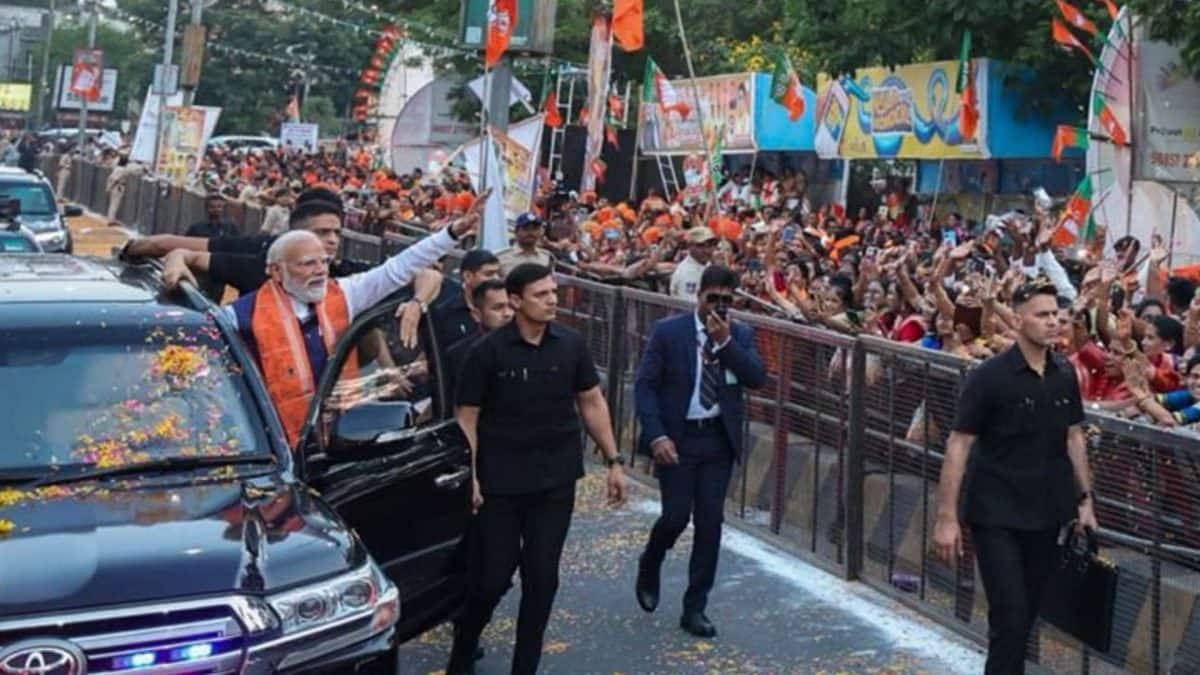
Prime Minister Narendra Modi has ordered a 50 per cent cut in his convoy and pushed greater EV use, with BJP chief ministers and senior leaders across states following suit as India braces for economic strain from the West Asia crisis
Prime Minister Narendra Modi has ordered a 50 per cent cut in the size of his official convoy and pushed for more use of electric vehicles as part of a broader austerity drive aimed at reducing fuel consumption, as India braces for the
economic aftershocks of the Iran war.
The Special Protection Group (SPG) has been directed to scale down the number of vehicles in the Prime Minister’s convoy while ensuring there is no compromise on mandatory security protocols, reported news agency ANI.
The changes are already being put into effect.
The Prime Minister has already been seen travelling with noticeably smaller convoys during recent visits to Gujarat and Assam, including appearances in Vadodara and Guwahati shortly after his public appeal for economic restraint at a BJP rally in Hyderabad.
Leading by example
The message is now spreading across the government and allied administrations.
In Uttar Pradesh, Chief Minister Yogi Adityanath has ordered an immediate 50 per cent reduction in official vehicle fleets used by the Chief Minister, ministers and senior officials. He also urged ministers, MPs, MLAs and public representatives to use public transport at least one day every week.
मुख्यमंत्री जी ने प्रदेश में ‘वर्क फ्रॉम होम’ (WFH) की संस्कृति को भी प्राथमिकता देने की अपील की। उन्होंने कहा कि जिन संस्थानों में बड़ी संख्या में कार्मिक कार्यरत हैं, उन्हें सप्ताह में दो दिन WFH की अनुशंसा के लिए राज्य स्तर पर एडवाइजरी जारी की जाए। राज्य सचिवालय/निदेशालय की 50…
— CM Office, GoUP (@CMOfficeUP) May 12, 2026
Madhya Pradesh Chief Minister Mohan Yadav has announced that his convoy will now use the minimum number of vehicles required and appealed to other ministers to follow suit. He also encouraged wider use of public transport.
आदरणीय प्रधानमंत्री श्री @narendramodi जी के आह्वान पर मध्यप्रदेश राष्ट्रहित में पेट्रोल-डीजल की खपत कम करने के लिए संकल्पित है।
आगामी आदेश तक मेरे कारकेड में सुरक्षा की दृष्टि से न्यूनतम वाहन होंगे और भ्रमण के दौरान कोई वाहन रैली नहीं होगी। सभी मंत्रीगण भी यात्रा के समय न्यूनतम…
— Dr Mohan Yadav (@DrMohanYadav51) May 12, 2026
Delhi Chief Minister Rekha Gupta said official vehicle use would be sharply reduced across the administration, with Cabinet ministers, BJP MLAs, officers and public representatives instructed to prioritise carpooling and public transport wherever possible.
माननीय प्रधानमंत्री श्री @narendramodi जी ने वर्तमान वैश्विक परिस्थितियों के मद्देनज़र देशवासियों से पेट्रोल-डीजल की बचत करने तथा ऊर्जा संरक्षण को जन आंदोलन बनाने का आह्वान किया है।
माननीय प्रधानमंत्री जी की इस महत्वपूर्ण अपील को आत्मसात करते हुए विभागीय कामकाज हेतु वाहनों की…
— Rekha Gupta (@gupta_rekha) May 12, 2026
Rajasthan Chief Minister Bhajan Lal Sharma has similarly directed officials to minimise convoy sizes and avoid unnecessary vehicle deployment, particularly for non-essential security movement.
In Maharashtra, the austerity drive has extended to air travel. State ministers must now seek prior approval from Chief Minister Devendra Fadnavis’s office before using government aircraft, effectively curbing non-essential official flights.
In Gujarat, Governor Acharya Devvrat has announced he will travel across the state using trains, state transport buses and public transport instead of helicopters and flights, while also reducing convoy size.
Gujarat Deputy Chief Minister Harsh Sanghvi has gone a step further by cancelling a planned trip to the United States following Modi’s call to cut non-essential foreign travel.
In Bihar, Deputy Chief Minister Vijay Kumar Chaudhary said he had personally halved the number of vehicles in his convoy and would undertake official travel only when absolutely necessary.
At the Hyderabad rally on Sunday, Modi urged people to reduce petrol and diesel consumption, make greater use of metro services, carpool where possible and shift toward electric vehicles.
He also encouraged work-from-home arrangements, increased use of railway parcel services and a rethink of non-essential spending.
In one of his strongest economic appeals in recent years, the Prime Minister asked citizens to avoid buying gold for the next year and postpone unnecessary foreign travel in a bid to conserve foreign exchange reserves as global oil prices remain volatile.
He also called for lower edible oil consumption, reduced dependence on chemical fertilisers and wider adoption of natural farming and locally made products to strengthen economic self-reliance.
PM Modi said these steps were necessary to shield India from the economic fallout of the West Asia crisis.
First Published:
May 13, 2026, 12:00 IST
End of Article