

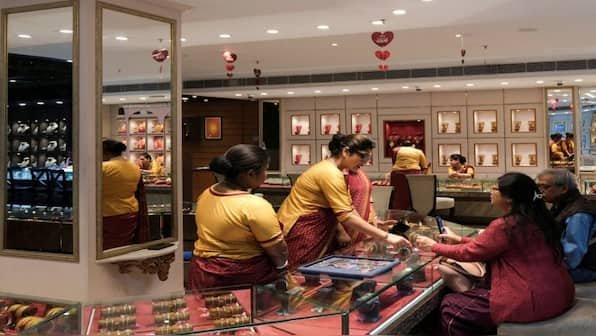
India loves its gold. We purchase the precious yellow metal for weddings, baby showers, festivals such as Diwali, and even during crises. It’s what makes India among the biggest buyers of gold worldwide — we account for around 20-25 per cent of the global demand.
Now, imagine in such a situation what happens if we don’t buy gold for a year, as per Prime Minister Narendra Modi’s request. What impact will such a move make on global prices as well as the Indian economy?
We explore and get you the answers.
Why has PM Modi urged people not to buy gold for a year?
On Sunday (May 10), Prime Minister Narendra Modi called on Indians to follow some austerity measures as a result of the long-drawn West Asia crisis.
Among the many measures, the PM asked Indians to avoid buying gold for at least one year, saying gold imports put additional pressure on the country’s foreign exchange reserves during a global crisis.
“Gold purchases are another area where foreign exchange is used extensively. In the national interest, we must resolve not to purchase gold for a year,” said PM Modi in an address from Telangana’s Secunderabad.
Data shows that PM Modi isn’t wrong. As a country,
India imports millions and millions of dollars’ worth of gold. The data reveals that gold imports have risen to 24 per cent to a record $71.98 billion in 2025-26. In two years, the gold import bill has almost doubled from $35 billion in 2022-23. The import bill stood at $45.54 billion in 2023-24, indicating a consistent upward trend in value terms over the last two years.
In fact, of India’s total import bill in 2025-2026 amounting to Rs $775 billion, the gold purchases of $71.98 billion is only second to crude oil purchase of $134.7 billion. This makes gold nearly 10 per cent of the total import bill.
So, if Indians were to curtail their gold purchase, India’s import bill would reduce considerably, and also help India conserve its
foreign reserves, which stand around $690.69 billion, according to the latest Reserve Bank of India (RBI) data.
What happens to the economy if Indians adhere to Modi’s advice?
Most experts note that Indians would benefit greatly if they followed the PM’s request on the purchase of the yellow metal. If Indians stopped purchasing gold for a year, it could reduce India’s import bill by a significant amount.
Manoranjan Sharma, Chief Economist at Infomerics Ratings, noted that gold imports are among India’s largest non-oil imports, and a sharp fall in purchases could meaningfully reduce pressure on the economy’s external balances. “If Indian households stop buying gold for a year, the current account deficit would narrow sharply,” he said. India’s CAD for FY2025 is estimated at around 0.9–1.1 per cent of GDP, or roughly $28–32 billion.
He further noted that a lower CAD would strengthen the rupee, which in turn would reduce pressure on imported inflation.
Moreover, the dollars saved from not buying gold could be put to better use to purchase essential energy imports like crude, which have become more expensive due to the ongoing West Asia war.
A Moneycontrol analysis, in fact, revealed that even if Indians reduced their gold consumption by 10 per cent, it would save India $7.2 billion.
What about the global gold prices?
If Indians actually do heed PM Modi’s request, it will also affect gold prices internationally. That’s because India is among the largest buyers of the yellow metal globally.
Analysts believe that a reduction in gold purchases from India could result in a surplus in global supplies, leading to a major correction in spot gold prices. However, the situation inside India could be very different. Despite weaker global prices, domestic gold rates may remain elevated because of limited supply and rising premiums.
How has the jewellery industry reacted to Modi’s gold appeal?
While many experts have called PM Modi’s request a defensive economic strategy, those from the jewellery industry note that this could have a negative impact in the long term.
The All India Jewellers & Goldsmith Federation (AIJGF) noted that if Indians were to stop purchasing gold completely for a year, it would imperil the jobs of 35 million people connected to this sector.
In a letter to Commerce Minister Piyush Goyal, AIJGF national President Pankaj Arora said while the government’s concerns over foreign exchange reserves and a swelling import bill were understandable, a broad public appeal discouraging gold purchases without a structural alternative risked devastating the jewellery ecosystem.
“While the intention of protecting India’s foreign exchange reserves is understandable, the solution should not be demand destruction. The solution should be domestic gold mobilisation, recycling and productive circulation of India’s idle gold stocks,” Arora said.
The federation warned that a sudden negative shift in consumer sentiment could reduce footfalls, slow manufacturing orders, and hit the incomes of small jewellers and artisans — the most vulnerable workers in the supply chain. “This is not merely a gold trade issue. This is a livelihood issue.” Gold holds a unique place in Indian households, the federation noted, serving as a store of savings, a fixture of wedding culture, and a source of rural liquidity rather than a discretionary luxury. “For millions of Indian families, jewellery is not speculation, it is savings in wearable form,” Arora wrote.
VIDEO | Nagpur: “We support PM’s statement but people working in gold jewellery industry will face losses”, says GJC Chairman Rajesh Rokde on Modi asking people to purchase less gold.
(Full video available on PTI Videos – https://t.co/n147TvrpG7) pic.twitter.com/6RNgbDlqaa
— Press Trust of India (@PTI_News) May 12, 2026
Rajesh Rokde, chairman of All India Gem and Jewellery Domestic Council, also concurred on this assessment. He said that the jewellery industry contributes around seven per cent to India’s GDP and supports a large employment ecosystem. “Today, more than one crore people work directly in the showrooms through employment through artists through their employment,” he said. “Giving any kind of restriction on jewellery can raise a big question of unemployment,” Rokde said.
In fact, industry insiders are set to submit a Gold Monetisation Scheme proposal to the government. This will allow individuals, trusts, and institutions to deposit idle gold with banks and earn interest, with both interest and capital gains fully tax-exempt.
However, the impact of the PM’s appeal will be known only in the next few months.
With inputs from agencies
First Published:
May 12, 2026, 11:38 IST
End of Article