

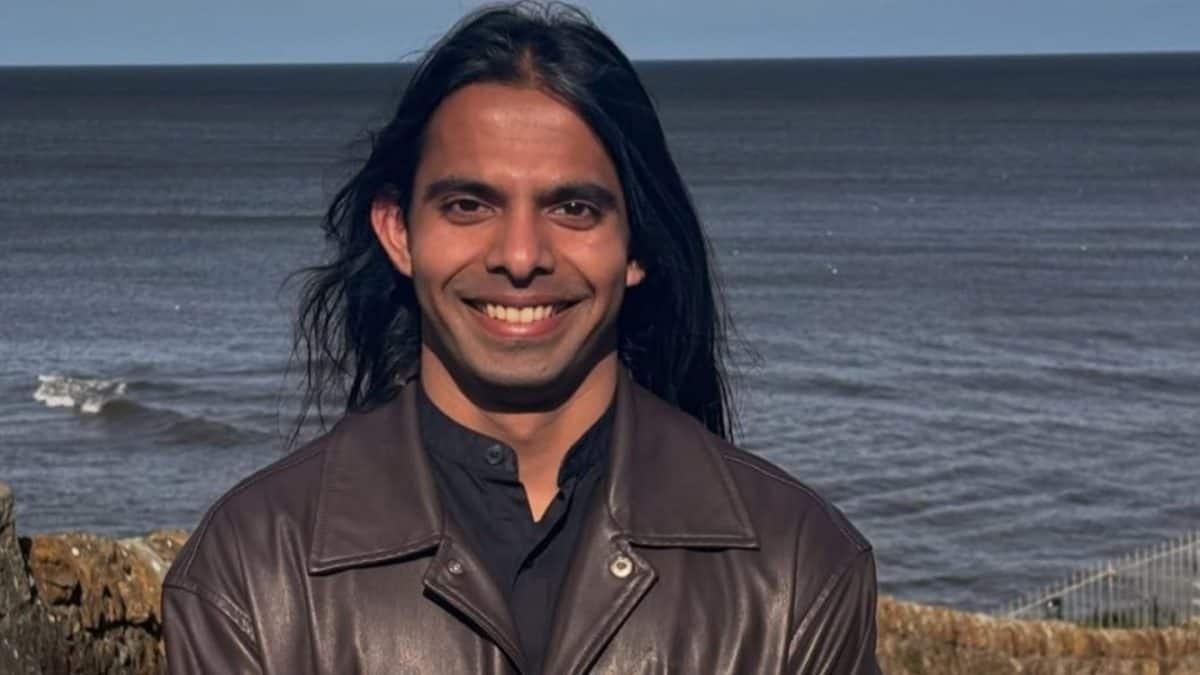
Manivannan, who identifies as non-binary and uses they/them pronouns, won a Scottish Greens seat in Edinburgh and Lothians East under 2025 legislation introduced by the SNP government. The law expanded eligibility to allow non-UK citizens with valid leave, including short-term visas, to contest Scottish Parliament elections
An Indian-origin transgender candidate has been elected to the Scottish Parliament despite not having permanent UK residency, according to The Telegraph.
Q Manivannan, who identifies as non-binary and uses they/them pronouns, won a seat representing the Scottish Greens in the Edinburgh and Lothians East region.
Who is Q Manivannan?
A native of India’s Tamil Nadu, Manivannan arrived in Scotland in September 2021 as a PhD student at the University of St Andrews. Before moving to the UK, they studied liberal arts and humanities at OP Jindal Global University in Delhi.
In their victory speech, they identified as a “transgender Tamil immigrant” from a lower-caste background, pledging to bring a “politics of care and compassion” to the chamber.
“I want to continue standing unwaveringly for solidarity for oppressed communities – whether its immigrants or asylum-seekers in Edinburgh… or suffering Palestinians,” Manivannan stated.
A trans Indian migrant who arrived in the UK a few years ago and is not a citizen or permanent resident was elected to the Scottish parliament as a member of the woke Green Party. Scotland allows non-citizens to become elected to office.
“Q Mannivannan” is set to earn over… pic.twitter.com/3ePA6B0le1
— Andy Ngo (@MrAndyNgo) May 9, 2026
A ’new Scot’ under new rules
Manivannan’s win was made possible by legislation introduced by the Scottish National Party (SNP) government in 2025. This law expanded eligibility, allowing non-UK citizens with any form of valid leave, including short-term student visas, to stand for election to the Scottish Parliament.
Previously, candidates were generally expected to have Indefinite Leave to Remain (ILR) or permanent residency to stand for election.
A spokesperson for the Scottish Greens defended Manivannan’s election, saying their visa status is valid and includes the right to work in the UK.
The party also pointed out that, as a citizen of a Commonwealth country like India, Manivannan meets the eligibility criteria set by the devolved administration.
They further cited Holyrood’s “New Scots” approach, which allows anyone living in Scotland to take part in the democratic process.
The election has not been without friction.
Critics from groups like Migration Watch have questioned the stability of having an elected official on a temporary visa.
Adding to the unique nature of their situation, Manivannan has reportedly had to crowdfund roughly £2,100 ($2,852) to cover the costs of a graduate visa to ensure they can remain in the country for the duration of their term. Despite the debate, they are set to receive the standard annual Member of the Scottish Parliament (MSP) salary of £77,000 ($104,595)as they take their seat at Holyrood.
First Published:
May 11, 2026, 12:18 IST
End of Article