

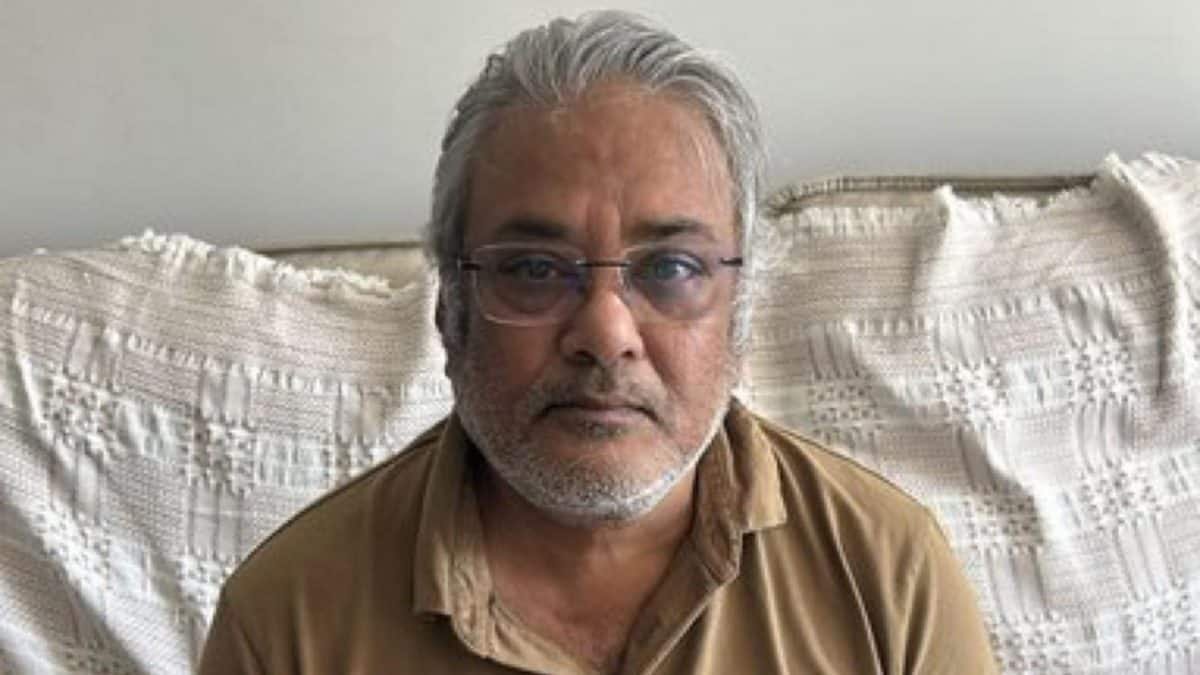
The recent arrest and deportation of Mohammad Salim Dola represents one of the most consequential actions taken against the global criminal architecture linked to Dawood Ibrahim’s D-Company in recent years.
A veteran figure of the Mumbai underworld, Dola had for decades remained embedded in the syndicate’s international operations, handling not only narcotics trafficking but also critical financial and logistical networks that enabled its survival across borders.
At 59, Dola was no longer a peripheral player. Investigators describe him as a central figure whose responsibilities spanned continents, linking suppliers, distributors, financiers, and facilitators.
His arrest in Turkey,
followed by his deportation to India, is therefore been viewed touted as a strategic disruption of a transnational criminal ecosystem.
How was Salim Dola tracked down in Istanbul?
Dola’s arrest on April 25, in Istanbul came after what officials characterised as a complex, multi-agency operation involving sustained intelligence coordination between Indian and Turkish authorities.
The operation, backed by inputs from agencies such as the NIA, NCB, and RAW, relied heavily on prolonged surveillance and cross-border information exchange.
For years, Dola had deliberately kept a low profile. After relocating from the United Arab Emirates — where increasing cooperation between Indian and Emirati authorities made continued operations difficult — he shifted base to Turkey.
In Istanbul, he adopted a covert lifestyle, avoiding direct contact and limiting his movements to reduce the risk of detection.
For nearly one and a half years, Dola reportedly did not step out of his residence and avoided direct interactions that could expose his location.
Despite these precautions, a small operational lapse reportedly proved decisive. A courier delivery ordered to his residence allowed investigators to identify his location with precision.
This transaction, combined with intelligence inputs and monitoring mechanisms, enabled agencies to confirm his presence in a specific hideout in Istanbul’s Beylikdüzü district.
Armed with this information, Indian agencies alerted Turkish law enforcement. Acting swiftly, local police units carried out a raid at the identified location. Dola was taken into custody under an Interpol Red Notice issued in March 2024 at India’s request.
The arrest was the culmination of months of coordinated surveillance, involving both physical tracking and technical intelligence gathering. Authorities had been monitoring potential leads across multiple countries before narrowing down his location to Turkey.
What did Dola use to evade capture?
A key element of Dola’s ability to remain undetected for years lay in his use of multiple identities and travel documents. Investigators found that he had been operating under an assumed name — “Hamza” — while residing in Turkey.
Preliminary findings indicate that he was in possession of a Bulgarian passport bearing this alias. Officials are currently examining whether this document was legitimate or fraudulently obtained.
Alongside this, two Indian passports were also recovered during the search of his residence, raising further questions about the network of forged or duplicate documents that may have facilitated his movements.
Earlier intelligence had suggested that Dola had used a passport purportedly issued by the UAE to avoid scrutiny.
The use of aliases and foreign passports is consistent with the broader modus operandi of organised crime networks. In Dola’s case, these methods allowed him to shift between jurisdictions while remaining outside the reach of law enforcement agencies for extended periods.
Who is Salim Dola and how did he rise within D-Company?
Born in 1966 and associated with Mumbai’s Dongri and Byculla localities, Dola’s journey into organised crime began during a period when the city’s underworld was undergoing significant transformation.
Over time, he transitioned from a local operator to a figure with international responsibilities within D-Company.
Unlike individuals involved in direct enforcement or violent activities, Dola’s role was primarily strategic. He became deeply involved in managing overseas operations, particularly those linked to narcotics trafficking.
Investigators describe him as a coordinator who connected suppliers, distributors, and financial intermediaries across regions.
He is believed to have overseen a wide-ranging synthetic drug network dealing in substances such as mephedrone, heroin, methamphetamine, and fentanyl.
These operations extended across West Asia, Africa, and Europe, indicating a level of reach that placed him among the key facilitators of the syndicate’s global activities.
In addition to drug trafficking, Dola handled financial logistics, including hawala transactions — informal systems used to transfer money across borders outside formal banking channels. He was also involved in gold smuggling and in arranging forged travel documents for other members of the organisation.
His importance within D-Company stemmed from his ability to manage these interconnected functions. While other operatives may have been involved in enforcement or territorial control, Dola contributed to sustaining the syndicate’s financial and logistical backbone.
What is known about his links to Dawood Ibrahim?
Dola’s association with Dawood Ibrahim places him within the core structure of D-Company. Intelligence inputs suggest that he had direct access to senior figures within the organisation, including Dawood Ibrahim and his brother Anees Ibrahim.
His name has appeared in chargesheets filed by Indian agencies such as the CBI and NIA in connection with the 1993 Mumbai serial blasts.
He is alleged to have provided logistical assistance and financial support to individuals accused in the attacks, though these aspects remain part of ongoing legal processes.
In more recent years, Dola has been linked to multiple narcotics cases in India. He is a prime accused in a ₹1,000 crore fentanyl seizure case from 2018, involving drugs reportedly intended for trafficking to Mexico.
Despite being arrested in that case, he later secured bail and left the country, a development that drew attention due to controversies surrounding forensic testing at the time.
He is also identified as a key supplier in cases involving the seizure of commercial quantities of mephedrone, including a 2023 operation in south Mumbai where 20 kilogrammes of the drug were recovered.
Investigators have indicated that even while based abroad, Dola continued to coordinate drug manufacturing and distribution networks within India.
Why did D-Company shift operations towards Turkey?
Dola’s relocation to Turkey reflects a broader shift within D-Company’s operational strategy. For years, the United Arab Emirates had served as a relatively secure base for several members of the syndicate.
However, increasing cooperation between Indian authorities and their counterparts in the UAE made it more difficult for fugitives to operate from there.
As a result, the syndicate is believed to have explored alternative locations, with Turkey emerging as a potential hub. Istanbul, in particular, offered connectivity to Europe and Africa, making it a strategic transit point for both narcotics and financial flows.
Dola entered Turkey in 2024 through Istanbul Airport and reportedly sought to obtain Turkish citizenship through an investment-linked programme. Such programmes, which offer naturalisation in exchange for economic investment, have been used by individuals seeking long-term residence in foreign countries.
However, his application was blocked after Indian authorities shared intelligence inputs. Turkish officials subsequently initiated deportation proceedings, demonstrating a willingness to act on information provided by India.
How did India and Turkey coordinate in this operation?
The arrest and deportation of Dola underline the growing operational cooperation between India and Turkey in addressing transnational crime.
Despite differences in their broader geopolitical positions, both countries have demonstrated the ability to collaborate on matters related to law enforcement and security.
The process began with the issuance of an Interpol Red Notice in March 2024. This mechanism enabled authorities across member countries to identify and detain Dola upon locating him. Indian agencies provided detailed inputs regarding his activities, movements, and possible locations.
Turkish authorities responded by conducting surveillance and eventually executing the arrest. They also blocked his citizenship application and facilitated his deportation to India on April 28.
This is not the first instance of such cooperation. Turkey has previously assisted India in deporting individuals linked to extremist organisations, including cases involving suspected operatives associated with ISIS and the Indian Mujahideen.
In 2019, Indian national Mishaal Kunhimon was deported from Turkey with support from Indian diplomatic channels.
Officials have indicated that such collaboration is driven by shared concerns over terrorism and organised crime, which often transcend political differences.
What happened after his deportation to India?
Following his arrest, Dola was flown to New Delhi on a special flight, where he was taken into custody by the Narcotics Control Bureau. A court in the national capital granted transit remand, allowing authorities to transfer him to Mumbai for further investigation.
He was subsequently produced before a Mumbai court, which remanded him to NCB custody till May 8. The remand relates to the 2023 case involving the seizure of 20 kilogrammes of mephedrone in south Mumbai.
Investigators have sought extended custody to question him about his role in various narcotics trafficking operations, both within India and internationally.
Given his position within D-Company, officials expect that his interrogation could provide valuable insights into the syndicate’s current structure and activities.
Authorities have also indicated that Dola had been absconding in multiple cases, making his custody a significant development in ongoing investigations. His movements, contacts, and financial transactions are likely to be examined in detail as part of the probe.
Why is Salim Dola’s arrest considered a major breakthrough?
Dola’s arrest is seen as a major setback for D-Company’s operational capabilities. As an individual responsible for managing both narcotics trafficking and financial logistics, his removal from the network disrupts key channels that sustained the syndicate’s activities.
The development gains additional significance
in light of the earlier extradition of his son, Taher Salim Dola, from the UAE in 2025. With both individuals now in custody, one of the syndicate’s active drug pipelines has been effectively dismantled.
Officials believe that Dola’s knowledge of the organisation’s functioning could prove critical. His familiarity with hawala routes, shell companies, safe houses, and supply chains makes him a valuable source of information for investigators.
With inputs from agencies
First Published:
May 02, 2026, 15:06 IST
End of Article