

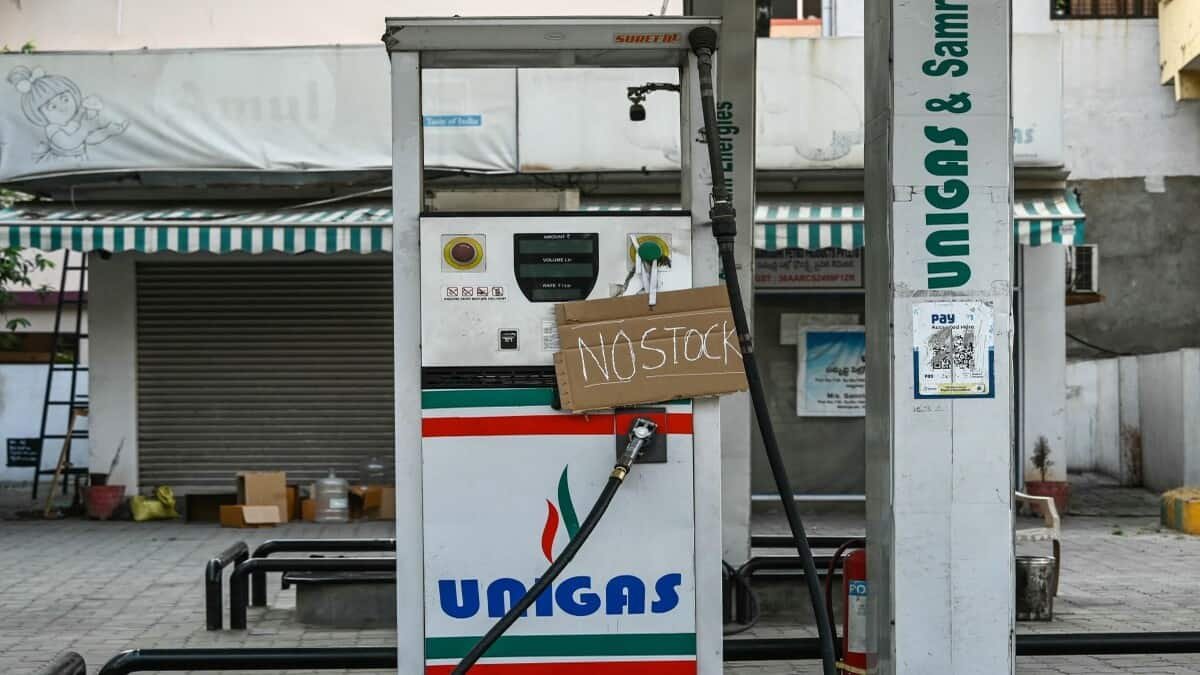
India has remained an outlier in global fuel markets, keeping petrol and diesel prices unchanged even as a US-Iran conflict-driven blockade of the Strait of Hormuz triggers up to 65 per cent fuel price surges across major economies
India has emerged as a rare outlier in the global energy market turmoil triggered by the ongoing US-Iran conflict, which has effectively disrupted maritime traffic through the Strait of Hormuz and sent fuel prices soaring across major economies.
According to market assessments, petrol and diesel prices have surged by as much as 65 per cent in several countries after tensions escalated into a partial blockade of the Strait of Hormuz — a critical chokepoint through which nearly one-fifth of global crude oil flows.
While global oil markets have reacted sharply to the disruption, India has reported a zero per cent retail fuel price hike, insulating domestic consumers from the immediate shockwave of higher crude costs.
Sharp global divergence in fuel inflation
Data compiled by energy trackers highlight sharp differences in fuel price inflation across countries amid global supply pressures. Myanmar has recorded the steepest rise, with petrol prices surging up to 60 per cent and diesel up by 65 per cent.
In the United States, fuel prices have climbed nearly 50 per cent, while countries such as Pakistan, South Korea, Japan, Germany and the United Kingdom have seen increases in the range of 30–55 per cent.
Even smaller South Asian economies, including Sri Lanka, Bangladesh and Nepal, have reported double-digit hikes.
India holds steady despite global volatility
In contrast to global trends, India’s retail fuel prices have remained unchanged.
Despite being one of the world’s largest crude importers, India has so far absorbed the external shock through a mix of policy interventions, strategic stock management and pricing adjustments by state-run oil marketing companies.
Officials and industry watchers say refiners have been allowed to smoothen the impact of volatile crude prices, preventing immediate transmission to retail consumers.
India’s stability stands out particularly at a time when crude oil benchmarks have repeatedly crossed $100 per barrel amid supply fears and geopolitical escalation.
Energy experts point to India’s diversified crude sourcing, higher strategic petroleum reserves, and calibrated taxation framework as key factors limiting retail volatility.
Unlike many advanced economies that directly pass on global price movements to consumers, India’s pricing structure allows for short-term buffering of international shocks.
However, analysts caution that sustained high crude prices could eventually test this insulation if the conflict persists and supply disruptions deepen.
Global outlook remains uncertain
The broader oil market remains highly sensitive to developments in West Asia, with even small shifts in diplomatic signals triggering sharp price swings.
Recent reports of possible de-escalation talks between Washington and Tehran briefly
pushed crude prices lower, though traders remain cautious about long-term stability.
Meanwhile, continued naval tensions in and around the Strait of Hormuz suggest that volatility is likely to persist, keeping global fuel inflation elevated.
First Published:
May 07, 2026, 13:11 IST
End of Article