

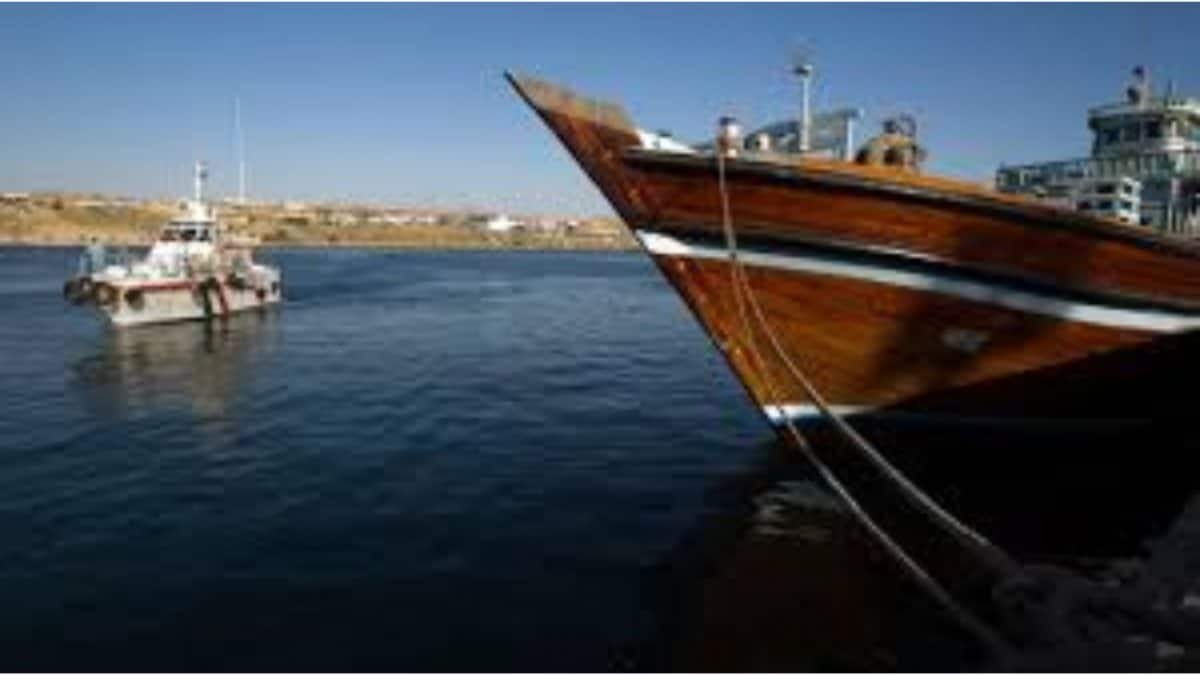
Clouds of uncertainty loom over India’s operations at Iran’s Chabahar port, as the US sanctions waiver granted to New Delhi in October last year ended on April 26.
Clouds of uncertainty loom over India’s operations at Iran’s Chabahar port, as the US sanctions waiver granted to New Delhi in October last year ended on April 26.
As the US administration seeks to financially squeeze Iran, it has taken several measures against Tehran, including the
blockade of Iranian ports. In this scenario, the possibility of another sanctions waiver appears bleak.
This has created a strategic dilemma for the Indian government: whether to
exit the 23-old port project, or continue its involvement while risking American sanctions.
In October last year, the US had extended the waiver for six months in an attempt to give India ample time to ‘wind down’ the project.
Now, as the waiver has expired, Indian government is exploring a number of options- including the possibility of transferring New Delhi’s stake to a local company. However, no final decision has been taken in this regard yet.
Earlier, in November last year, India withdrew all its personnel from Chabahar port, and prepaid its investment commitment of $120 million.
Stake divestment
According to a report in Business Standard, New Delhi has worked out a proposal to disinvest the stake of India Ports Global in India Ports Global Chabahar Zone to an Iranian company.
The report adds that the proposed stake transfer will include a provision allowing India to reclaim its shares once the sanctions are lifted.
In February last year, US President Donald Trump mandated the Secretary of State to modify sanctions waivers, especially those that give Iran some sort of economic relief, including Chabahar port project. On September 29 last year, the US state department revoked the waiver given to India in 2018.
In 2024, India had signed a 10-year agreement with Iran to operate the terminal at the port after several rounds of negotiations. According to reports, India has invested around $620 million in the project as of now.
What happens now?
India views Chabahar port as a strategic investment to maintain a balance of power in the region. Given its geographical proximity to Pakistan, and the China-operated Gwadar port, Chabahar provides India with a strategic edge.
It also serves as a critical gateway for North South Transport Corridor, connecting India with Central Asia, Europe and Russia.
Now, as the chances of a waiver extension remains minimal, a stake transfer appears to be the most viable and pragmatic option before New Delhi.
However, any move to dilute or temporarily exit the project could have long-term geopolitical implications. It may not only affect India’s connectivity ambitions in Central Asia but also create space for other regional players to expand their influence in Iran.
First Published:
April 27, 2026, 11:53 IST
End of Article