

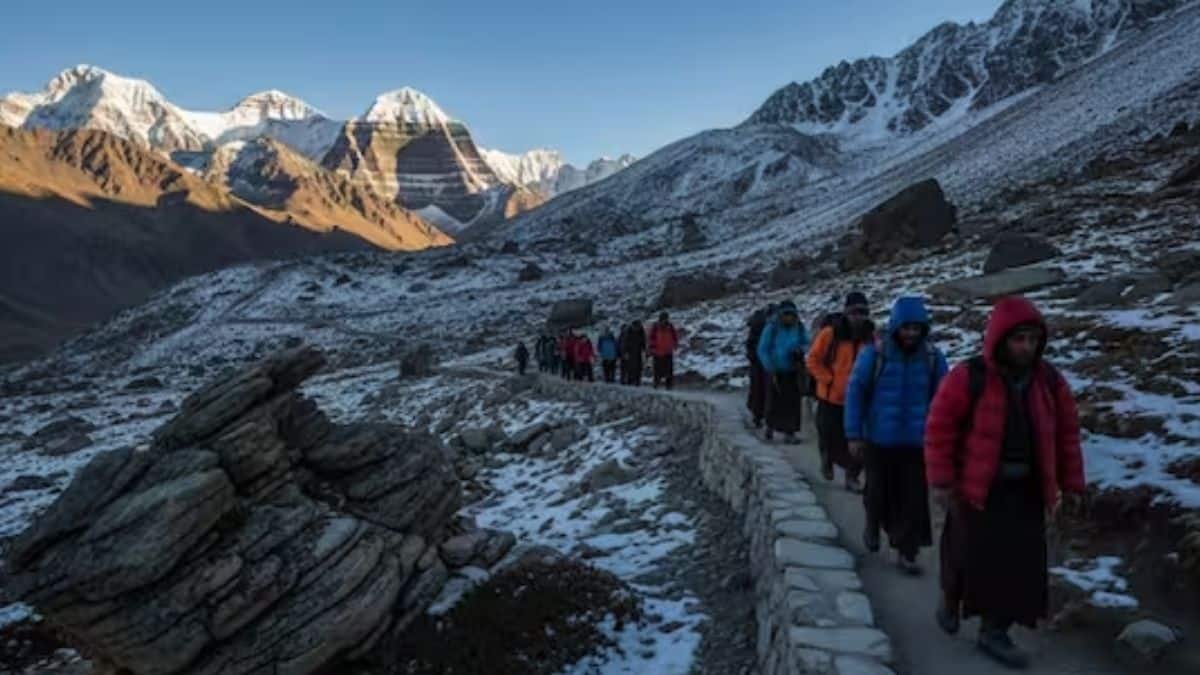
Nepal has objected to the use of Lipulekh Pass for the Kailash Mansarovar Yatra, while India has rejected the claim, citing established practice
As preparations begin for the 2026 Kailash Mansarovar Yatra, a diplomatic disagreement has emerged between Nepal and India over the use of the Lipulekh Pass, with Kathmandu asserting territorial rights and New Delhi dismissing the claim. The issue has gained prominence alongside the announcement of pilgrimage routes coordinated with China, even as Nepal maintains it was not consulted.
Nepal’s Foreign Ministry has formally objected to India and China proceeding with plans to conduct the Kailash Mansarovar Yatra through the Lipulekh Pass, stating that the area lies within its territory. Kathmandu has conveyed its concerns to both countries through diplomatic channels and urged them to avoid any activities in the region, including pilgrimage, trade or infrastructure work.
The ministry reiterated that Lipulekh is an integral part of Nepal and confirmed that even China has been informed of this position.
India rejects claim, cites established practice
India responded by rejecting Nepal’s objection, describing it as an “untenable” expansion of territorial claims. The Ministry of External Affairs said its position on Lipulekh remains “consistent and clear”.
Officials noted that the Kailash Mansarovar Yatra has used the Lipulekh Pass route since 1954 and said the current arrangement does not represent any new development. India also stated that Nepal’s claims are “neither justified nor based on historical facts and evidence”, while maintaining that it remains open to dialogue on boundary issues through diplomatic channels.
What prompted the current dispute
The disagreement follows India’s announcement that the 2026 Kailash Mansarovar Yatra will take place between June and August in coordination with Beijing. A total of 1,000 pilgrims will travel in batches of 50 using two routes: one via Nathu La Pass in Sikkim and another through Lipulekh Pass in Uttarakhand. Registrations are open until May 19.
Nepal has said it was neither informed nor consulted about the plans.
The dispute over Lipulekh dates back to the 1816 Treaty of Sugauli, which defined the Kali River as Nepal’s western boundary. Nepal maintains that the river originates at Limpiyadhura, placing Lipulekh and Kalapani within its territory.
India, however, holds that the river’s source lies further east near the Lipukhola tributary, thereby excluding these areas from Nepal’s boundary. Following the 1962 Sino-Indian War, Indian forces established a presence in the Kalapani region, which has continued since.
The 2020 turning point
Tensions escalated in May 2020 after India inaugurated an 80-kilometre road linking Dharchula in Uttarakhand to Lipulekh Pass. Nepal responded with diplomatic protests and released a revised political map incorporating Limpiyadhura, Lipulekh and Kalapani within its borders.
The map was endorsed unanimously by Nepal’s Parliament in June 2020, making the territorial claim part of its legal framework. India rejected the move as a “unilateral act” and reiterated its own position.
China remains involved as a third party, having agreed with India in 2015 to use Lipulekh as a trade route and for the Kailash Mansarovar Yatra. Nepal had objected at the time, stating it was not part of the agreement.
In August 2025, India and China again agreed to reopen the pass for border trade during a visit by Chinese Foreign Minister Wang Yi. Nepal raised the issue with Chinese President Xi Jinping shortly afterwards, but the response did not alter the situation.
A recurring issue with limited resolution
The latest development mirrors past disagreements, with Nepal reiterating its position through diplomatic means while emphasising historical treaties and evidence.
Despite its claims, Nepal does not maintain a physical presence in Lipulekh or Kalapani. It continues to pursue the matter through dialogue, even as preparations for the pilgrimage move forward.
Nepal has indicated it will continue raising the issue through diplomatic channels. As the pilgrimage season approaches and travel plans proceed, the disagreement remains unresolved, reflecting a longstanding and complex boundary dispute in the Himalayan region.
First Published:
May 04, 2026, 11:42 IST
End of Article