

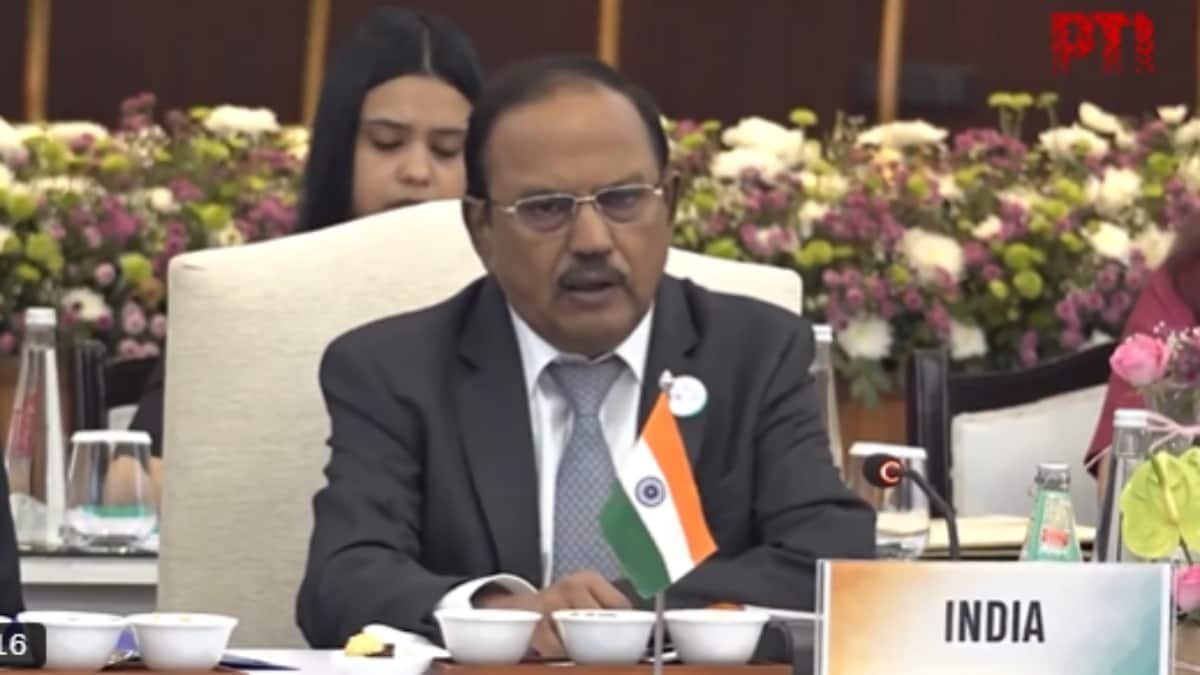
India’s National Security Adviser Ajit Doval offered a candid look at the realities of intelligence cooperation with the United States. He explained why India continues to work closely with Washington despite periodic tensions.
India’s National Security Adviser Ajit Doval offered a candid look at the realities of intelligence cooperation with the United States in a past interview with Sansad TV.
Speaking in 2013, when he had retired from the Intelligence Bureau and was leading the New Delhi-based think tank Vivekananda International Foundation, Doval explained why India continues to work closely with Washington despite periodic tensions.
Responding to a question that referenced the arrest of Ratan Sehgal, a senior IB official, for allegedly passing information to the Central Intelligence Agency (CIA), Doval drew a clear distinction between principles and practical realities.
He said that ideally such incidents should not occur between strategic partners and fellow democracies. But intelligence work, by its nature, is driven by national interests.
Taking a pragmatic view, Doval noted that all countries—including the United States—seek to gather information and build access within other systems.
“It happens in this profession,” he suggested, adding that India too must develop similar capabilities. In this context, cooperation is not abandoned simply because of mistrust. Instead, it continues because both sides gain from it.
Doval underlined that India and the US share many areas of common interest, particularly in counterterrorism, cybersecurity and intelligence sharing.
These platforms, he said, allow both sides to discuss issues and pursue mutual goals. Even when there are disagreements or concerns about overreach, the broader benefits of cooperation often outweigh the costs.
At the same time, Doval did not shy away from pointing out specific incidents that strained trust.
He recalled a case from 2006 involving a joint cyber forum set up with the US. “We set up a joint cyber forum with America with all good intentions. But in 2006, we were forced to send a US diplomat back home because she tried to get some of our people to do things that were detrimental to India’s national interest,” he said.
The episode, he implied, was a reminder that partnerships in the intelligence world are rarely free of friction. However, such incidents do not necessarily derail long-term cooperation.
Doval also highlighted the technological dimension of modern intelligence. Referring to the period after India’s Pokhran nuclear tests, he said that the US had developed significant capabilities to monitor India.
Rather than blaming others, he argued, India should focus on strengthening its own systems. “If we cannot defeat this, then it is our failure,” he remarked.
In the interview, Doval’s message was straightforward: intelligence cooperation is a balancing act.
Nations collaborate where interests converge, compete where they must, and constantly work to protect their own security. The relationship with the US, he suggested, is no exception.
First Published:
May 04, 2026, 12:08 IST
End of Article