

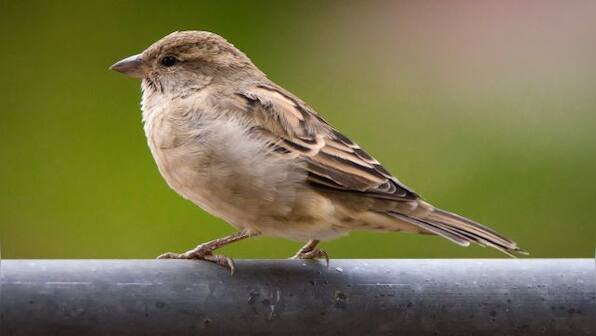
There was a time when the house sparrow was a familiar sight across India, perched on windowsills, nesting near homes, moving easily through human spaces. Its ability to live alongside people once made it one of the most widespread birds.
That is no longer the case. Studies point to a sharp decline in its population. According to the Indian Council of Agricultural Research (ICAR), numbers have dropped by as much as 80 per cent in Andhra Pradesh, around 20 per cent in Kerala, Gujarat and Rajasthan, and up to 70-80 per cent in several coastal regions.
“In childhood, we watched sparrows on our roofs. But nowadays, we can barely spot a sparrow in cities,” said Prime Minister Narendra Modi in his 116th edition of Mann Ki Baat, pointing to the effects of rapid urbanisation.
But the
sparrow is not alone. Its decline reflects a wider change underway.
Urbanisation is reshaping birdlife. While some species are adapting and persisting, others are steadily being pushed out.
The small-town effect
By 2036, India’s towns and cities are expected to house 600 million people, around 40 per cent of the population, up from 31 per cent in 2011, according to the World Bank. As cities expand, natural habitats are replaced with buildings, roads, and other infrastructure. This leads to habitat loss, fragmentation and a decline in green spaces, all of which affect bird diversity.
Much of this change is increasingly visible in smaller cities. Unlike older metros, which often retain large parks or institutional green spaces, newer urban areas tend to grow in a more fragmented way, with dense roads, scattered construction and limited mature vegetation.
For birds, such spaces can be challenging. They lack the resources of natural habitats and the stability of long-established urban ecosystems. Conditions also shift quickly. A vacant plot one season can become a construction site the next. It makes nesting and feeding unpredictable.
“Adaptation is a broad concept in ecology, and often what we observe in urban birds is a short-term coping mechanism rather than true evolutionary adjustment,” says Shaheer Khan, project scientist at the Wildlife Institute of India.
This unevenness shows up clearly across towns. In Chittaranjan, West Bengal, for instance, bird diversity remains relatively high overall, but drops sharply in built-up areas compared to vegetated patches that offer more consistent food and nesting resources. In Uttar Pradesh’s Mirzapur and Bhadohi, fruit-eating species peak in urban areas, scavengers in semi-urban zones, and carnivores in more rural habitats, reflecting how urban growth reshapes food sources and habitat availability across different parts of these expanding towns.
Traffic also plays a role. A 2025 study in Karnataka found that vehicle intensity was a key driver of bird diversity, likely due to noise and constant disturbance. “Vehicle disturbance poses several different threats to bird occurrence in cities. I consider noise pollution to be the most important factor influencing bird communities. It interferes with communication between individuals, which can reduce breeding success,” says Jan Grünwald of the Institute for Environmental Studies, Charles University, Czechia.
Some birds stay, and others disappear
A 2026 study by researchers from the Sálim Ali Centre for Ornithology and Natural History found that in urbanising landscapes, bird communities are increasingly dominated by a smaller set of adaptable species.
Generalists, birds that can eat a wide range of food and live in habitats shaped by humans, tend to thrive. The house crow, common myna, and rock pigeon have remained stable or adapted well in many urban areas. Even species like the red-vented bulbul and certain parakeets hold steady where trees and gardens persist.
Others fall behind. “Insect-eating birds often struggle to find enough food in densely built-up areas. Ground-nesting birds are vulnerable to predators like stray dogs and often can’t find safe places to nest. As a result, both groups are at risk of disappearing from areas undergoing rapid construction,” says Grünwald.
According to the State of India’s Birds 2023
report, several once-common birds are now showing long-term declines, with species that have more specialised diets and habitat needs faring worse. Many insectivores, such as drongos and flycatchers, are among those in decline, reflecting how changes in food availability and habitat structure are affecting birdlife in built-up areas. “Overall, species most affected by urbanisation are those with specific diets and those that depend on natural, undisturbed habitats such as forests,” says Grünwald.
But what looks like adaptation isn’t always straightforward. “For example, rock pigeons in major cities have increased in numbers. The fundamental requirements for any species are to secure food and reproduce. But in cities, pigeons do not forage extensively. Instead, they rely on abundant human-provided food resources. Their primary activity becomes reproduction, which can lead to increased disease transmission affecting both pigeons and humans,” says Khan.
Even birds that continue to live in cities are under strain. A 2025 study on sparrows found that urban females have to work harder than their rural counterparts to raise fewer chicks, suggesting that food and nesting conditions are becoming less reliable.
Even when bird numbers in cities seem stable or even increasing, this can be misleading. Cities end up with more birds, but fewer varieties. “When insect-eating birds decline, natural pest control is reduced. When fruit-eating birds become scarce, seed dispersal suffers, affecting how native plants regenerate. If nectar-feeding birds drop out, pollination can be disrupted,” says Khan.
Sustaining the bird population
Urban green spaces, especially parks and wetlands, remain critical refuges for bird diversity. But everyday spaces matter too. “A lot of what we call green in cities is designed to look neat, not to function as habitat,” says Khan.
Lawns, ornamental plants and heavily pruned trees often provide little food or shelter. “These spaces lack layers, no understory, very little natural clutter, and not enough native plants,” he adds.
Planting native trees for food and nesting, maintaining water sources, and limiting noise and traffic in certain areas can all help sustain bird populations. Letting some spaces remain a little less managed, with denser shrubs, patches of leaf litter or even a small patch of wild growth, can also create microhabitats. These changes may not bring species back. But they will determine what survives and what quietly disappears.
First Published:
April 26, 2026, 17:15 IST
End of Article